Beneath the surface of Singapore's pools, a fast-paced, breathless, and surprisingly tactical sport is quietly making waves. Underwater hockey — once considered an obscure curiosity — has grown into one of the most talked-about aquatic pursuits in the country, attracting everyone from competitive swimmers looking for a new challenge to complete beginners captivated by the sport's unique appeal. If you've never seen it played, imagine a game of hockey stripped of skates and ice, relocated to the bottom of a swimming pool, and played entirely on a single breath of air. It sounds impossible. It's actually exhilarating.
At SPEEDISWIM, Singapore's aquatic development centre with over 25 years of experience training swimmers and aquatic athletes, we've seen firsthand how underwater hockey captures the imagination of those who try it. This article covers everything you need to know about the sport — from its rules and equipment to its physical benefits and how you can join a structured program right here in Singapore.
Underwater hockey, known internationally as Octopush, was invented in England in 1954 by Alan Blake, who wanted to keep his diving club active and fit during the cold winter months. The sport spread gradually across the globe, gaining dedicated followings in Australia, South Africa, Canada, France, and increasingly across Southeast Asia. Today it is governed by the World Aquachallenge Association (formerly CMAS), and international competitions attract teams from over 40 countries.
In Singapore, underwater hockey has found a passionate local community supported by clubs, school programmes, and aquatic development centres like SPEEDISWIM. The sport blends the breath-holding discipline of freediving, the spatial awareness of swimming, and the tactical teamwork of traditional team sports — making it one of the most cognitively and physically demanding games you can play in a pool.
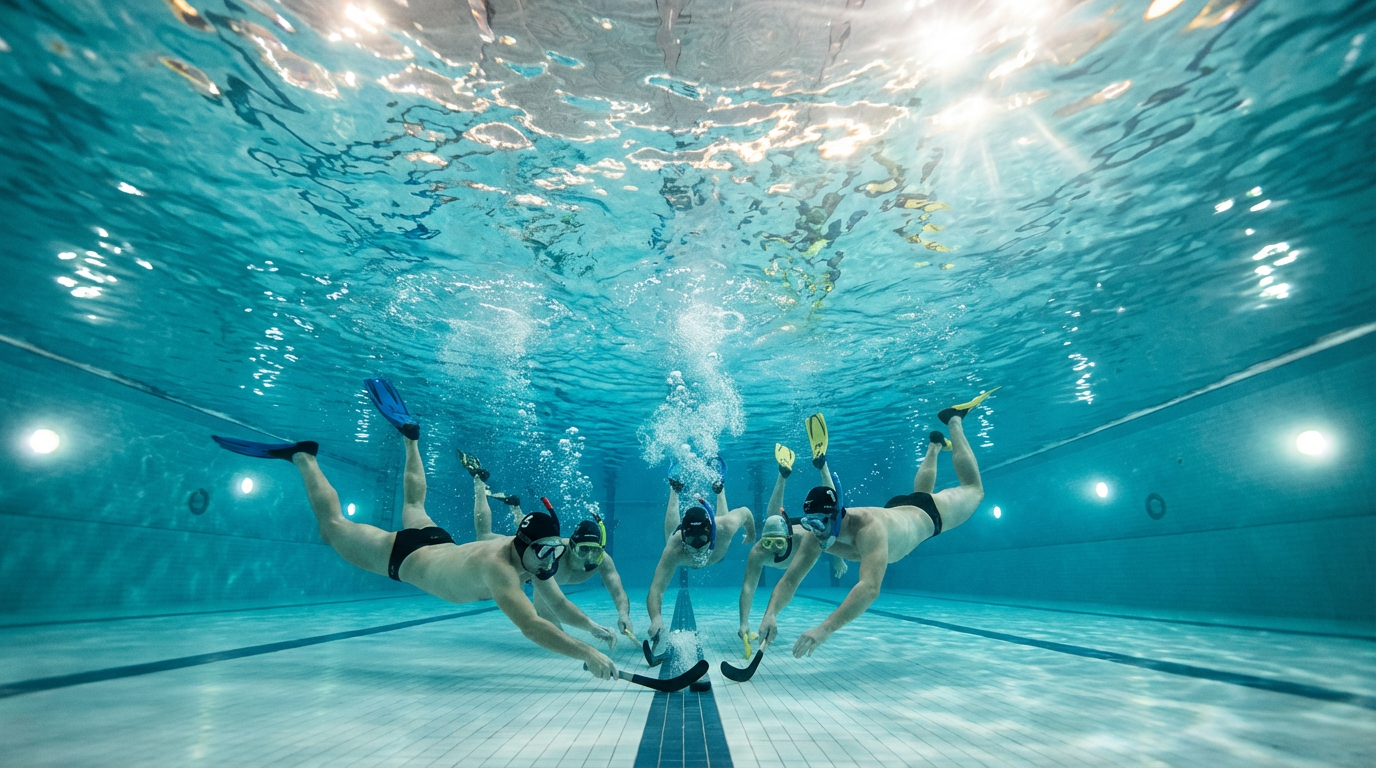
The objective of underwater hockey is straightforward: use a short stick (called a pusher) to manoeuvre a weighted puck along the bottom of the pool and into the opposing team's goal (a metal tray). Games are played in two halves, typically 10 to 15 minutes each, with both teams consisting of six players in the water at any time, plus reserves who rotate in throughout the match.
What makes the sport uniquely challenging is that all of this happens entirely underwater, on a single breath. Players surface to breathe, then dive back down to re-engage. There are no breathing aids, no oxygen tanks, and no downtime. Strategic substitutions are constant, and teams must communicate through pre-planned signals and exceptional spatial awareness developed through training.
Key rules and gameplay elements include:
Referees observe from the surface and from underwater using cameras or direct observation, ensuring fair play in what is genuinely one of the most three-dimensional team sports in existence.
Singapore's relationship with water runs deep. With mandatory water safety education embedded in the national curriculum through programmes like SwimSafer 2.0 — which teaches people of all ages and abilities to swim safely and confidently — the country has built a strong foundation of water-literate citizens who are genuinely comfortable in aquatic environments. That baseline confidence is exactly the kind of platform that allows a sport like underwater hockey to thrive.
Beyond swimming competency, Singapore's year-round warm climate, strong network of public and private pools, and growing appetite for unconventional sports have all contributed to the sport's rise. Schools and sports clubs have begun introducing underwater hockey as a co-curricular activity, and national-level competitions have gained visibility through social media, bringing the sport to new audiences who might never have considered it otherwise.
There is also a compelling social dimension. Underwater hockey is notoriously inclusive. Unlike many competitive sports, it does not reward sheer size or raw speed above all else. Smaller, more agile players with excellent breath control and tactical instincts can outperform larger opponents consistently. This levelling quality has made the sport particularly popular among teenagers, women, and adults who feel underserved by more conventional sporting pathways.
Underwater hockey is one of the most complete workouts available in an aquatic setting. A typical training session or game engages virtually every major muscle group, demands significant cardiovascular output, and requires sustained mental focus — all at the same time.
Cardiovascular fitness improves rapidly in underwater hockey players due to the repeated cycles of intense exertion and breath-hold. The cardiovascular demand is comparable to interval training, making it highly efficient for improving aerobic capacity and lung function. Many players report noticeable improvements in breath-hold time and swimming efficiency within weeks of regular training.
Full-body strength and coordination are also major benefits. Fin kicking engages the legs, core, and lower back, while manoeuvring the puck develops shoulder stability and arm strength. Navigating the three-dimensional space of a pool floor while tracking opponents, teammates, and the puck simultaneously challenges proprioception and spatial awareness in ways that few other sports can replicate.
From a mental health perspective, the sport demands total present-moment focus. There is simply no room for distraction when you are underwater, managing your breath, reading the game, and anticipating your next move. Many players describe this enforced mindfulness as one of the sport's most unexpectedly rewarding qualities — a genuine mental reset that extends well beyond the pool.
One of the most common questions about underwater hockey is whether it is suitable for beginners. The honest answer is: yes, with the right foundation. Players do not need to be elite competitive swimmers, but a confident, competent swimming ability is essential before entering the water for underwater hockey. Specifically, players should be comfortable swimming laps, able to tread water for extended periods, and willing to learn breath-hold technique in a supervised environment.
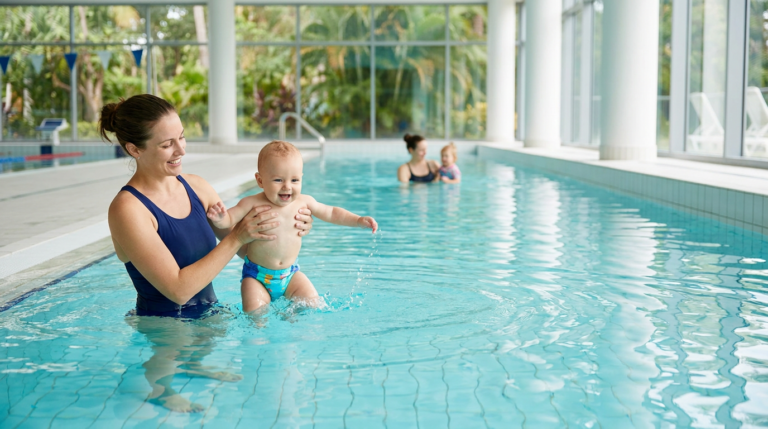
In Singapore, programmes like SwimSafer 2.0 provide an excellent entry-level foundation, teaching water safety and survival skills that form the bedrock of safe participation in any aquatic sport. For those who want to develop their swimming skills further before trying underwater hockey, structured competitive swimming training builds the stroke efficiency, endurance, and water confidence that underpin strong underwater hockey performance.
In terms of age, underwater hockey is played across a wide range. Junior programmes typically begin from around 8 to 10 years of age, while adults of all ages participate in recreational and competitive leagues. There is no upper age limit, and the sport's emphasis on technique and spatial intelligence means that experienced players often remain highly effective well into middle age and beyond.
Getting started in underwater hockey does not require a large initial investment, particularly when joining a structured programme where much of the equipment is provided. Understanding what you need, however, helps you prepare properly and progress faster.
The core equipment every underwater hockey player uses includes:
For beginners joining a coached programme, most equipment is typically provided during introductory sessions. As players progress and develop their own preferences — particularly regarding fin length and pusher shape — they may choose to invest in personal gear suited to their playing style.
SPEEDISWIM has been at the forefront of aquatic sports development in Singapore since 1998, training over 25,000 students and producing more than 1,000 athletes across disciplines including competitive swimming, artistic swimming, water polo, and more. Our Underwater Hockey Program brings the same structured, coach-led approach that has developed over 50 National Youth and National Team swimmers to this exciting and fast-growing sport.
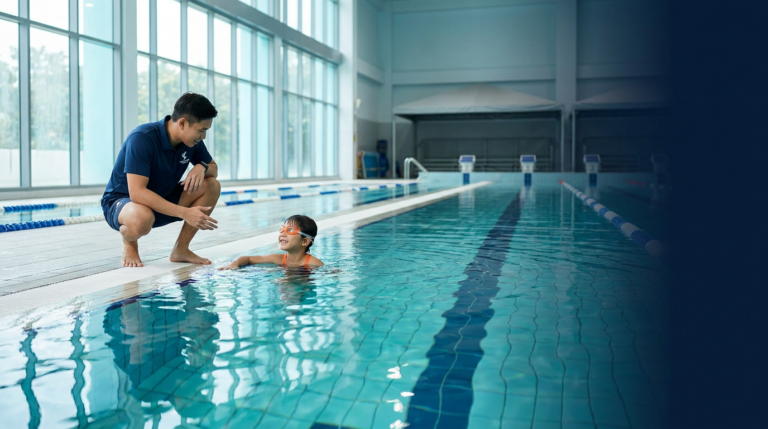
Our underwater hockey coaching is delivered by qualified instructors who understand both the technical demands of the sport and the developmental needs of players at every level. Sessions are designed to progressively build breath-hold confidence, fin technique, puck-handling skills, and game intelligence — so that players develop safely and enjoyably, regardless of their starting point.
SPEEDISWIM operates across multiple venues including international schools and country clubs, giving students access to quality pool facilities. For families whose children are already enrolled in our SwimSafer programme or competitive swimming pathway, underwater hockey offers a compelling next step — a team sport that rewards the aquatic skills they've already invested in building.
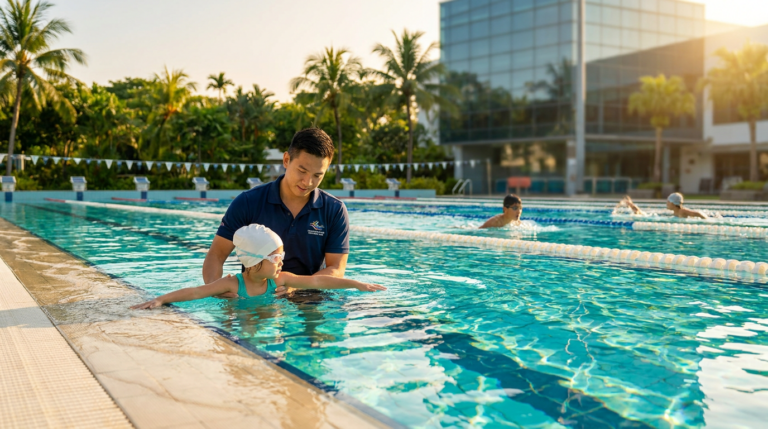
Starting your underwater hockey journey is simpler than you might expect. The most important first step is ensuring your swimming ability is at a level where you can participate safely. If you or your child is still building water confidence, beginning with a structured swimming programme aligned with SwimSafer 2.0 — Singapore's national water safety framework — is the ideal foundation. SwimSafer 2.0, developed in collaboration with Sport Singapore, teaches swimming and personal water survival skills across progressive stages, giving beginners the competency they need to safely explore sports like underwater hockey.
Once your swimming foundation is solid, joining a coached underwater hockey programme gives you access to proper technique instruction, safe supervised practice, and the social benefits of training within a team. This structured approach is far more effective than attempting to self-teach, particularly for breath-hold skills, which require careful, progressive development under supervision.
Here is a simple pathway for getting started:
Whether you are a seasoned swimmer looking for a fresh challenge, a parent seeking a unique team sport for your child, or a complete newcomer to aquatic sports, underwater hockey offers a genuinely rewarding experience that you simply cannot get anywhere else.
Underwater hockey is more than just a sport — it is a community, a physical challenge, and an entirely new way of experiencing the water. Singapore's growing interest in this dynamic game reflects a broader shift toward diverse, inclusive, and genuinely exciting aquatic pursuits. With the right swimming foundation, quality coaching, and a willingness to try something extraordinary, underwater hockey could become one of the best decisions you make this year.
At SPEEDISWIM, we have spent over 25 years helping Singaporeans of all ages find their place in the water — from first-time swimmers taking their initial strokes to national-level athletes competing at the highest level. Our Underwater Hockey Program is the next chapter in that story, and we would love for you to be part of it.
Whether you're a confident swimmer looking for a new challenge or exploring aquatic sports for the first time, SPEEDISWIM's team is here to guide you. Get in touch today to learn more about our Underwater Hockey Program, trial session availability, and how we can help you take the plunge.