Every year, drowning remains one of the leading causes of accidental death in children worldwide — and in a water-rich environment like Singapore, surrounded by pools, reservoirs, and coastal attractions, this risk is very real. Yet one of the most effective defences parents can give their child is surprisingly accessible: learning to swim early.
But when is the right time to start swimming lessons? It's one of the most common questions parents ask, and the answer has evolved significantly over the past decade as paediatric researchers, child development experts, and water safety organisations have deepened our understanding of how children interact with water. Whether your child is a curious toddler or a school-going primary student, the timing and type of aquatic education matters enormously.
In this guide, we draw on expert consensus from leading paediatric and water safety bodies, align it with Singapore's national SwimSafer 2.0 framework, and offer practical guidance to help you make the best decision for your child's age, temperament, and safety.
The most significant shift in expert guidance came in 2010, when the American Academy of Pediatrics (AAP) revised its position to recommend swimming lessons for most children from age 1 onwards, having previously suggested waiting until age 4. This reversal was prompted by compelling data showing that children aged 1 to 4 who had participated in formal swimming lessons had a significantly lower risk of drowning. The AAP stopped short of recommending lessons for infants under 12 months, citing insufficient evidence of benefit at that age while also noting the social and bonding value of parent-child water programmes.
The World Health Organization (WHO) and various national water safety councils echo this sentiment: children who receive structured aquatic education before age 5 develop foundational water survival skills during a neurologically receptive window. At this stage, children absorb motor skills more readily, and positive early experiences in water build confidence that carries through life. The consensus is not that earlier is always better in every case, but rather that unnecessary delay carries real risk, particularly in environments where children have frequent access to water.
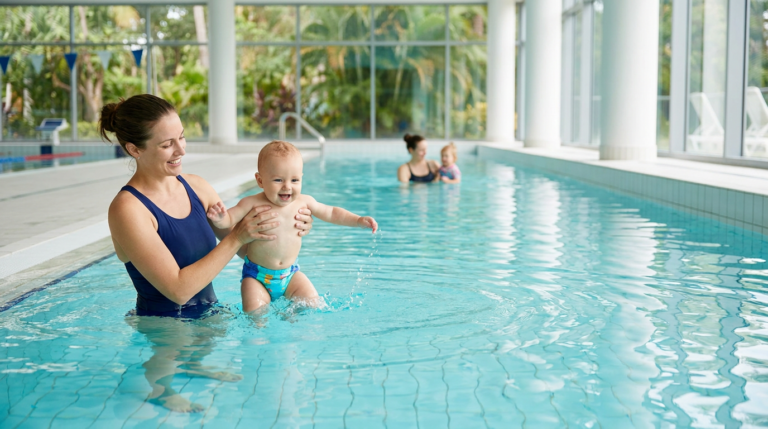
While formal swimming instruction is generally not recommended before 12 months, structured parent-child aquatic programmes from around 6 months can play a meaningful role. These programmes are not designed to teach independent swimming — no infant is developmentally ready for that — but rather to introduce water in a positive, controlled environment. Parents learn how to safely hold and move their baby in water, and infants begin building comfort, breath control awareness, and an early association between water and positive experience.
Between 12 and 24 months, toddlers can begin more structured aquatic exposure. At this stage, the emphasis is on water familiarisation, simple breath control, supported floating, and basic movement patterns. Research published in paediatric journals suggests that children who are introduced to water early — even through play — are significantly less likely to panic or freeze when unexpectedly exposed to water. That comfort can, in some situations, be lifesaving. However, it is essential to understand that no level of early aquatic exposure eliminates the need for active adult supervision around water.
The period between ages 1 and 4 represents what water safety experts frequently describe as the most critical intervention window. Drowning is among the top causes of unintentional injury death for children in this age bracket in many countries, including Singapore. At the same time, children in this range are at a developmental stage where motor learning is rapid, fear responses around water are often not yet entrenched, and foundational aquatic skills — such as learning to roll onto their back, float, and reach for the pool edge — can be taught progressively.
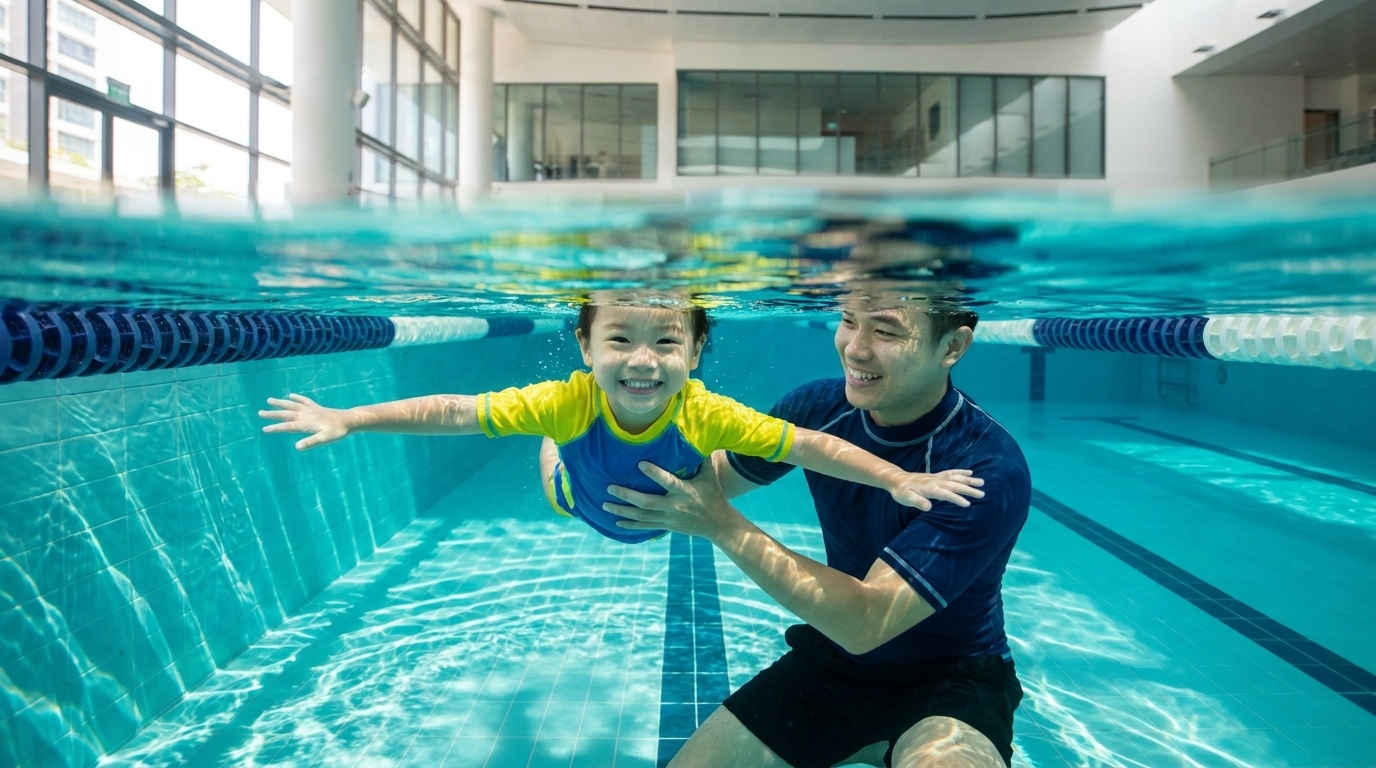
It is important to have realistic expectations for this age group. A 2-year-old will not be swimming laps. The goal at this stage is water survival readiness: learning to hold breath, recover to a floating position, and move toward safety. Quality programmes for this age group use small class sizes, qualified instructors experienced in early childhood development, and carefully graduated progressions. Consistency matters enormously — irregular attendance limits progress significantly at this age.
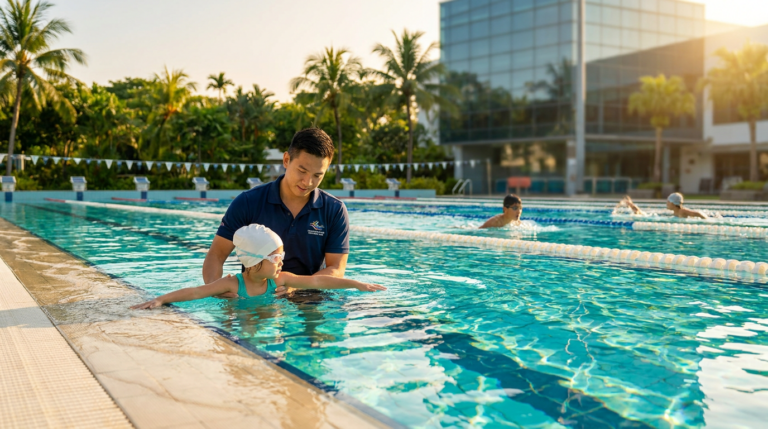
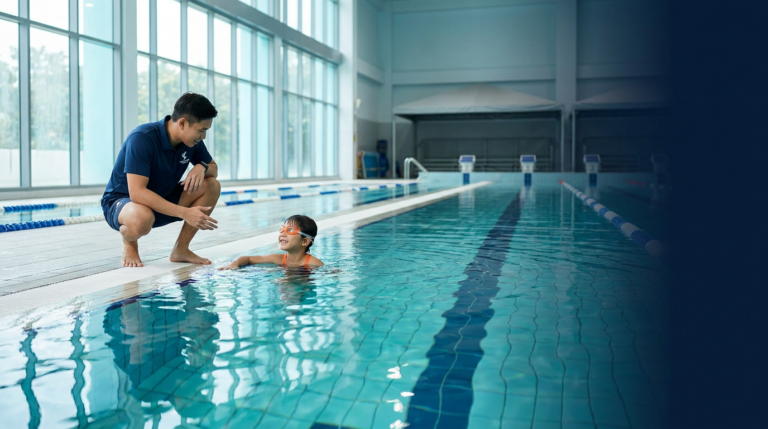
Children aged 5 and above can engage with more technical swimming instruction. By this age, most children have the cognitive capacity to understand and follow multi-step instructions, the physical coordination for stroke development, and the emotional resilience to handle structured learning with peers. This is the age range where formal learn-to-swim programmes — including Singapore's nationally recognised SwimSafer 2.0 — are most commonly entered and where children make measurable, stage-based progress.
For children who have not yet had any aquatic exposure by age 5, it is never too late to begin. These children may need a brief water familiarisation phase before entering a standard programme, but they typically progress quickly due to their more developed cognitive and physical abilities. School-age children who master swimming fundamentals early are also better positioned to explore other aquatic disciplines — from competitive swimming to artistic swimming and water polo — as they grow older.
Age is an important guide, but individual readiness varies. Beyond the minimum recommended ages, look for these developmental signs before enrolling your child in a structured programme:
A child who shows fear or strong resistance to water is not necessarily unready — it may simply mean they need a gentler, more gradual entry point. Speak with a qualified aquatic instructor about a water familiarisation approach before committing to a full structured programme. Forcing anxious children into formal lessons before they're emotionally ready can create lasting negative associations with water.
In Singapore, the national framework for children's swimming education is SwimSafer 2.0, developed by the National Water Safety Council in collaboration with Sport Singapore. First introduced in 2010 as SwimSafer and comprehensively refreshed in 2016–2017, SwimSafer 2.0 is a six-stage progressive programme designed to teach people of all ages to swim and be safe in, on, and around water. What sets it apart from basic learn-to-swim programmes is its dual emphasis on skill development and personal water survival education — children are not just taught strokes, but also how to respond in water emergency situations.
The six stages of SwimSafer 2.0 take a swimmer from complete beginner to confident, competent aquatic participant. Each stage involves both practical in-water assessments and theoretical water safety knowledge. Certifications are nationally recognised, meaning a child's achievements are documented and transferable across compliant aquatic centres. For parents, enrolling in a SwimSafer 2.0-certified programme provides the assurance that their child's learning is benchmarked against a rigorous national standard. SPEEDISWIM's SwimSafer Programme follows this framework, delivered by professionally qualified coaches across multiple venues including international schools and country clubs.
Understanding the cost of swimming lessons helps parents plan appropriately and evaluate value. In Singapore, pricing generally reflects class format, instructor qualification, and venue:
When evaluating cost, look beyond the per-session price. Consider instructor qualifications, class size ratios, programme structure, alignment with national certifications like SwimSafer 2.0, and the track record of the aquatic centre. A slightly higher investment in a well-structured, professionally delivered programme typically yields far better outcomes — in both safety competence and skill development — than a cheaper alternative with poor pedagogy.
Not all swimming programmes are created equal, and the right choice depends on your child's age, current ability, temperament, and long-term goals. For younger children aged 1 to 4, prioritise programmes with small class ratios, instructors trained in early childhood aquatics, and a clear water safety curriculum rather than purely stroke-focused teaching. For school-age children, look for structured, staged progressions with nationally recognised certifications.
If your child shows early aptitude or a love for the water, consider a programme connected to broader aquatic pathways. SPEEDISWIM's ecosystem, for instance, extends well beyond the foundational SwimSafer programme to include competitive swimming, artistic swimming, water polo, and even underwater hockey — giving children room to discover an aquatic discipline that truly excites them. With over 25 years of experience, more than 25,000 students trained, and a track record that includes national-level athletes and SwimSafer-certified assessments, SPEEDISWIM offers families in Singapore one of the most comprehensive and credentialed aquatic education environments available.
Ultimately, the best time to start swimming lessons is as early as your child is developmentally ready — and for most children, that window begins sooner than many parents realise. Water safety is not a skill that can wait indefinitely. But with the right programme, delivered by qualified professionals in an encouraging environment, it becomes one of the most empowering gifts you can give your child.
Expert consensus is clear: for most children, structured swimming education can and should begin between ages 1 and 4, with parent-child aquatic exposure possible from as early as 6 months. In Singapore's water-rich environment, early aquatic education is not a luxury — it is a fundamental safety investment. The SwimSafer 2.0 framework provides a structured, nationally recognised pathway for children to develop both swimming skills and water survival competence, and choosing a programme aligned with this standard gives parents meaningful assurance about the quality of their child's learning.
Whether your child is taking their first tentative steps near a pool or already splashing around with confidence, there is a programme designed for where they are right now — and a clear path forward from there.
SPEEDISWIM has been helping Singapore families build water confidence and swimming skills for over 25 years. Our professionally qualified coaches deliver structured SwimSafer 2.0-aligned programmes across multiple venues — designed to meet your child exactly where they are and take them further than you imagined.