Swimming is one of those rare skills that doubles as both a life-saving necessity and a lifelong sport — and in Singapore, where water activities are woven into everyday life, knowing how to swim is genuinely important. Whether you're a parent looking to enrol your child in their first splash session, a teenager hoping to compete at the national level, or an adult who never learned as a kid, there's a structured swimming course in Singapore designed for you.
The challenge, of course, is knowing where to start. With so many swim schools, programme formats, certification frameworks, and class types available across the island, it can feel overwhelming to find the right fit. This guide breaks down everything you need to know — from the different types of swimming courses and their durations to realistic pricing expectations and what actually happens on day one.
Singapore's relationship with water runs deep. With community pools managed by Sport Singapore, private clubs, international school facilities, and open-water activities readily accessible, swimming is far more than a recreational pastime here. The National Water Safety Council has long recognised drowning prevention as a public health priority, which is why structured, certified swimming education has become a cornerstone of youth development in the country.
Beyond safety, swimming opens doors to competitive sports pathways, physical fitness, and — for the most dedicated athletes — national representation. Organisations like SPEEDISWIM, which has been nurturing swimmers since 1998 and has trained over 25,000 students, reflect how seriously Singapore takes aquatic education across all levels.
Swimming courses in Singapore span a wide spectrum, from water familiarisation for toddlers to elite competitive training. Understanding what each programme focuses on helps you match the right course to your goals or your child's developmental stage.
SwimSafer 2.0 is the national water safety and learn-to-swim programme developed by Sport Singapore in collaboration with the National Water Safety Council. It was first launched in 2010 as SwimSafer and refreshed in 2016-2017 to better reflect modern swimming pedagogy. The updated programme places equal emphasis on skill development and water safety education, teaching participants of all ages and abilities to be genuinely safe in, on, and around water — not just competent swimmers in a controlled pool environment.
The programme is structured across six progressive stages, from water confidence at Stage 1 through to advanced water survival and stroke refinement at Stage 6. Each stage includes a formal assessment, and successful completion earns a nationally recognised certification. For parents in Singapore, SwimSafer 2.0 is often the most logical starting point for children, as it provides a clear, goal-oriented progression framework backed by SportSG. SPEEDISWIM is an accredited provider of the SwimSafer 2.0 programme, with assessments conducted at its OCC (Orchid Country Club) venue, which is one of the official Non-ActiveSG Pool CAMS Centres in Singapore.
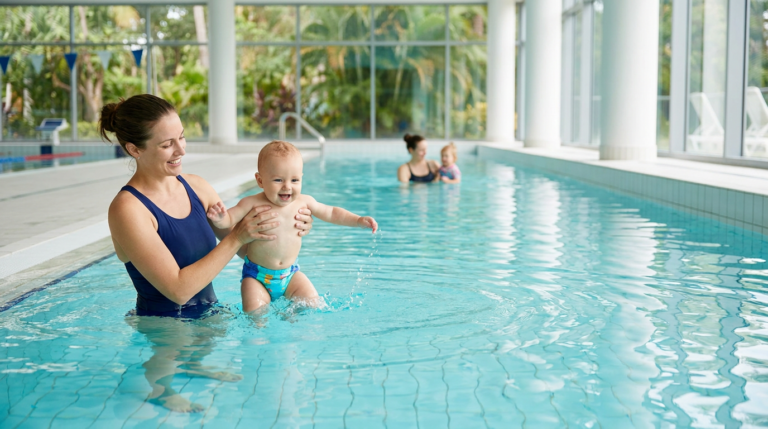
For younger children not yet ready for structured certification or for adults picking up swimming for the first time, general learn-to-swim programmes offer a more flexible entry point. These courses typically begin with water familiarisation — getting comfortable in the water, learning to float, and gaining confidence — before progressing to freestyle (front crawl) and basic kicks. Infant and toddler programmes (usually for children aged 6 months to 3 years) are parent-accompanied and focus entirely on water comfort and basic survival instincts rather than formal technique.
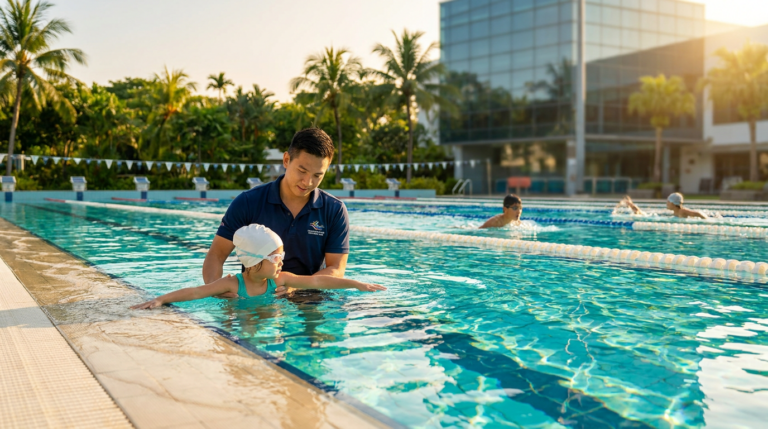
Once children reach around 4 to 5 years of age, formal instruction begins in earnest. At this stage, motor skills are developed enough to start coordinating arm strokes with leg kicks, making it an ideal window to introduce structured swimming lessons. Many swim schools, including SPEEDISWIM, align their beginner programmes with the SwimSafer 2.0 framework to ensure that foundational skills lead naturally into nationally recognised certification stages.
For swimmers who have demonstrated ability beyond recreational level and have ambitions to race, competitive swimming programmes represent a significant step up in training intensity, technical rigour, and commitment. These squads typically train multiple times per week, focusing on the four competitive strokes (freestyle, breaststroke, backstroke, and butterfly), race starts, turns, and competitive pacing strategies.
SPEEDISWIM's Competitive Swimming programme has a proven record in this space — having groomed over 1,000 athletes and seen more than 50 swimmers selected for National Youth and National Teams. The programme has produced nationally recognised athletes, including SNOC Sportsgirl of the Year 2018, Debbie Soh Li Fei. Students with strong competitive potential may also be eligible for Direct School Admission (DSA) pathways, which SPEEDISWIM actively supports.
Singapore's aquatic education landscape extends well beyond lane swimming. For students who want to explore other disciplines within the water, several specialised programmes offer a unique and rewarding alternative to traditional swimming courses.
One of the first decisions parents and learners face is choosing between group and private swimming lessons. Both have genuine merit, and the best choice depends on your child's personality, learning style, and goals — as well as your budget.
Group lessons are the most common format in Singapore. Students learn alongside peers of a similar age and skill level, which can be highly motivating and socially enjoyable. Instructors teach to the group's pace, which works well for children who follow instructions easily and benefit from observing others. Group sizes vary between swim schools, but smaller groups generally allow for more instructor attention per student.
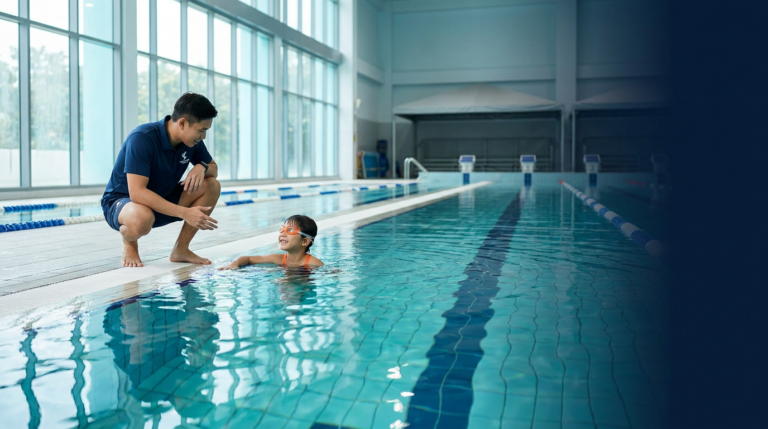
Private lessons offer one-on-one (or small group) instruction, allowing the coach to tailor every aspect of the session to the individual learner. This format is particularly valuable for swimmers who are anxious in the water, need to catch up to a specific level quickly, or are preparing for competitive assessments and want focused technical feedback. It's also a practical choice for adult learners who may feel self-conscious in a group setting.
The duration of swimming courses in Singapore varies considerably depending on the programme type and the learner's starting point. There is no single fixed timeline — progress is driven by individual development rather than a rigid schedule.
Most swimming lessons run for 30 to 45 minutes per session, with younger children (under 5) typically in 30-minute classes to match their shorter attention spans. Older children and adults generally attend 45-minute to 1-hour sessions. For SwimSafer 2.0, the number of sessions needed to pass each stage depends on the learner's starting ability and consistency of attendance, but most students working through stages systematically can complete one to two stages per term (roughly 10 to 12 weeks).
Competitive swimming squads operate on a different model altogether — training is ongoing, year-round, and typically involves three to six sessions per week as athletes progress. Specialty programmes like artistic swimming or water polo also run in structured terms with registration per season. The key point is that swimming education is not a short course you complete once; it is a progressive journey, and the best swim schools structure their programmes to support that long-term development.
Pricing for swimming courses in Singapore reflects the type of instruction, class size, and the credentials of the coaching team. As a general guide:
It's worth noting that investing in quality swimming instruction from a certified, experienced coach often yields faster and safer progress — which can actually reduce the total number of sessions needed over time. When comparing prices, look at instructor qualifications, student-to-coach ratios, and programme structure alongside the fee.
Walking into a first swimming lesson — whether for yourself or your child — can feel nerve-wracking. Knowing what typically happens helps set realistic expectations and puts everyone at ease.
Most structured swimming lessons follow a consistent format. Sessions usually begin with a brief warm-up, either on the pool deck (stretching) or in shallow water, to prepare muscles and help students transition mentally into the pool environment. From there, the coach will introduce or revisit a specific skill — this might be floating on the back, kicking technique, or arm stroke coordination — and demonstrate before guiding students through practice.
In beginner classes, a significant portion of early sessions is devoted to water confidence: getting the face wet, blowing bubbles, floating with support, and learning to push off from the wall. These foundational skills are non-negotiable — confidence and comfort in the water underpin every technical skill that follows. Parents joining parent-accompanied toddler classes should dress to get wet and be prepared to actively participate alongside the instructor.
Sessions typically close with a brief cool-down or review, and good coaches will provide feedback to parents after class on what was covered and what to practise before next time. Over the course of several sessions, you'll notice a clear and measurable progression — and that progress is one of the most rewarding parts of structured swimming education.
With so many options available across the island, choosing the right swimming course comes down to a few clear criteria. First, define the goal: Is the priority water safety, recreational fitness, national certification, or competitive racing? The answer will immediately narrow your options significantly. Second, consider the learner's current level and age — a 3-year-old joining for the first time has very different needs from a 12-year-old aiming for competitive squad entry.
Third, assess the credentials of the swim school and its coaches. Look for programmes led by coaches with recognised qualifications (such as those aligned with SSPA or Sport Singapore frameworks), and check whether the school has an established track record with verifiable outcomes. Finally, consider logistical factors like venue location, class schedules, and whether the pool environment is appropriate for the learner's needs — heated pools, for example, make a significant difference for infant and toddler classes.
SPEEDISWIM operates across multiple venues including international schools and country clubs, offering a structured environment for learners from first splash through to national-level competition — all under one organisation with over two decades of proven aquatic education experience.
Swimming courses in Singapore are more varied, more structured, and more accessible than many people realise. Whether you're starting with SwimSafer 2.0, exploring competitive pathways, or diving into a specialty sport like artistic swimming or water polo, there's a programme designed to meet you exactly where you are. The key is choosing a swim school with the experience, qualified coaches, and progressive framework to take you — or your child — from the first kick to long-term aquatic confidence.
At SPEEDISWIM, over 25 years of dedicated aquatic education has produced more than 25,000 swimmers, over 1,000 athletes, and dozens of national representatives. That track record speaks for itself.
Interested in joining a swimming course with SPEEDISWIM?
Whether you're enrolling your child in their first lesson or pursuing competitive swimming, our team is ready to help you find the right programme.