Singapore has produced world-class swimmers — from Joseph Schooling's historic Olympic gold to a generation of national team athletes who compete on the regional and global stage. Behind every elite result is a structured journey that begins long before the first race: one built on water safety fundamentals, technical coaching, competitive exposure, and consistent development. Whether you are a parent exploring options for your child or a young swimmer ready to take training seriously, understanding competitive swimming in Singapore is the first step toward making the most of what this sport offers.
This guide covers everything you need to know — from the SwimSafer 2.0 foundations that underpin all progression, through club structures and race formats, to the national pathway that can take talented swimmers from local meets all the way to international competition. It also explains how programs like those offered by SPEEDISWIM are designed to bridge the gap between learning to swim and competing at the highest level.
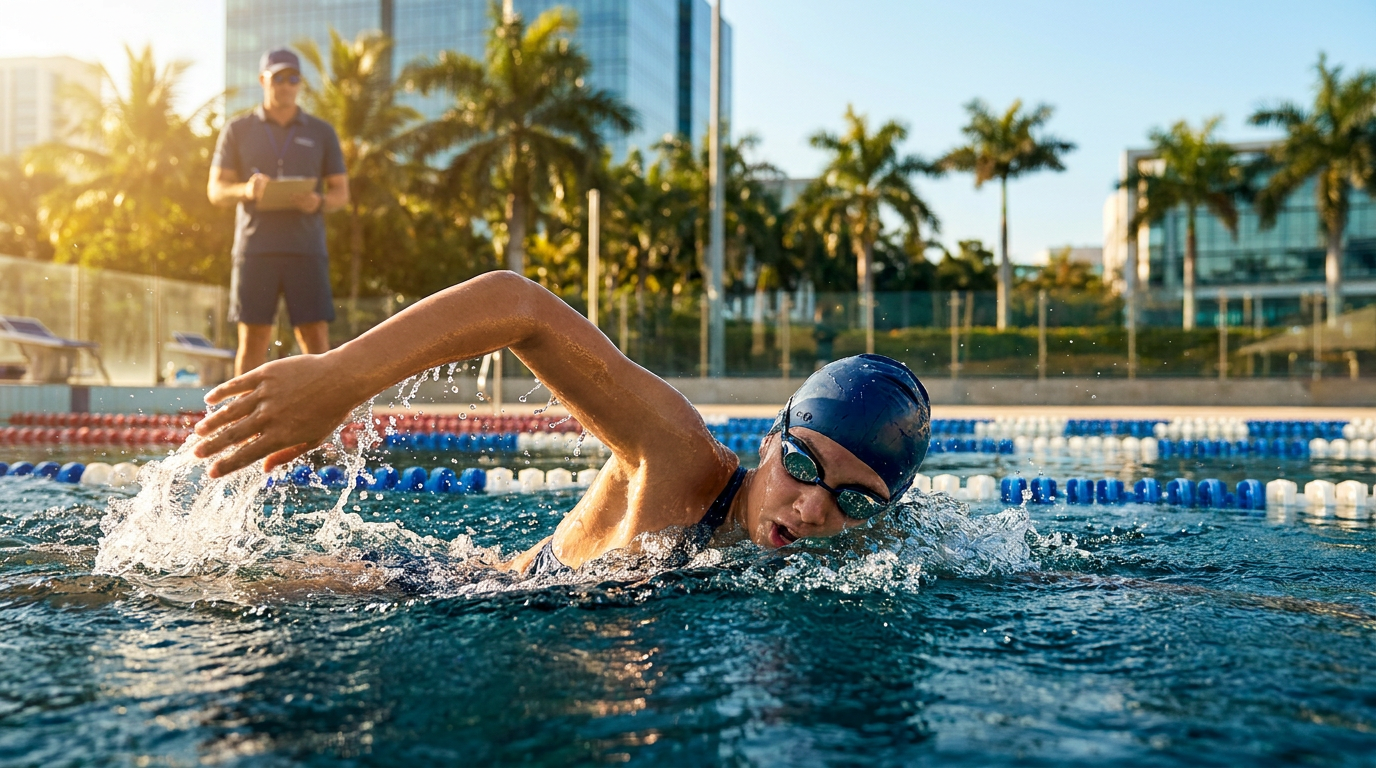
Competitive swimming is the organised, timed racing of swimmers across regulated distances and strokes in a pool setting. Unlike recreational swimming, competitive swimming involves structured training under qualified coaches, participation in sanctioned meets and time trials, adherence to technical stroke rules, and progressive performance benchmarking. In Singapore, competitive swimming is governed by Singapore Swimming Association (SSA), which oversees everything from grassroots competitions through to national and international representation.
The sport is structured around four primary strokes — freestyle, backstroke, breaststroke, and butterfly — as well as individual medley (IM) events that combine all four. Competitions take place in either a 25-metre short-course pool or a 50-metre long-course pool, and swimmers are classified by age group and qualifying time standards. For many athletes in Singapore, competitive swimming also opens doors to other aquatic disciplines including artistic swimming, water polo, and diving.
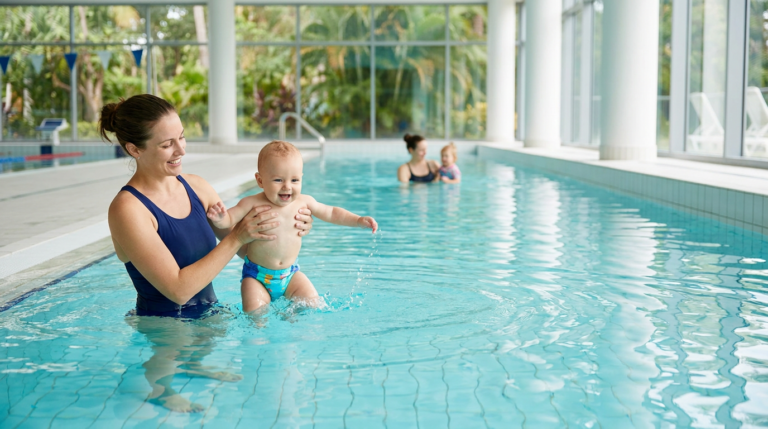
Before any young swimmer enters the competitive stream, they must first build a safe and technically sound relationship with water. In Singapore, this foundation is provided through the SwimSafer 2.0 programme, a nationally recognised curriculum developed by the National Water Safety Council in collaboration with Sport Singapore. Introduced as an update to the original SwimSafer initiative launched in 2010, SwimSafer 2.0 was refined between 2016 and 2017 to place greater emphasis on skill development alongside water safety and personal water survival education.
The programme is designed for people of all ages and varying abilities, progressing through six structured stages. Each stage builds on the last, developing stroke technique, endurance, and the confidence to handle real-world aquatic environments. Importantly, SwimSafer 2.0 is not just a prerequisite for recreational swimmers — it establishes the technical baseline that competitive coaches build upon. Swimmers who complete the full SwimSafer 2.0 pathway arrive at competitive squads with correct stroke mechanics, breath control, and the spatial awareness needed to train effectively in a competitive lane environment.
SPEEDISWIM is an official Non-ActiveSG Pool CAMS (Centralised Assessment Management System) Centre at Orchid Country Club, meaning SwimSafer 2.0 assessments conducted here are formally recognised under the national framework. For families looking to transition their child from foundational lessons to competitive training, completing the SwimSafer programme with a structured and assessment-accredited provider ensures there are no technical gaps when that transition is made.
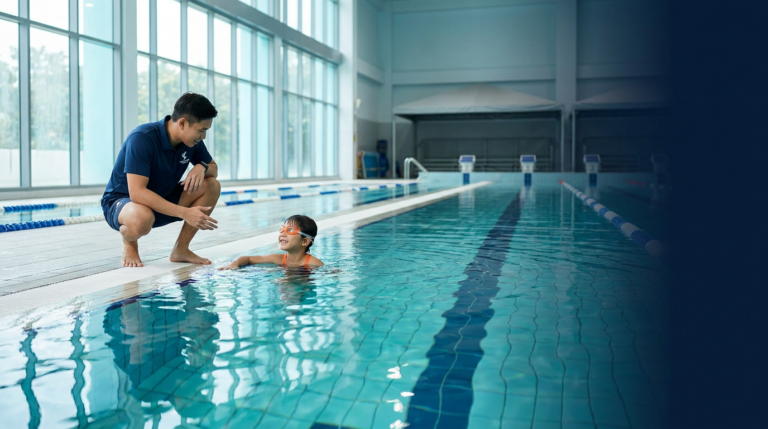
The journey into competitive swimming typically follows a clear progression. Most swimmers begin in a group learn-to-swim environment, where they develop basic water confidence and stroke foundations. In Singapore, group swimming lessons generally range from $35 to $55 per session, making them an accessible entry point for most families. As a swimmer's skills develop, private or semi-private coaching becomes a useful tool for accelerating technical progress, with pricing typically ranging from $60 to $120 per session depending on the coach's qualifications and session format.
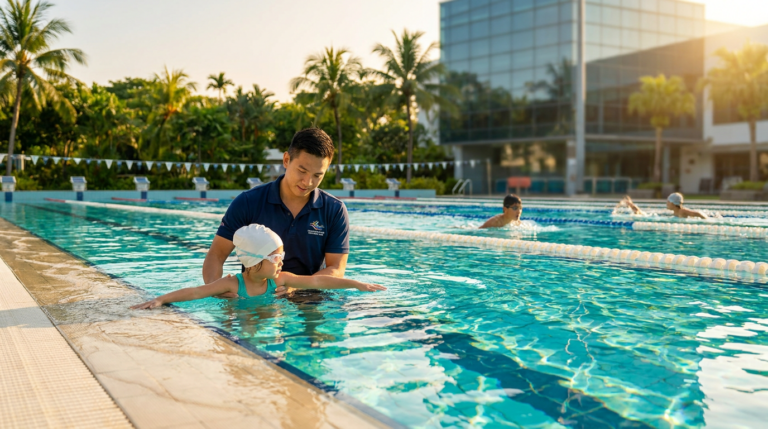
Once a swimmer demonstrates competency in all four strokes, sufficient stamina for repeated training sets, and the maturity to follow structured coaching instructions, they become ready for squad-based competitive training. This transition is a significant one — squad sessions involve higher training volumes, timed sets, race-pace work, and regular performance tracking. It is worth noting that the transition does not need to happen all at once. Many young swimmers benefit from a period of parallel participation, attending regular squad sessions while still refining stroke mechanics in a smaller group setting.
Singapore's competitive swimming calendar offers multiple levels of competition, from internal club time trials to major national championships. Understanding the formats helps swimmers and parents set realistic short- and long-term goals.
Time trials are the most common entry point for newer competitive swimmers. These sessions are held within clubs or squads and serve to establish baseline times that coaches use to guide training. Time trials also provide a low-pressure race environment where young athletes can experience race conditions — blocks, timing systems, officials — without the pressure of a full meet.
Sanctioned swim meets are officially governed competitions that produce times recognised by SSA. These include:
Races are swum in heats format for qualification, with finals determining medal positions. Swimmers are seeded by submitted times, with the fastest swimmers assigned to centre lanes. For younger athletes, simply swimming a personal best in a sanctioned meet is a meaningful competitive achievement — and one that coaches track closely to identify developmental progress.
Competitive swimmers in Singapore train through clubs or swim squads affiliated with SSA. These organisations provide structured training programmes, access to sanctioned competitions, and the coaching expertise required for systematic performance development. Club training typically takes place across multiple sessions per week, with higher-level competitive swimmers training six days a week at volumes that can exceed 40,000 metres weekly at the elite level.
For younger or developing competitive swimmers, training frequencies of two to four sessions per week are more common and appropriate. SPEEDISWIM's competitive swimming programme is structured to provide this kind of progressive, age-appropriate training environment. Operating across multiple venues including international schools and country clubs, SPEEDISWIM's competitive squads are coached by professionally qualified instructors with a proven record of developing athletes for national representation. The programme has produced over 1,000 competitive athletes across aquatic disciplines, with more than 50 swimmers selected for National Youth and National Teams.
The national competitive swimming pathway in Singapore is a structured development framework that takes swimmers from grassroots participation to international representation. It is designed to identify talented swimmers early, provide appropriate coaching and competition exposure at each stage, and support the long-term athlete development model that minimises burnout and maximises peak performance.
The pathway broadly moves through the following stages:
The pathway is not linear for every swimmer. Some athletes develop rapidly and move through stages early; others take longer but still reach high-performance levels with consistent training and quality coaching. The key is remaining in a structured, coached environment that provides progressive challenge at every stage.
One of the most practically significant aspects of competitive swimming in Singapore is the Direct School Admission (DSA) programme, which allows student-athletes with demonstrated competitive swimming achievements to apply for entry into secondary schools and junior colleges through a talent-based pathway. DSA applications are supported by competition records, coach endorsements, and trial performances, making it essential that developing swimmers compete in sanctioned meets and train under recognised programmes from a young age.
SPEEDISWIM has a strong track record of supporting swimmers through the DSA pathway, having produced athletes who have used their competitive swimming credentials to gain admission to top secondary schools and junior colleges in Singapore. The organisation's most prominent alumni include SNOC Sportsgirl of the Year 2018, Debbie Soh Li Fei — a product of SPEEDISWIM's development environment. For families who understand that competitive swimming can serve both athletic and academic goals, this dual benefit makes early entry into a quality competitive programme a strategically sound decision.
Parents considering competitive swimming for their child should have a realistic picture of what the sport demands. In terms of time, competitive squad training typically requires two to five sessions per week, each lasting 60 to 90 minutes. Add travel time, swim meets on weekends, and the occasional early-morning training session, and competitive swimming becomes a meaningful commitment for the whole family.
Financially, group squad sessions generally fall within the same pricing band as quality group lessons — around $35 to $55 per session — though this varies by programme level and venue. Equipment costs (swimsuits, goggles, training fins, pull buoys, kickboards) add an initial outlay of several hundred dollars, and competition registration fees apply for sanctioned meets. That said, the investment in a well-structured competitive programme pays dividends well beyond the pool: discipline, goal-setting, resilience, time management, and the deep satisfaction of earned improvement are skills that competitive swimmers carry throughout their lives.
With numerous swim clubs, academies, and private coaching options available in Singapore, choosing the right programme requires careful consideration. The most important factors are coach qualifications, training structure, competition access, and the programme's track record in athlete development. A good competitive programme should offer clear progression criteria, regular performance feedback, and an environment that balances challenge with support.
SPEEDISWIM has been operating in Singapore since 1998 and has trained more than 25,000 students across its network of venues. Its competitive swimming programme is built on the same philosophical foundation as its learn-to-swim and SwimSafer offerings — structured, safety-first, and coach-led. For families looking for a programme that can take a swimmer from their first strokes all the way to national competition, SPEEDISWIM's integrated pathway from SwimSafer 2.0 through to competitive squad training represents one of Singapore's most established and proven development environments.
Beyond competitive swimming, SPEEDISWIM also offers pathways into complementary aquatic disciplines that can enrich a young athlete's development, including artistic swimming, water polo, and underwater hockey. Exploring these options alongside competitive swimming can broaden an athlete's aquatic skill set and sustain long-term engagement with the sport.
Competitive swimming in Singapore is a well-structured, nationally supported sport with a clear pathway from water safety education through to international representation. It demands commitment, but rewards it generously — in performance improvements, academic opportunities through DSA, and life skills that extend far beyond the pool. The most important step is choosing the right programme from the outset: one with qualified coaches, proven athlete outcomes, and a development philosophy built for the long term. With over 25 years of experience and more than 1,000 competitive athletes developed across aquatic disciplines, SPEEDISWIM offers exactly that kind of environment for Singapore's next generation of competitive swimmers.
Whether your child is just completing their SwimSafer stages or is ready to join a competitive squad, SPEEDISWIM's experienced coaches are here to guide the next step. With venues across Singapore and a development pathway trusted by over 25,000 students, we are ready to help your swimmer reach their potential.