Few experiences match the joy of watching your baby kick their tiny legs in the water for the very first time. But beyond the adorable moments, enrolling your child in baby swimming classes in Singapore is one of the most meaningful early investments you can make in their health, safety, and development. Water surrounds us on this island nation, and building a confident, safe relationship with it from an early age can be genuinely life-changing.
Whether you're a first-time parent wondering if your six-month-old is ready for the pool, or a toddler parent looking for a structured program that goes beyond splashing around, this guide covers everything you need to know. From the developmental science behind early aquatic exposure to Singapore's national SwimSafer 2.0 framework, we'll walk you through when to start, what the benefits are, what to look for in a class, and how to keep your little one safe every step of the way.
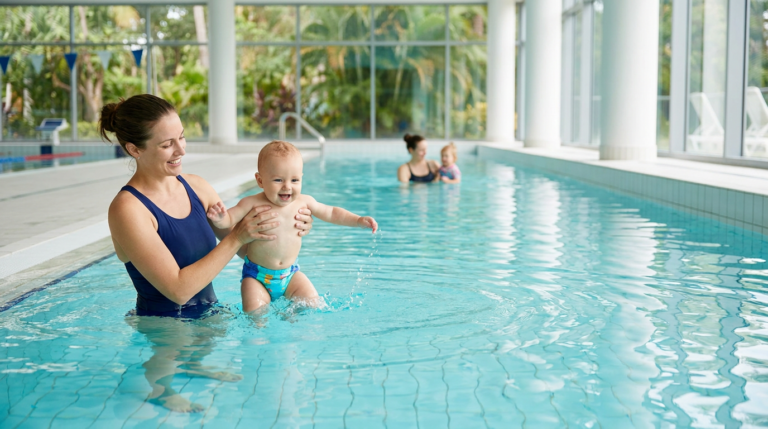
One of the most common questions parents ask is simply: when is the right time to start? The good news is that babies can be introduced to water earlier than most people assume. Most paediatric and aquatic organisations recommend that babies can begin water familiarisation activities from around 4 to 6 months of age, once they have sufficient head and neck control. At this stage, classes are not about formal stroke technique but about building comfort, trust, and a positive association with the water.
Structured swimming lessons with more deliberate skill-building typically begin between 12 months and 3 years, as children develop the motor coordination and cognitive ability to follow simple instructions. Singapore's SwimSafer 2.0 programme, the national framework for water safety education, formally caters to children from around 5 years old onwards with graded stages. However, many certified aquatic centres, including those offering parent-accompanied water play classes, begin nurturing water confidence well before that. The key principle is that earlier positive exposure lays a stronger foundation for safe, skilled swimming later in life.
Starting swimming lessons early does far more than teach a child to move through water. Research published in journals including Early Human Development has found that children who participate in early aquatic programmes demonstrate measurable advantages in motor skill development, balance, and even cognitive function. Here's a closer look at what early swimming can offer your child.
Swimming engages virtually every major muscle group, making it one of the most comprehensive forms of physical activity a young child can experience. For babies and toddlers, the resistance of water strengthens core muscles, improves coordination, and supports healthy cardiovascular development in a low-impact environment that is gentle on developing joints. Children who swim regularly from a young age also tend to develop stronger gross motor skills, such as balance and bilateral coordination, compared to non-swimming peers.
Singapore's proximity to water, whether the sea, public pools, or condominium facilities, makes water safety education a genuine priority rather than an optional extra. Drowning is one of the leading causes of accidental death in children globally, and early aquatic training gives children both the skills and the instincts to respond safely in an unexpected water situation. While no level of swimming ability makes a child "drown-proof", early swimming education paired with consistent water safety messaging dramatically reduces risk. Programmes built around frameworks like SwimSafer 2.0 integrate personal water survival skills directly alongside swimming technique, ensuring children learn to float, tread water, and call for help from the earliest stages.
Learning to swim in a structured class setting encourages children to follow instructions, persist through challenges, and build self-confidence, all foundational social-emotional skills. Studies have suggested that children in early aquatic programmes show improved concentration and language development, likely linked to the sensory-rich nature of the water environment and the structured interaction with coaches and peers. For babies, the skin-to-skin contact during parent-accompanied classes also strengthens the parent-child bond, while the novelty of the aquatic environment stimulates healthy neurological development.
Children who are introduced to swimming positively and early are far more likely to pursue it as a recreational or competitive activity as they grow. In Singapore, this can open doors to competitive swimming, artistic swimming, water polo, and other aquatic disciplines that provide physical outlets, social connection, and even pathways to national representation.
Before your child takes their first lesson, it is essential to understand the non-negotiable safety principles that should govern every aquatic experience. Even in a supervised class setting, parental awareness and vigilance remain irreplaceable.
Enrolling in a programme that takes safety seriously as a curriculum priority, not just a background consideration, makes a significant difference. This is precisely where structured, accredited programmes stand apart from informal swimming sessions.
For parents in Singapore, understanding SwimSafer 2.0 is fundamental to making informed decisions about swimming education. SwimSafer was originally launched in 2010 as a national initiative by the National Water Safety Council in collaboration with Sport Singapore (formerly the Singapore Sports Council). After a comprehensive review in 2016 and 2017, the programme was refreshed into its current iteration: SwimSafer 2.0.
The programme is designed to teach people of all ages and varying abilities not only to swim, but to be genuinely safe in, on, and around water. What distinguishes SwimSafer 2.0 from a standard learn-to-swim curriculum is its dual emphasis on skill development and personal water survival education. Participants progress through six structured stages, with each stage assessed against nationally standardised competencies that include swimming strokes, survival floating, treading water, and practical water safety knowledge.
Completing SwimSafer 2.0 stages provides children with nationally recognised certifications, which are valuable for school admissions (including Direct School Admission pathways for talented swimmers) and serve as a trusted benchmark for parents. Centres like SPEEDISWIM that deliver the SwimSafer programme as an official assessment centre provide structured progression that goes far beyond casual swim lessons.
Many parents feel a little anxious before their child's first lesson, unsure of what the class will involve or how their baby will react. Understanding the typical structure helps set realistic expectations and allows you to prepare your child effectively.
For the youngest participants, typically under 18 months, classes are usually parent-accompanied. A coach guides caregivers through water familiarisation activities such as gentle submersions, back floating with support, and kicking exercises, all set to songs and games that make the experience fun and non-threatening. The goal at this stage is emotional comfort and sensory exploration rather than formal technique.
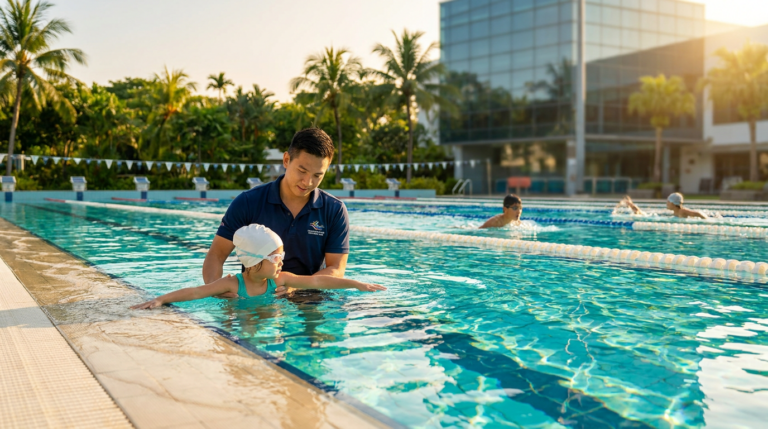
As children enter the toddler years (around 18 months to 3 years), classes progressively introduce more structured activities. Children begin practising supported floating, basic kicking on the pool wall, and blowing bubbles to develop breath control. Group classes at this age are typically small (often 4 to 6 children) to ensure every child receives individual attention.
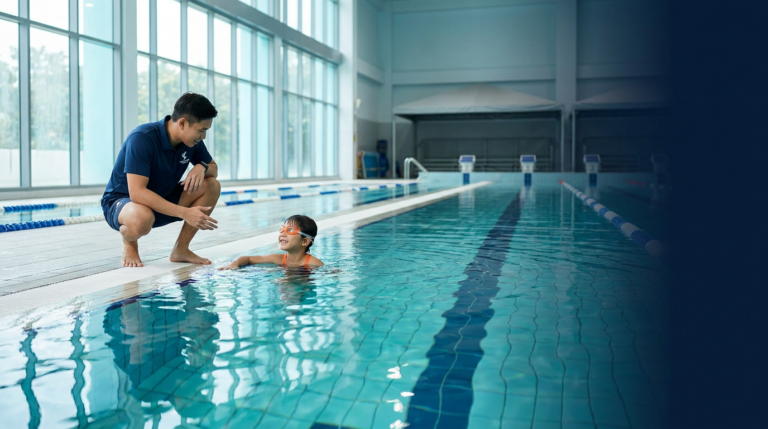
From around 4 to 5 years old, children can typically transition into independent lessons without a parent in the water, working through the formal stages of the SwimSafer 2.0 curriculum. By this age, most children have the attention span and physical ability to follow a structured lesson and make measurable progress session to session.
Singapore has a wide range of swimming programmes available, from community club classes to private academies and school-based programmes. Not all are created equal, and it pays to evaluate your options carefully before committing.
Consider the following factors when making your decision:
A programme that treats swimming as both a life skill and a potential sporting journey, rather than simply a timed course to complete, will serve your child's development far better in the long run.
Cost is a practical consideration for most families, and it's worth understanding the general pricing landscape for swimming lessons in Singapore before budgeting. Group swimming lessons typically range from $35 to $55 per session, depending on the programme, venue, and the child's age group. These classes offer structured learning in a social setting and represent excellent value for most families.
For parents who prefer more personalised instruction, private or semi-private lessons are also available, generally ranging from $60 to $120 per session. Private lessons can be particularly beneficial for children who are especially nervous around water, have specific developmental needs, or are training toward competitive goals where individual coaching makes a meaningful difference to progress.
When evaluating cost, factor in the value of the full programme rather than the price per session alone. A centre with accredited coaches, nationally recognised certifications, a proven track record, and clear progression pathways offers substantially more value than an inexpensive class with limited structure or oversight.
Enrolling your baby or toddler in swimming classes is one of the most rewarding decisions a Singapore parent can make. The benefits extend well beyond the pool: stronger bodies, sharper minds, greater confidence, and crucially, the water safety skills that can one day save a life. Starting early, choosing a credentialed programme, and maintaining consistent attendance gives your child the very best foundation in this essential life skill.
With over 25 years of experience, more than 25,000 students trained, and a curriculum grounded in the national SwimSafer 2.0 framework, SPEEDISWIM has been helping Singapore families raise water-safe, water-confident children since 1998. Whether your goal is water safety, recreational enjoyment, or nurturing a future competitive athlete, our structured programmes, qualified coaches, and multiple venue locations across Singapore are here to support your child's aquatic journey from the very first splash.
Give your child the gift of water confidence with Singapore's trusted aquatic experts. Whether you're just starting out or looking to progress to the next level, SPEEDISWIM's professionally qualified coaches are ready to guide your family every step of the way.