Ask any parent what skill they want their child to have for life, and water safety almost always makes the list. But what if swimming offered far more than safety? A growing body of research — and the real-world experience of coaches who have worked with tens of thousands of children — confirms that learning to swim is one of the most powerful developmental investments a parent can make. Swimming supports child development across three critical dimensions: physical motor skills, cognitive function, and emotional confidence. Whether your child is dipping their toes into the water for the first time or training toward competitive goals, the benefits begin the moment they enter the pool. This article explores the science and the stories behind what swimming does for developing minds and bodies, and why structured swim lessons are worth every lap.
In Singapore, where water is never far away — from coastal beaches to reservoirs and community pools — knowing how to swim is considered a fundamental life skill. Yet the value of swimming extends well beyond survival. Unlike most sports, swimming is a full-body, multi-sensory activity. Children must coordinate breathing with movement, manage buoyancy, read spatial cues underwater, and regulate their bodies in an environment that is fundamentally different from land. This unique combination of challenges makes the pool an extraordinarily rich developmental environment, engaging physical, neurological, and emotional systems all at once.
For young learners especially, this multi-dimensional engagement is particularly significant. During the early years of childhood, the brain is in a period of rapid growth and heightened neuroplasticity — meaning it is exceptionally receptive to new learning. Activities that challenge coordination, rhythm, and spatial awareness during this window have lasting effects on how neural pathways form. Swimming, with its demands on timing, balance, and bilateral body coordination, is ideally suited to stimulate this developmental window in ways that most land-based activities simply cannot replicate.
Motor skill development is one of the most well-documented benefits of early swimming. Researchers at Griffith University in Australia conducted a landmark study following over 7,000 children and found that children who participated in early swimming lessons reached key developmental milestones — such as balance, coordination, and fine motor tasks — significantly earlier than their non-swimming peers. These gains appeared across children of all socioeconomic backgrounds, suggesting the pool itself is the key variable.
The mechanics of swimming explain why. Every stroke requires bilateral coordination, meaning the left and right sides of the body must work together in a deliberate, rhythmic pattern. Freestyle demands alternating arm pulls with a rotational kick; breaststroke requires symmetrical, simultaneous limb movements; backstroke builds spatial orientation and core stability. Each style trains different muscle groups and movement patterns, giving children a comprehensive physical education that few other activities can match at a young age.
Beyond the pool, these motor gains transfer meaningfully to daily life. Children who develop strong proprioception (awareness of where their body is in space) and core stability through swimming tend to perform better in other sports, show improved handwriting and fine motor control, and even demonstrate better posture. The physical literacy built in the water becomes a foundation for confidence in movement on land.
The connection between swimming and brain development is one that continues to attract scientific attention. The same Griffith University research found that early swimmers outperformed their peers in cognitive tasks including mathematical reasoning, oral expression, and story recall. While swimming is not a substitute for classroom learning, the cognitive demands of the pool appear to prime young brains for academic challenges in meaningful ways.
One explanation lies in how swimming requires children to process multiple streams of information simultaneously. A child learning to swim must listen to instructions, feel the water resistance against their body, manage their breathing cycle, track their position in the pool, and adjust their technique in real time. This constant multi-tasking in a low-stakes, supportive environment is excellent training for the kind of executive function — attention, working memory, and cognitive flexibility — that underpins academic success.
There is also a neurochemical dimension to consider. Aerobic exercise, including swimming, consistently promotes the release of brain-derived neurotrophic factor (BDNF), sometimes called "Miracle-Gro for the brain." BDNF supports the growth of new neurons and the strengthening of existing neural connections, with particular impact on the hippocampus — the region associated with memory and learning. Regular swimming sessions, therefore, do not just build fitter bodies; they contribute to a more capable, resilient brain.
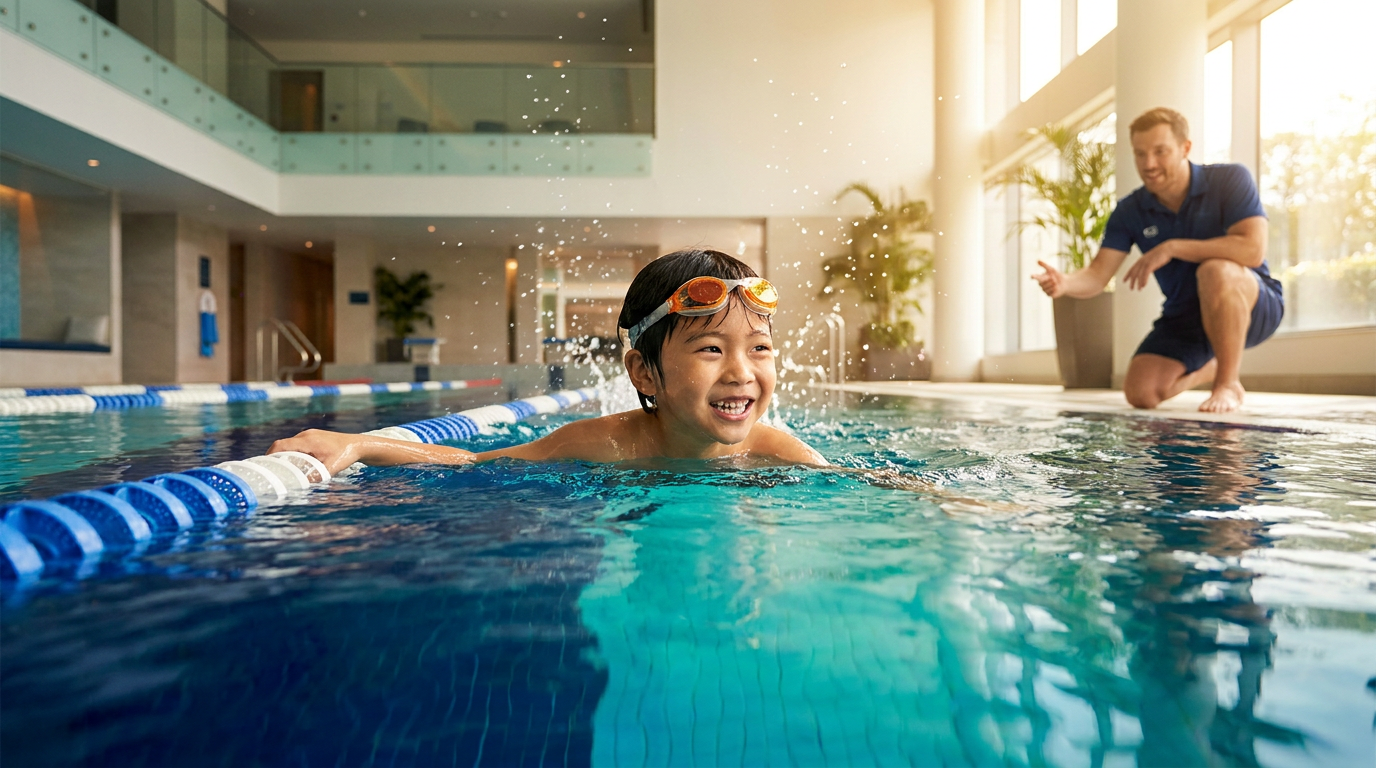
Perhaps the most underappreciated benefit of swimming for children is what it does for their sense of self. Learning to swim is inherently challenging. Children encounter genuine fear — of water, of submersion, of failure — and must work through it incrementally. Each milestone reached, from blowing bubbles underwater to completing a first lap unaided, carries real emotional weight. These small victories accumulate into something profound: the belief that effort leads to progress, and that difficult things can be mastered.
This is not just anecdotal. Psychologists refer to this as self-efficacy, the conviction that one is capable of achieving specific goals through sustained effort. Children who develop strong self-efficacy in one domain — say, learning to float independently for the first time — tend to apply that same growth mindset to new challenges in school and social life. The pool becomes a rehearsal space for resilience.
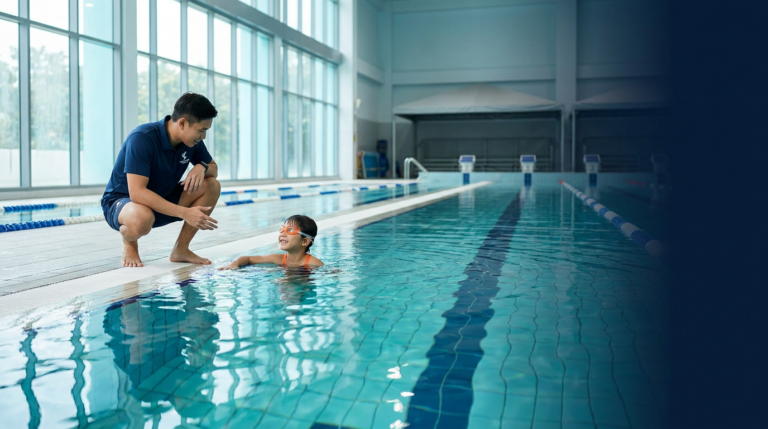
Group swimming lessons add another layer of emotional development. Children learn to take turns, encourage peers, listen to a coach in a group setting, and manage the experience of sometimes seeing classmates advance before them. These social dynamics nurture patience, empathy, and the ability to learn in community — skills that are every bit as important as stroke technique. For children who may struggle in traditional classroom settings, the pool can offer a refreshing arena where they find their footing and gain genuine peer recognition.
In Singapore, drowning remains one of the leading causes of accidental death among children, making water safety education not just beneficial but essential. The national SwimSafer 2.0 programme, developed through a collaboration between the National Water Safety Council and Sport Singapore, was designed to address this directly. Reviewed and refreshed in 2016-2017, SwimSafer 2.0 goes beyond teaching children how to swim — it equips them with personal water survival skills, hazard awareness, and the confidence to respond calmly in aquatic emergencies.
The programme is structured across progressive stages, allowing children of all ages and varying abilities to develop competency at a pace appropriate to their development. Each stage builds on the last, combining stroke proficiency with water safety knowledge so that children do not just learn to swim — they learn to be safe in, on, and around water in a wide variety of real-world contexts. SPEEDISWIM is proud to offer structured programmes aligned with SwimSafer 2.0 standards, taught by professionally qualified coaches, giving families the assurance that their children are receiving nationally recognised, safety-first aquatic education. You can learn more about our SwimSafer Programme and how it is structured for different age groups.
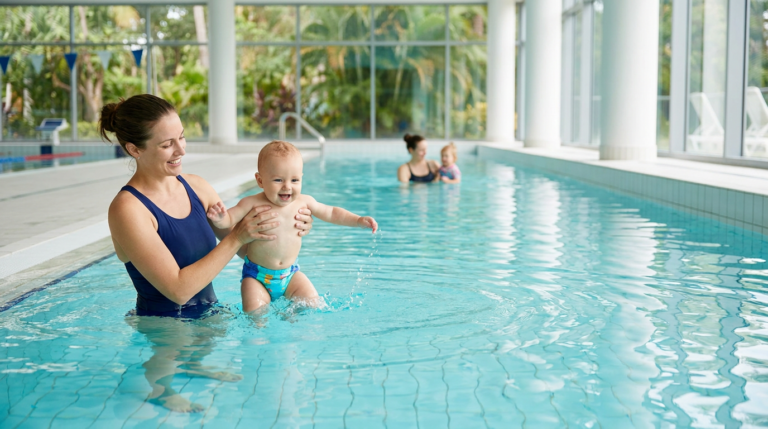
This is one of the most common questions parents ask, and the answer from research and experienced coaches alike is: earlier than most parents think. Most child development experts and aquatic education bodies recommend introducing children to the water from as young as six months through parent-and-child water familiarisation classes, with formal instruction typically beginning from around three to four years of age, depending on individual readiness.
The early years are optimal for building water confidence because young children have not yet developed the ingrained fear responses that can make later-stage learning more challenging. That said, it is never too late to start. Children who begin swimming at primary school age or even during adolescence can absolutely develop strong technique and water safety skills with the right coaching. What matters most is not the age at which a child starts, but the quality and consistency of instruction they receive once they do.
In Singapore, group swimming lessons typically range from $35 to $55 per session, while private or semi-private lessons are priced at $60 to $120 per session depending on the programme and coach expertise. For most families, group lessons offer an excellent balance of personalised attention and social learning — and the developmental benefits discussed throughout this article apply fully to this format.
Not all swimming instruction is equal. A structured, curriculum-based programme — one aligned with national standards and taught by qualified coaches — delivers substantially better developmental outcomes than informal lessons or unguided pool time. Structure matters because child development, whether physical, cognitive, or emotional, thrives on progressive challenge: skills built in the right sequence, at the right pace, with consistent reinforcement.
At SPEEDISWIM, this philosophy has guided our approach for over 25 years. Having trained more than 25,000 students since 1998 and groomed over 1,000 athletes across disciplines including competitive swimming, artistic swimming, water polo, and underwater hockey, we understand how to meet each child at their current level and build towards their full potential. Our programmes are structured to offer clear milestones, nationally recognised certifications, and the kind of long-term coaching relationships that produce not just capable swimmers, but well-rounded young people.
For families whose children show exceptional aptitude, our competitive swimming programme provides a pathway to national representation. SPEEDISWIM has developed over 50 swimmers who have been selected for National Youth and National Teams, including SNOC Sportsgirl of the Year 2018. Whether your child is taking their first strokes or aiming for the podium, a structured environment makes all the difference in how far and how confidently they progress.
Swimming is one of the few activities that simultaneously builds physical coordination, sharpens cognitive function, develops emotional resilience, and teaches a life-saving skill. For children growing up in Singapore, where water is a constant presence, these benefits are especially relevant. The evidence from developmental research, combined with the lived experience of coaches who have worked with thousands of young swimmers, tells a consistent story: early, structured swimming instruction is among the most impactful investments a parent can make in their child's development. Whether your priority is water safety, academic readiness, sporting ambition, or simply giving your child a skill and confidence they will carry for life, the pool is a remarkable place to start.
With over 25 years of experience and more than 25,000 students trained, SPEEDISWIM offers structured, nationally certified swimming programmes designed to grow with your child — from their very first splash to the competitive pool. Our professionally qualified coaches are ready to help your child build skills, safety, and confidence in the water.