If you've ever stood at the edge of a pool wondering whether it's too late to learn — or asked yourself how long swimming lessons will actually take before your child is truly safe in the water — you're not alone. It's one of the most common questions coaches hear, and the honest answer is: it depends. But that doesn't mean the answer is unhelpful. With the right structure, qualified instruction, and consistent practice, most people reach meaningful milestones far sooner than they expect.
Whether you're enrolling a toddler for the very first time, signing up a school-age child for Singapore's SwimSafer 2.0 programme, or considering competitive swimming training, understanding realistic timelines helps you set the right expectations and choose the right programme from the start. This guide breaks down how long it typically takes to learn swimming by age group and goal, what factors speed up or slow down progress, and how to make every session count.
Before looking at timelines, it helps to define what "learning to swim" actually means — because the answer varies dramatically depending on your goal. For a three-year-old, success might mean floating on their back and blowing bubbles confidently. For a ten-year-old, it could mean completing all six stages of SwimSafer 2.0 and being able to tread water independently. For a teenager or adult, it might mean swimming 400 metres continuously or representing their school at an inter-school competition.
There is no single finish line. Swimming is a progressive skill — each milestone unlocks the next. This is why structured programmes, like those offered at SPEEDISWIM, organise learning into stages with clear outcomes at every level. Having that scaffolding in place makes progress visible and keeps motivation high for learners of all ages.
No two swimmers progress at exactly the same pace, and that's completely normal. Several variables influence how fast someone picks up swimming skills, regardless of age:
Understanding these variables helps you make smarter choices: selecting the right class size, lesson frequency, and programme structure from the outset sets your child (or yourself) up for steady, confident progress.
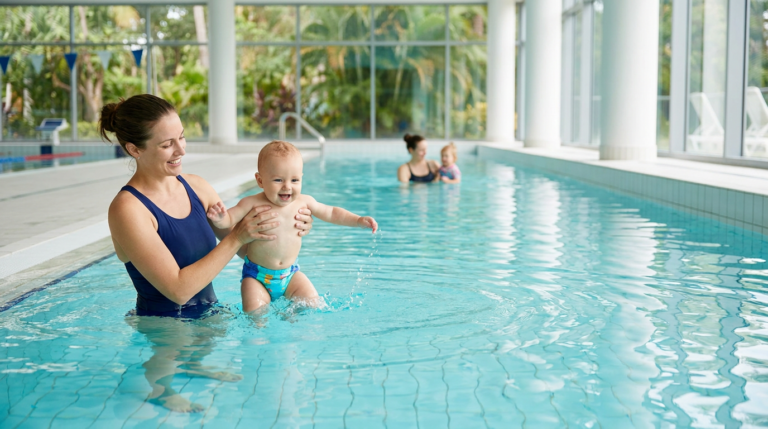
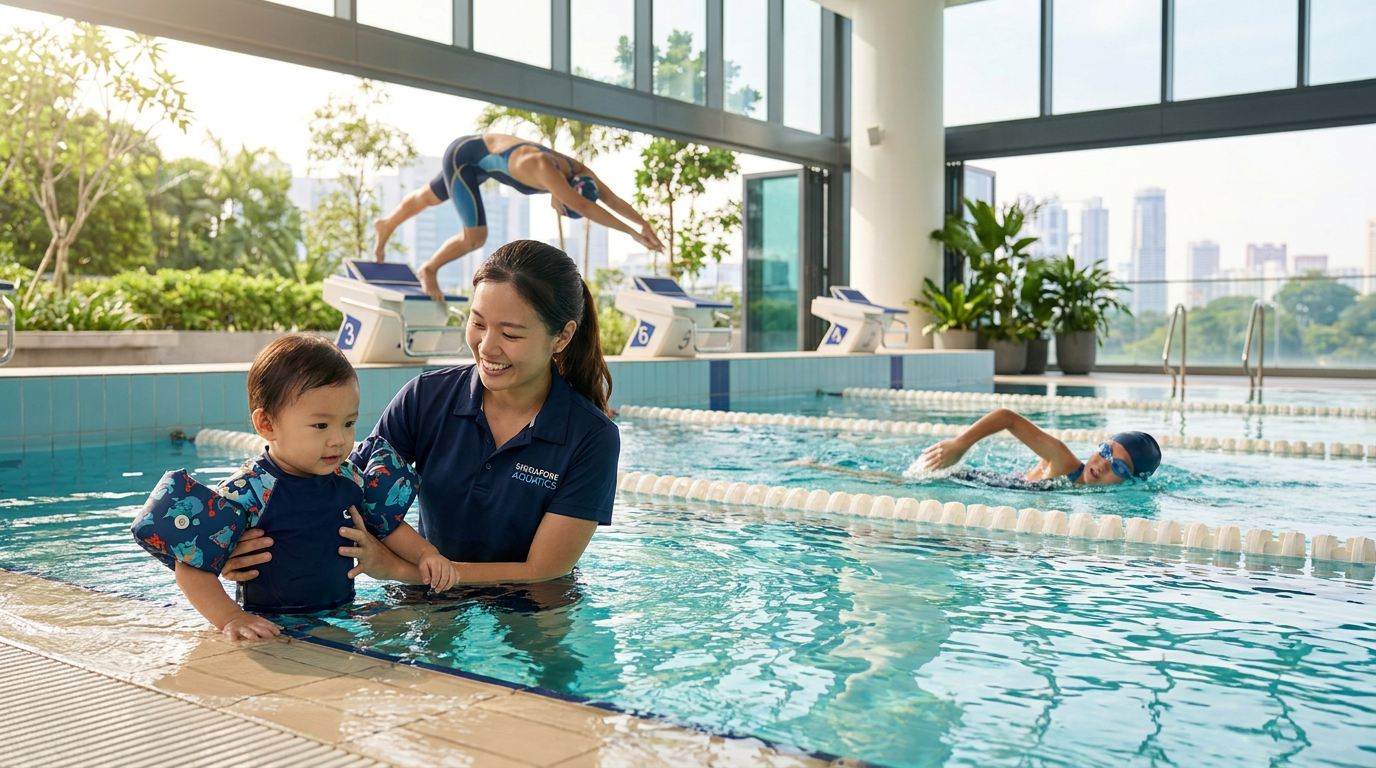
For most young children, the primary goal in the early stages is water familiarisation — learning to feel comfortable submerging, blowing bubbles, floating, and kicking. At this age, the focus is never on speed or perfection. It's about building a positive relationship with water that will serve them for life.
Most children aged 3 to 6 will take 6 to 18 months of consistent weekly lessons to become independently safe in the water at a beginner level. Some children progress faster, particularly those with regular pool access between lessons. Others, especially those with stronger anxiety or limited exposure, may take longer — and that's perfectly fine. Rushing this stage often backfires. The goal is confidence first, technique second.
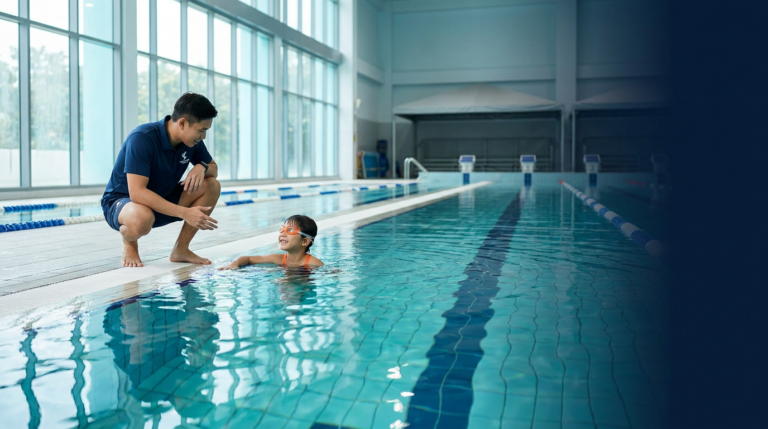
This is often considered the "golden window" for learning to swim. Children in this age group have better coordination, can follow instructions more reliably, and are usually less fearful than toddlers (or adults). Many children who start lessons at age 7 or 8 with no prior experience can achieve basic independent swimming within 3 to 6 months of two-sessions-per-week training.
For those working through Singapore's SwimSafer 2.0 framework, completing all six stages typically takes 1 to 3 years depending on lesson frequency and individual pace. Academically, this age group is also prime for identifying sporting talent — children who show aptitude and enjoyment can begin transitioning into more structured competitive swimming programmes from around age 8 or 9.
Teenagers who are complete beginners often worry that they've "missed the window" — they haven't. The teenage brain is excellent at processing technical instruction, which means stroke mechanics can actually be learned and corrected more efficiently than in early childhood. Most teens with no swimming background can reach a competent recreational level within 3 to 6 months of consistent training.
That said, teenagers who want to compete face a steeper hill if starting from scratch, simply because competitive swimmers at this age have typically been training for many years. However, other aquatic disciplines such as water polo or artistic swimming can still be accessible entry points for teens who discover a passion for the water later in life.
Adult learners face unique challenges — primarily psychological ones. Fear of judgment, water anxiety, and the sheer unfamiliarity of being in a horizontal, buoyant environment can slow early progress. But adults are also deeply motivated and goal-oriented, which is a significant advantage. Most adult beginners can learn to swim comfortably across a 25-metre pool within 3 to 6 months of twice-weekly lessons, assuming consistent attendance.
Adults who already swim but want to improve technique, endurance, or stroke efficiency can see meaningful gains within just a few weeks under qualified coaching. The key for adults at any level is not to compare themselves to childhood learners — their journey is simply different, not inferior.
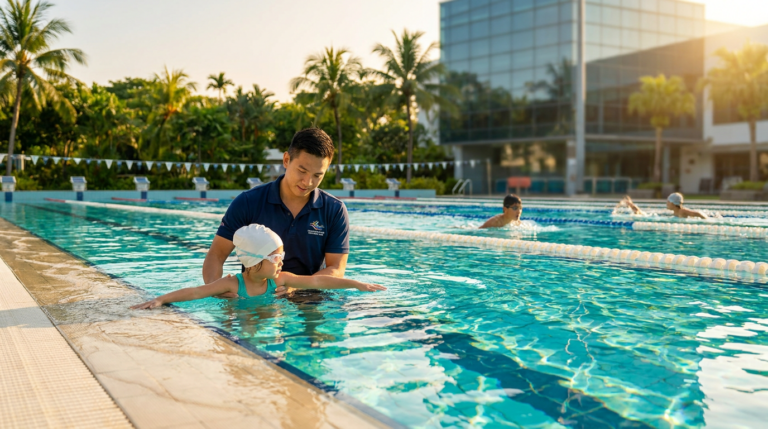
If the primary goal is ensuring that your child can keep themselves safe in the water — floating, treading water, and reaching safety in an emergency — this is achievable within 6 to 12 months for most children aged 5 and above with regular lessons. In Singapore, the SwimSafer 2.0 programme is specifically designed to achieve this, with water survival education embedded into every stage. Completing Stages 1 and 2 of SwimSafer 2.0 gives children a strong foundation in personal water survival.
Recreational swimming — the ability to swim laps comfortably using at least two strokes, turn at the wall, and feel genuinely at home in the water — typically takes 1 to 2 years for children starting from scratch, or 6 to 12 months for motivated adults with consistent training. At this level, swimmers can enjoy holiday pools, open-water environments, and community aquatic activities with confidence and safety.
Competitive swimming is a long-term pursuit. Most swimmers who go on to compete at inter-school, national, or elite levels have been training intensively for 3 to 7 years before reaching that stage. Talent identification typically begins around ages 7 to 10, and swimmers who enter structured competitive squads early have the advantage of technical refinement at a formative age.
SPEEDISWIM's competitive swimming programme has produced over 50 swimmers selected for National Youth and National Teams, including SNOC Sportsgirl of the Year 2018, Debbie Soh Li Fei. This level of achievement doesn't happen overnight — it's the result of years of deliberate, coached practice, proper periodisation, and a supportive training environment. For those with competitive aspirations, the earlier the structured training begins, the better — but it is never too late to start building the foundation.
For parents in Singapore, SwimSafer 2.0 is the most widely recognised benchmark for children's swimming development. Launched as a national initiative by the National Water Safety Council in collaboration with Sport Singapore, and updated from the original 2010 programme following a 2016–2017 review, SwimSafer 2.0 teaches people of all ages and varying abilities to swim safely and confidently. The programme places equal emphasis on stroke technique, water safety knowledge, and personal water survival skills — so children don't just learn to swim, they learn to be safe.
The programme comprises six progressive stages. Children who complete all six stages are considered competent, safe swimmers with strong foundational technique. SPEEDISWIM is an official Non-ActiveSG Pool CAMS (Centralised Assessment Management System) Centre at OCC (Orchid Country Club), meaning assessments conducted here are recognised nationally. You can explore SPEEDISWIM's SwimSafer programme for a structured, stage-by-stage pathway aligned with this national standard.
When budgeting for swimming lessons in Singapore, the format you choose will significantly affect both the pace of learning and the overall cost. Group lessons, which are the most common format for children enrolled in structured programmes like SwimSafer 2.0, typically range from $35 to $55 per session. These classes usually have small student-to-coach ratios to ensure adequate individual attention.
For learners who want accelerated progress, or for adults who prefer a more personalised approach, private and semi-private lessons are available. These command premium pricing, generally ranging from $60 to $120 per session, but the one-on-one feedback can significantly shorten the learning curve, particularly for those working through a specific skill barrier or preparing for assessment.
Beyond traditional lap swimming, SPEEDISWIM also offers a range of aquatic disciplines that complement swimming development and open new pathways for enthusiastic learners:
Exploring these disciplines alongside core swimming lessons keeps engagement high and develops well-rounded aquatic athletes.
Regardless of age or goal, there are a few universal habits that consistently separate fast-progressing swimmers from those who plateau:
Progress in swimming isn't always linear, and there will be sessions that feel harder than others. The swimmers who improve fastest are almost always the ones who show up consistently, stay curious, and trust the process.
There's no single answer to how long it takes to learn swimming, but there is a clear pattern among those who succeed: structured learning, consistent practice, and qualified coaching. Whether your child is taking their first tentative steps into the water at age four or you're an adult finally ready to conquer your fear of the deep end, the journey is entirely achievable — and deeply worthwhile.
With over 25 years of experience, more than 25,000 students trained, and a proven track record of developing elite national athletes, SPEEDISWIM offers programmes carefully designed to meet every swimmer where they are and take them exactly where they want to go. From Singapore's SwimSafer 2.0 pathway to competitive squads and specialised aquatic disciplines, there's a programme for every age, every goal, and every timeline.
Whether you're enrolling a young child in their first swim class or exploring competitive opportunities for a budding athlete, our team is here to help you find the right fit. Get in touch with SPEEDISWIM today and let's map out a swimming journey tailored to your goals.