Singapore may be a small island, but it punches well above its weight when it comes to swimming infrastructure. With over 30 public swimming complexes managed by ActiveSG spread across every corner of the island — plus dozens of private, club, and school facilities — there is rarely a good excuse not to take a dip. Whether you are a parent scouting a safe venue for your child's first swimming lesson, a competitive swimmer looking for a 50-metre lap pool, or simply someone who wants to cool off after a long week, knowing your options makes all the difference.
This complete directory and comparison guide covers the major public swimming pools in Singapore, breaks down admission fees, highlights what each facility offers, and explains how you can take your swimming journey further with structured programmes like SwimSafer 2.0. We have also included practical tips so your next pool visit goes as smoothly as possible.
Swimming is not just a leisure activity in Singapore — it is widely regarded as an essential life skill. The island's geography, tropical climate, and proximity to water mean that water safety awareness has real, everyday relevance. The government has long recognised this, investing heavily in accessible public pool infrastructure so that swimming remains affordable and available to all residents regardless of income or neighbourhood.
Public pools also serve a broader developmental role. They are the entry points for most Singaporeans into structured aquatic programmes, from national certification schemes to competitive pathways. For families with young children especially, knowing which public pool is closest, most well-equipped, and best suited to different ages and skill levels is genuinely useful information.
The vast majority of public swimming pools in Singapore are operated by ActiveSG, the national sports agency under Sport Singapore (SportSG). These complexes are strategically distributed across all planning regions of the island — North, South, East, West, and Central — ensuring that most residents live within a reasonable distance of at least one facility.
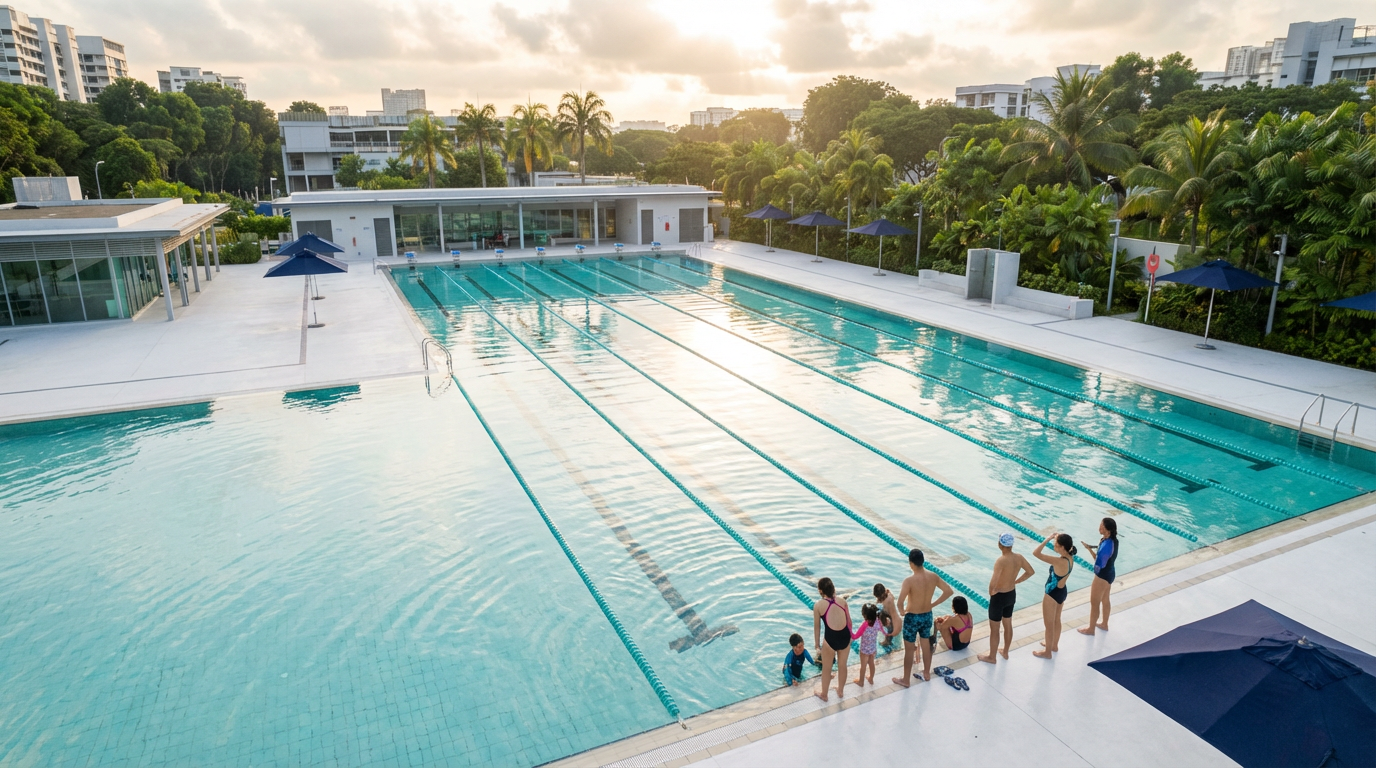
ActiveSG pools are standardised to a high level of maintenance and safety. Most complexes include a combination of pools catering to different needs: a main pool (often 50 metres), a teaching pool for beginners and children, a leisure or recreational pool, and sometimes a toddler wading pool. Trained lifeguards are on duty during all opening hours, and facilities typically include changing rooms, lockers, and shower areas.
To access ActiveSG pools, visitors need an ActiveSG account, which can be created via the ActiveSG app or at any swimming complex counter. New accounts come with a complimentary $100 credit, making the sign-up process genuinely worthwhile.
Below is an overview of notable public swimming complexes across Singapore's regions. This is not exhaustive — Singapore has more than 30 ActiveSG pools — but it covers the key facilities that are most widely used and best-equipped.
Beyond ActiveSG complexes, several private and club-based pools offer high-quality swimming environments that are accessible to members or through affiliated programmes. These include facilities at country clubs such as Orchid Country Club (OCC), international schools, and condominium complexes. These venues often offer a quieter swim experience, better lane availability during off-peak hours, and direct access to structured coaching programmes.
One of the greatest strengths of Singapore's public pool network is its affordability. ActiveSG swim admission fees are kept deliberately low to encourage regular participation across all age groups and income levels.
These rates are charged per swim session (typically defined as a two-hour window), and payment is processed through the ActiveSG app or at counter kiosks. Most pools operate from around 6:30am to 9:30pm daily, though specific hours vary by complex and may be affected by maintenance closures, competitions, or school bookings. It is always worth checking the ActiveSG app or official website before heading out.
For families who swim regularly, the annual membership packages available through ActiveSG provide substantial savings and are worth considering if you plan to visit more than a few times per month.
With so many options available, the right pool for you depends on what you are looking to get out of each visit. Here is a practical breakdown:
If you swim for fitness and want dedicated lane space, prioritise pools with 50-metre main pools such as Toa Payoh, Tampines, Kallang Basin, or Jurong East Swimming Complex. Weekday mornings (6:30am to 9:00am) tend to offer the cleanest lane availability, particularly outside school holiday periods.
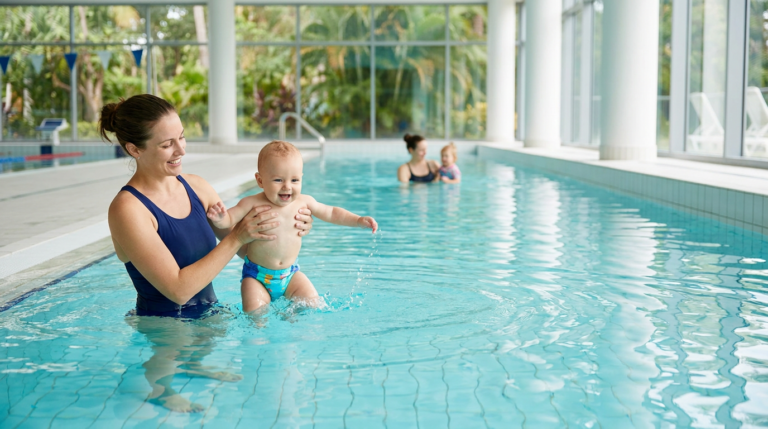
Look for complexes with a dedicated toddler or wading pool in addition to a teaching pool. Pasir Ris, Tampines, and Jurong East are popular family destinations given their leisure pool features. Water depth markers and the ratio of lifeguards to swimmers are important factors to observe on your first visit.
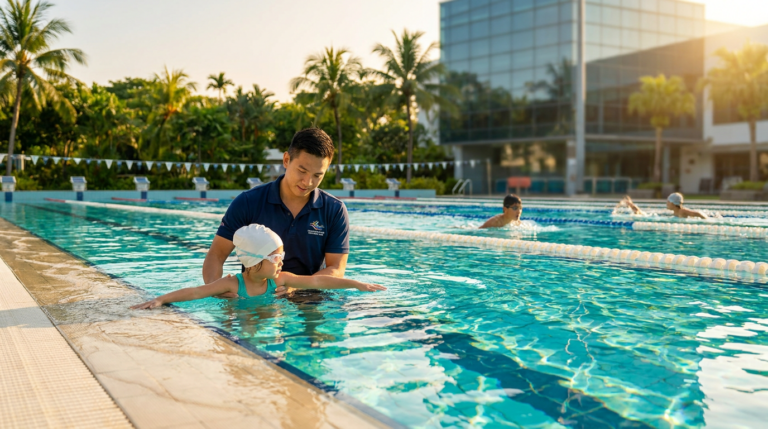
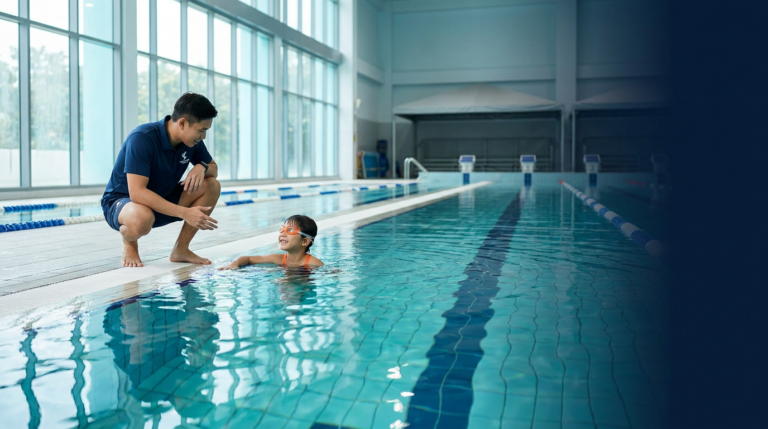
Teaching pools (typically shallow, 25-metre lanes) are available at most ActiveSG complexes and are the standard environment for group swimming lessons under the SwimSafer 2.0 programme. If your primary goal is learning rather than leisure, a pool attached to a certified swim school or aquatic centre will often give you better coaching oversight and programme structure.
Pools used for national-level competitions (Toa Payoh, Kallang Basin, OCBC Aquatic Centre) are where serious training environments exist. However, many competitive swimmers train at private aquatic centres or through school-based programmes that use both public and private pool venues. If your child has shown talent and interest in competitive swimming, a structured programme with qualified coaches matters far more than simply having access to a fast pool.
SwimSafer was launched in 2010 as an initiative by the National Water Safety Council in collaboration with SportsSG. The programme was reviewed and refreshed in 2016–2017, resulting in SwimSafer 2.0 — Singapore's current national standard for water safety and swimming education. The programme is designed for people of all ages and varying abilities, with a strong emphasis on skill development alongside personal water survival education.
SwimSafer 2.0 is structured across six progressive stages, from Stage 1 (water familiarisation and basic safety) through to Stage 6 (advanced swimming and survival skills). Completing each stage earns a nationally recognised certification, which is widely respected by schools, sports clubs, and aquatic organisations across Singapore. Many public pools and certified swim schools offer SwimSafer-aligned group lessons, often priced between $35 and $55 per session for group formats. Private or semi-private instruction typically ranges from $60 to $120 per session, offering more personalised feedback and faster skill progression.
For families looking to enrol their children in lessons, selecting a provider that is certified under the SwimSafer 2.0 framework ensures that your child's progress is properly assessed, certified, and benchmarked against national standards. SPEEDISWIM is one such certified provider, and its OCC venue is an official Non-ActiveSG Pool CAMS (Centralised Assessment Management System) Centre — meaning SwimSafer assessments can be conducted on-site without needing to travel to an ActiveSG pool for testing.
Public pools are an excellent starting point, but they are just that — a starting point. For swimmers who want to progress beyond casual laps or earn their SwimSafer certifications, structured coaching at a dedicated aquatic centre makes a significant difference. The quality of instruction, programme design, and competitive exposure available through established swim schools far exceeds what most individuals can achieve through unguided pool visits alone.
SPEEDISWIM, established in 1998, has spent over two decades building one of Singapore's most comprehensive aquatic training environments. Operating across multiple venues including international schools and country clubs, SPEEDISWIM offers programmes across the full spectrum of aquatic disciplines. For younger swimmers and beginners, the SwimSafer 2.0 programme provides nationally certified, stage-by-stage progression in a structured and supportive environment.
For those with competitive ambitions, the competitive swimming programme has a proven track record — SPEEDISWIM has trained more than 1,000 athletes and seen over 50 swimmers selected for the National Youth and National Teams. Beyond competitive swimming, the centre also offers specialist programmes in artistic swimming, water polo, and underwater hockey — making it one of the few aquatic centres in Singapore with genuine multi-discipline depth.
A few simple habits will make your public pool visits more enjoyable and stress-free, especially if you are going with children or during peak periods.
Singapore's network of public swimming pools is genuinely world-class in terms of accessibility, affordability, and geographic spread. Whether you live in Woodlands or Pasir Ris, Jurong or Tampines, a well-maintained, lifeguard-supervised pool is never far away. For casual swimmers, public pools offer everything needed for a safe, affordable, and enjoyable experience.
But if your goal is to swim with confidence, earn nationally recognised certifications under SwimSafer 2.0, or develop real competitive potential, the pool is only the beginning. What happens in and around the water — the coaching, the structured programme, the consistent assessment — is what transforms a recreational swimmer into a skilled, confident, and safe one. Singapore's public pools provide the infrastructure; quality aquatic programmes provide the pathway.
Whether you are looking to enrol your child in a SwimSafer 2.0 programme, explore competitive swimming, or discover one of SPEEDISWIM's specialist aquatic disciplines, our team is here to help you find the right programme at the right venue.
SPEEDISWIM has been developing swimmers and athletes across Singapore since 1998 — from first-time beginners earning their Stage 1 badge to national team representatives competing on the international stage.