When enrolling children in swimming lessons, most parents focus on finding a qualified instructor and convenient location. However, one critical factor often gets overlooked: lesson duration. The standard 30-minute swimming lesson has become ubiquitous across Singapore and globally, but is this one-size-fits-all approach truly optimal for skill development and water safety education?
At SPEEDISWIM, our experience training over 25,000 students since 1998 has revealed a fundamental truth: effective swimming instruction cannot be confined to arbitrary time constraints. Different age groups have vastly different attention spans, physical capabilities, and learning requirements. A lesson duration that works perfectly for a 4-year-old beginner may severely limit progress for an 8-year-old intermediate swimmer or overwhelm a toddler just starting their aquatic journey.
This article examines the research-backed optimal lesson durations for each age group, explains why the conventional 30-minute standard often falls short, and provides guidance on how to evaluate whether your child's current lesson structure supports meaningful progress. Understanding these principles will help you make informed decisions about your child's aquatic education and ensure they develop both competence and confidence in the water.
Swimming lesson duration directly impacts skill acquisition, muscle memory development, and safety competency. Unlike classroom learning where children sit and absorb information, swimming requires simultaneous cognitive processing, motor skill execution, and environmental adaptation. This multifaceted learning process demands sufficient time for proper skill introduction, practice repetition, and corrective feedback.
Research in motor learning demonstrates that meaningful skill acquisition requires multiple practice trials within a single session. When lessons are too short, instructors face an impossible choice: either rush through techniques without adequate practice time, or slow progression by spending multiple sessions on single skills. Neither approach optimizes learning outcomes. Adequate lesson duration allows for the complete learning cycle: skill demonstration, guided practice, error correction, independent practice, and skill consolidation.
Additionally, swimming lessons involve transition time that doesn't contribute directly to skill development. Children need time to enter the water, adjust to temperature, warm up, and mentally transition into learning mode. Similarly, cool-down and exit procedures consume valuable minutes at the lesson's end. In a 30-minute session, these non-instructional periods can consume 8-10 minutes, leaving only 20-22 minutes of actual skill practice. For many age groups, this condensed timeframe severely limits what can be accomplished.
Water safety education adds another layer of complexity. Comprehensive programs like SwimSafer 2.0 integrate technical swimming skills with crucial safety knowledge including water hazard recognition, survival techniques, and rescue awareness. Teaching these life-saving competencies alongside stroke mechanics requires adequate instructional time that abbreviated lessons simply cannot provide.
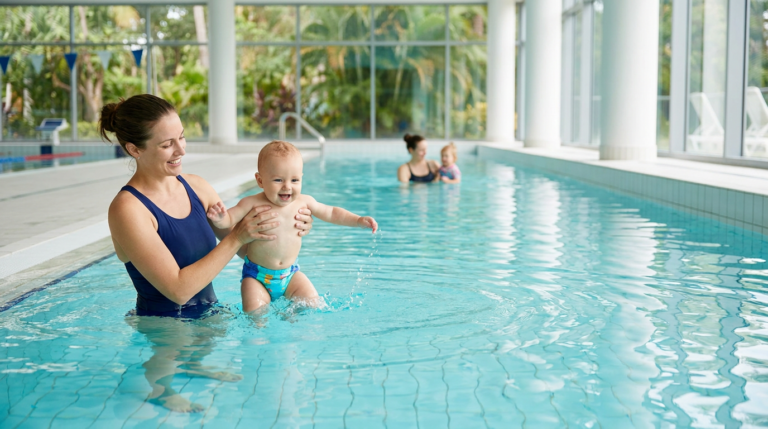
For the youngest swimmers, shorter sessions align perfectly with developmental capabilities. Infants and toddlers have limited attention spans, tire quickly, and can become overwhelmed by extended water exposure. The optimal lesson duration for this age group is 20-30 minutes, with 25 minutes representing the sweet spot for most children.
At this developmental stage, swimming lessons focus primarily on water acclimation, comfort building, and foundational water safety reflexes rather than technical stroke development. These objectives can be effectively addressed within shorter timeframes. The lesson structure should emphasize playful engagement, parent-child bonding (in parent-accompanied classes), and positive associations with the aquatic environment. Lessons that exceed 30 minutes risk creating negative experiences that can hinder long-term aquatic development.
Temperature regulation presents another consideration for this age group. Young children have higher surface-area-to-body-mass ratios and less developed thermoregulation systems, making them more susceptible to becoming chilled in pool water. Even in Singapore's warm climate, extended pool time can lead to discomfort and reduced engagement. Keeping sessions within the 20-30 minute window helps maintain comfortable body temperature and sustained enthusiasm.
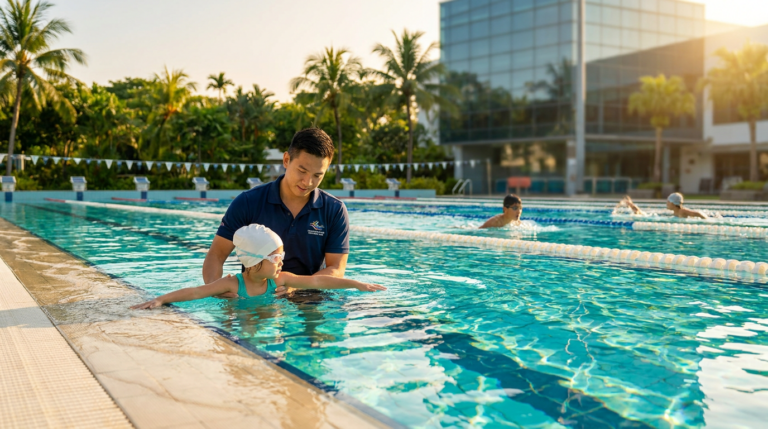
Preschool-aged children represent a transitional stage where the standard 30-minute lesson becomes marginal. While their attention spans and physical endurance have increased compared to toddlerhood, 30 minutes often proves insufficient for meaningful skill progression, particularly as they advance beyond basic water comfort to actual swimming technique.
A 35-40 minute lesson provides the optimal balance for this age group. This duration allows instructors to structure lessons with distinct segments: a warm-up and review period (5-7 minutes), introduction of new skills (8-10 minutes), practice and repetition (15-18 minutes), and a brief game or cool-down activity (5 minutes). This structure supports both skill development and engagement, preventing the lesson monotony that can occur when time constraints force repetitive drilling without variation.
Preschoolers are developing fundamental swimming movements including breath control, body position, basic propulsion, and water safety skills. These foundational techniques require numerous repetitions with corrective feedback to establish proper motor patterns. Insufficient practice time during critical developmental windows can lead to compensatory movement patterns that become increasingly difficult to correct as children mature. The additional 5-10 minutes beyond the standard 30-minute lesson can accommodate 50-75% more practice repetitions, significantly accelerating skill acquisition.
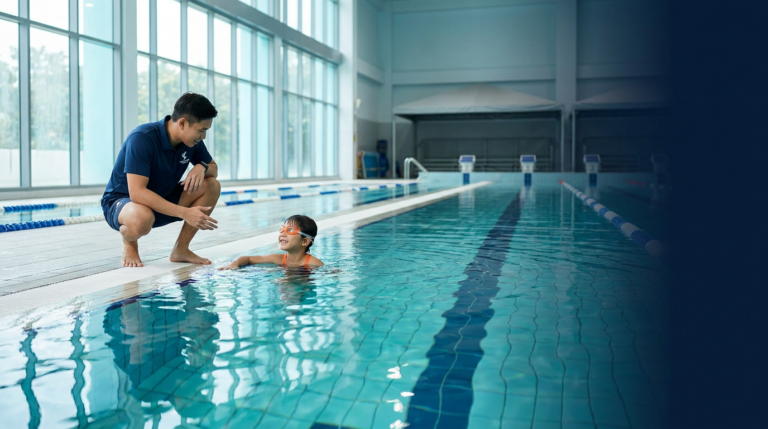
Children aged 6-8 years experience rapid improvements in attention span, motor control, and cognitive processing. At this developmental stage, 30-minute lessons become genuinely restrictive, limiting the depth and breadth of instruction that can be provided. The optimal lesson duration for early primary school children is 45-60 minutes, with most progressing well in 50-55 minute sessions.
This age group typically engages with programs like SwimSafer Stages 3-5, where curriculum demands expand significantly. Students learn multiple stroke variations, refine technique elements, develop endurance, and acquire comprehensive water safety knowledge including survival swimming and rescue awareness. The SwimSafer 2.0 framework emphasizes skill development in conjunction with safety education, requiring adequate time to address both dimensions effectively.
Extended lesson duration at this stage enables more sophisticated instructional approaches. Coaches can implement skill progressions that build systematically from simple to complex movements, provide individualized feedback to address each swimmer's specific technical needs, incorporate drill sets that develop both skill and stamina, and integrate safety education through discussion and practical application. These multifaceted lesson components simply cannot be compressed into 30-minute sessions without sacrificing quality or comprehensiveness.
From a practical perspective, children in this age range have typically developed sufficient physical endurance to maintain engagement and performance quality throughout longer sessions. Their improved thermoregulation also means they can remain comfortable during extended pool time. The investment in longer lessons at this stage yields substantial returns in accelerated progression through certification levels and development of technically sound swimming form.
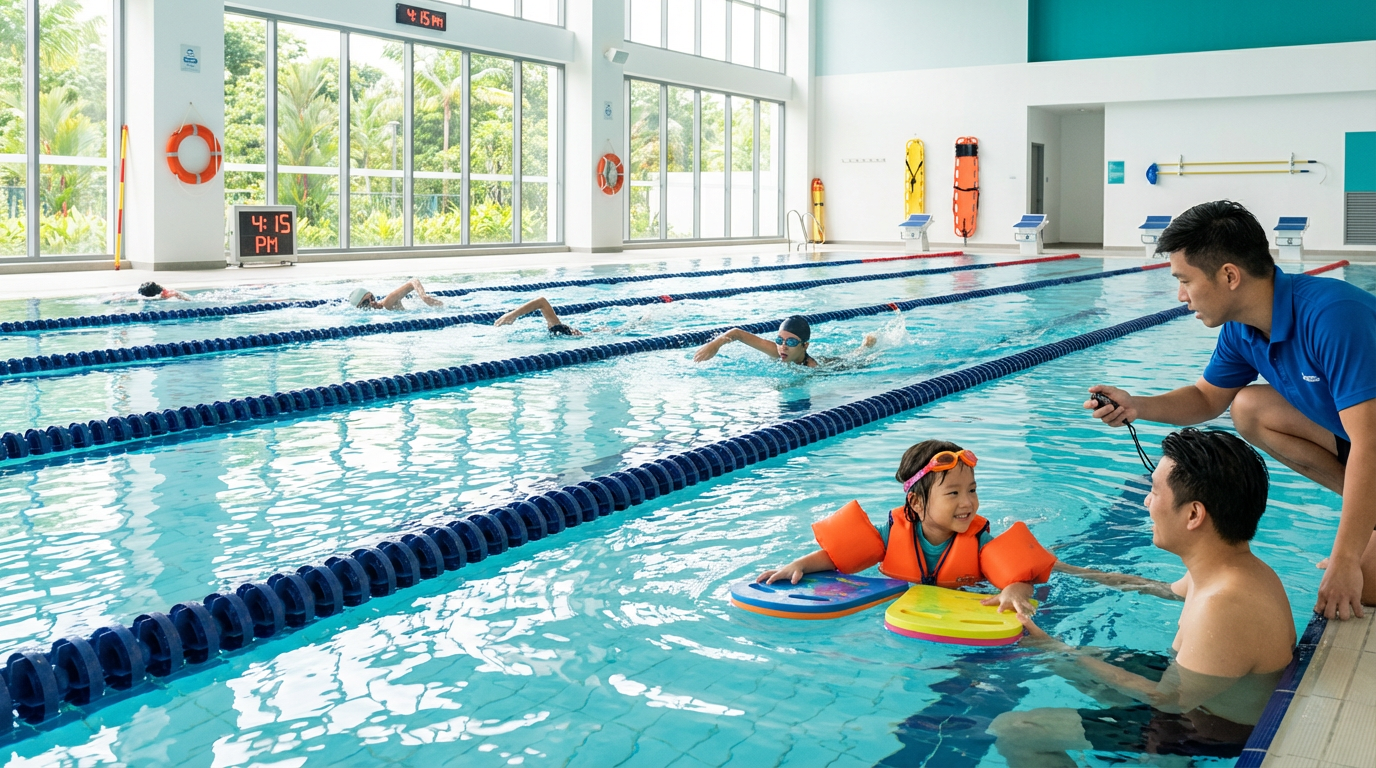
For older children and teenagers, particularly those advancing toward competitive swimming or completing advanced SwimSafer stages, 60-90 minute sessions become standard and necessary. At this level, swimming transitions from basic skill acquisition to technique refinement, endurance development, and specialized training.
Ninety-minute sessions allow for comprehensive training structures that mirror competitive swim practice formats: warm-up sets to prepare the body (10-15 minutes), technique-focused drilling with detailed coaching (20-25 minutes), main training sets building endurance and speed (30-40 minutes), and cool-down with flexibility work (10-15 minutes). This structure develops not just swimming ability but also training discipline, work capacity, and mental resilience.
Athletes at this level who aspire to competitive achievement, whether through school teams or programs like water polo or artistic swimming, require extended training time to develop the technical precision and physical conditioning necessary for success. SPEEDISWIM's track record of producing over 50 National Youth and National Team selections, including SNOC Sportsgirl of the Year 2018 Debbie Soh Li Fei, stems partly from providing adequate training duration that allows athletes to reach their potential.
Even non-competitive swimmers at this age benefit from longer sessions when working toward advanced certifications or developing specialized skills like lifesaving techniques. The cognitive and physical maturity of older children means they can absorb complex technical information, maintain focus during extended practice, and execute high-repetition training that builds genuine mastery.
The prevalence of 30-minute swimming lessons stems more from operational convenience than pedagogical optimization. This duration allows swim schools to maximize pool utilization and schedule density, fitting more classes into each hour and serving more customers. From a business perspective, the 30-minute standard makes perfect sense. From an educational standpoint, however, it represents a compromise that limits learning outcomes for most age groups beyond toddlerhood.
Consider the actual instructional time available in a typical 30-minute group lesson. Children spend 2-3 minutes entering the water and adjusting to temperature, another 2-3 minutes on safety briefings and attendance, and 2-3 minutes on exit and transition at the lesson's end. This leaves approximately 22-24 minutes for actual instruction. In a group setting with 4-6 students, individual practice time and personalized feedback become extremely limited. Each child might receive only 3-4 minutes of direct coaching attention per lesson, insufficient for meaningful skill development.
The time constraint also pressures instructors to prioritize quantity over quality, rushing through curriculum checkpoints to demonstrate progress rather than ensuring genuine skill mastery. This approach may help students pass certification assessments but often leaves gaps in technique, endurance, and water safety competency. Swimming proficiency isn't merely about demonstrating a skill once, it requires developing the consistency, stamina, and adaptability to perform safely and effectively across varying aquatic conditions.
Furthermore, the 30-minute structure fails to accommodate the natural learning rhythms of skill acquisition. Motor learning research indicates that initial skill attempts are typically imprecise, requiring multiple practice cycles with feedback to establish correct movement patterns. Abbreviated lessons often end just as students begin internalizing new techniques, missing the crucial consolidation phase where repetition cements learning. This results in slower overall progression, potentially requiring more total lessons to achieve competency than would be necessary with appropriately longer individual sessions.
While lesson duration significantly impacts learning potential, it represents just one component of effective swimming instruction. Parents evaluating swimming programs should consider multiple quality indicators that collectively determine educational outcomes:
Instructor qualifications and experience: Professional coaching certifications, ongoing training, and demonstrated expertise in age-appropriate instruction matter enormously. At SPEEDISWIM, our professionally qualified coaches bring specialized knowledge in pedagogy, child development, and technical swimming that elevates instruction quality regardless of lesson duration. However, expert instruction reaches its full potential only when given adequate time to work with students.
Student-to-instructor ratios: Even with extended lesson times, excessive group sizes dilute individual attention and practice opportunities. Effective ratios vary by age and skill level, with younger and less experienced swimmers requiring smaller group sizes. Programs should maintain ratios that ensure each child receives meaningful personalized coaching and sufficient practice repetitions during each session.
Curriculum structure and progression: Quality programs follow systematic frameworks like SwimSafer 2.0 that integrate technical skill development with water safety education. The curriculum should have clear progression pathways, defined competency standards, and assessment protocols that ensure genuine mastery rather than superficial skill demonstration. SPEEDISWIM's alignment with SwimSafer 2.0 and SSPA certifications ensures students develop comprehensive aquatic competency.
Facility quality and accessibility: Pool temperature, water quality, facility maintenance, and location convenience all influence learning effectiveness and program sustainability. SPEEDISWIM's operations across multiple venues including international schools and country clubs provide families with accessible, high-quality training environments that support consistent attendance and positive learning experiences.
Practice opportunities between lessons: Swimming skill development benefits enormously from additional practice beyond formal lessons. Programs that encourage and facilitate family swim time, provide practice guidance, and foster a culture of continuous engagement typically produce faster progression and more confident swimmers.
The SwimSafer 2.0 program, developed through the National Water Safety Council's collaboration with Sport Singapore, represents a comprehensive framework that emphasizes skill development in conjunction with water safety and personal survival education. This integrated approach requires adequate instructional time to address all competency dimensions effectively.
SwimSafer 2.0 progresses through six stages, each building systematically on previous competencies while introducing increasingly sophisticated skills and safety knowledge. The program's structure inherently supports the age-specific duration recommendations outlined earlier. Early stages focusing on water confidence and basic propulsion align well with shorter lesson durations appropriate for younger children. Advanced stages involving multiple stroke refinement, endurance development, and comprehensive safety education require the extended timeframes necessary for older, more capable swimmers.
The program's emphasis on water safety education distinguishes it from purely technique-focused approaches. SwimSafer 2.0 addresses hazard identification, safe entry and exit procedures, survival swimming techniques, and rescue awareness. These critical competencies require dedicated instructional time beyond stroke mechanics practice. Programs attempting to deliver SwimSafer content within restrictive 30-minute formats often shortchange safety education in favor of technical skill practice, undermining the framework's integrated philosophy.
SPEEDISWIM's implementation of SwimSafer 2.0 leverages our 20+ years of aquatic education experience to optimize lesson structures for each stage's specific requirements. Our coaches understand how to balance technical instruction, practice repetition, and safety education within lesson timeframes calibrated to age-appropriate durations. This approach has enabled us to train over 25,000 students while maintaining high safety standards and supporting progression to advanced aquatic disciplines including competitive swimming, water polo, and artistic swimming.
Understanding optimal lesson duration represents an important first step, but parents can take additional actions to accelerate their child's aquatic development and ensure swimming lessons deliver maximum value:
Match lesson duration to developmental stage: Evaluate your child's current age, skill level, and attention span honestly. If they're completing lessons without fatigue and asking for more pool time, they may be ready for longer sessions. Conversely, if they consistently lose focus or become resistant toward lesson's end, shorter durations might be more appropriate temporarily.
Prioritize consistency over intensity: Regular attendance matters more than cramming intensive training into sporadic sessions. Two 45-minute lessons weekly typically produce better outcomes than one 90-minute weekly session, as the reduced interval between practices supports better skill retention and motor pattern development.
Supplement formal lessons with recreational swimming: Family swim time provides valuable practice opportunities in lower-pressure environments. Encourage your child to practice skills learned during lessons, but keep recreational swimming fun and playful to maintain positive associations with the aquatic environment.
Communicate with instructors: Quality programs welcome parent input and provide progress updates. Share observations about your child's confidence, challenges, and interests. Instructors can adjust their approach when they understand each student's complete picture beyond what they observe during lessons.
Consider progression pathways: For children showing strong interest and ability, explore advanced opportunities like squad training or specialized aquatic sports. SPEEDISWIM offers progression into competitive swimming, water polo, artistic swimming, and even underwater hockey, providing pathways for continued development beyond learn-to-swim programs.
Evaluate value beyond price per session: While group swimming lessons in Singapore typically range from $35 to $55 per session, with private instruction commanding $60 to $120 per session, the cost-per-minute calculation tells only part of the value story. A 45-minute lesson at $50 may deliver substantially better outcomes than a 30-minute lesson at $35, making the longer session the superior investment despite higher absolute cost. Consider lesson duration, group size, instructor qualifications, curriculum quality, and facility standards when evaluating value.
Set realistic expectations: Swimming competency develops progressively over months and years, not weeks. Children advance at different rates based on age, physical development, previous experience, and individual learning styles. Trust the process, celebrate incremental progress, and maintain focus on long-term goals including water safety, technical proficiency, and lifelong aquatic enjoyment.
The standard 30-minute swimming lesson serves as a convenient scheduling unit for swim schools but fails to represent the optimal instructional duration for most age groups. While appropriate for toddlers and very young children, this abbreviated timeframe increasingly limits learning potential as children mature, develop longer attention spans, and tackle more sophisticated swimming competencies.
Parents seeking to maximize their child's aquatic development should evaluate lesson duration as a key selection criterion alongside instructor qualifications, curriculum quality, and facility standards. Understanding age-specific duration recommendations enables informed decision-making that supports efficient skill progression, comprehensive water safety education, and positive long-term outcomes.
At SPEEDISWIM, our two decades of experience training over 25,000 students across all aquatic disciplines has reinforced a fundamental principle: effective swimming instruction requires adequate time to teach properly, practice sufficiently, and develop genuine competency. Our structured programs provide age-appropriate lesson durations within the comprehensive SwimSafer 2.0 framework, delivered by professionally qualified coaches across quality facilities throughout Singapore.
Whether your child is taking their first tentative steps into the pool or training for competitive achievement, the right lesson duration can make the difference between frustrating stagnation and confident progression. Invest the time to find a program that prioritizes learning outcomes over operational convenience, and watch your child develop the skills, safety awareness, and aquatic confidence that will serve them throughout life.
Discover how SPEEDISWIM's age-appropriate lesson structures and 20+ years of expertise can accelerate your child's aquatic development. Our SwimSafer 2.0 certified programs provide the perfect balance of skill development, water safety education, and engaging instruction.