Singapore's reputation as a leading aquatic nation didn't happen by accident. With over 25 public swimming complexes, numerous private facilities, and a national commitment to water safety education, the island nation has built one of the most comprehensive swimming infrastructures in Southeast Asia. Whether you're a parent seeking the perfect venue for your child's first swimming lessons, a competitive athlete looking for Olympic-standard training facilities, or simply someone wanting to enjoy a refreshing swim, understanding Singapore's diverse pool landscape is essential.
As a nation surrounded by water, Singapore recognized early the importance of swimming as both a life skill and competitive sport. This understanding has shaped policies, infrastructure development, and educational programs for decades. Today, swimming pools in Singapore range from community facilities offering affordable access to world-class competition venues that have hosted international championships. Each serves a unique purpose within the broader ecosystem of aquatic education and recreation.
This comprehensive guide draws on over two decades of aquatic industry experience to help you navigate Singapore's swimming pool landscape. We'll explore facility types, locations, amenities, pricing structures, and provide expert insights to help you make informed decisions about where to swim, train, or learn this essential life skill.
Singapore's swimming facilities fall into several distinct categories, each serving different community needs and offering varied experiences. Understanding these categories helps you identify which facilities best match your requirements, whether for recreational swimming, competitive training, or structured learning programs.
The public pool network, managed primarily through ActiveSG, forms the backbone of accessible swimming in Singapore. These facilities prioritize affordability and community access, with pricing structures designed to encourage regular participation in aquatic activities. Most public complexes feature multiple pools catering to different age groups and skill levels, from shallow teaching pools for beginners to competition-standard 50-meter pools for serious swimmers.
Private facilities, including country clubs and condominium pools, offer alternative options often featuring enhanced amenities, less crowded conditions, and more flexible access hours. While these require membership or residential access, they provide valuable training venues for structured programs. International school pools represent another important category, many of which open their facilities to external swimming programs during non-school hours, contributing significantly to Singapore's aquatic training capacity.
The diversity of Singapore's pool infrastructure reflects the nation's commitment to the SwimSafer initiative, launched by the National Water Safety Council in collaboration with Sport Singapore. This program, refreshed as SwimSafer 2.0 in 2017, emphasizes skill development alongside water safety education, requiring extensive facility access across the island to serve communities effectively.
The ActiveSG network operates swimming complexes strategically distributed across Singapore's regions, ensuring no resident lives far from accessible aquatic facilities. These complexes serve millions of visits annually and form the primary venue for recreational swimming and many learn-to-swim programs.
The northern region features several significant facilities serving dense residential areas:
Eastern Singapore hosts several well-established swimming complexes with strong community connections:
Central and western facilities often experience higher utilization due to population density:
Southern Singapore features distinctive facilities including coastal locations:
ActiveSG Pricing: Public pool admission remains highly affordable, with typical entry fees of $1.50 for adults on weekdays and $2 on weekends and public holidays. Children, students, and seniors enjoy concessionary rates, making regular swimming accessible to all socioeconomic groups. Monthly season passes offer even better value for frequent swimmers.
Country clubs and private facilities complement public infrastructure by offering alternative training environments and enhanced amenities. These venues play crucial roles in competitive swimming development and specialized aquatic programs, with many hosting accredited swimming schools and sports development initiatives.
Orchid Country Club stands as a premier example, recognized as one of the official Non-ActiveSG Pool CAMS (Centralised Assessment Management System) Centres. This designation indicates the facility meets rigorous standards for conducting SwimSafer 2.0 assessments, essential for swimmers progressing through national certification levels. The club features well-maintained pools suitable for both recreational and competitive training, with professional coaching programs operating year-round.
Other notable private facilities include:
Private facilities typically require membership or guest access, with associated costs significantly higher than public pools. However, they offer advantages including less crowded conditions, extended operating hours, enhanced amenities, and often exclusive access to specialized coaching programs. Many competitive swimmers train at these facilities due to greater lane availability and fewer interruptions during peak hours.
International schools across Singapore have invested substantially in aquatic facilities, many featuring competition-standard pools that rival public complexes in quality. While primarily serving student populations during school hours, many schools partner with accredited swimming programs to maximize facility utilization during evenings, weekends, and school holidays.
These partnerships create valuable training opportunities, particularly in areas where public facility capacity reaches saturation during peak times. Schools benefit through facility cost recovery, while swimming programs gain access to quality venues, creating mutually beneficial arrangements that expand Singapore's effective aquatic training capacity.
International school pools typically feature:
Notable international schools with significant aquatic facilities include campuses across central, eastern, and western regions. These venues have become integral to Singapore's aquatic training ecosystem, particularly for programs like competitive swimming development and specialized disciplines requiring specific facility features.
Understanding facility features helps you select appropriate venues for different activities. Not all pools serve all purposes equally, and matching facility characteristics to your needs enhances both safety and enjoyment.
Singapore's swimming facilities typically include several pool types, each serving specific purposes:
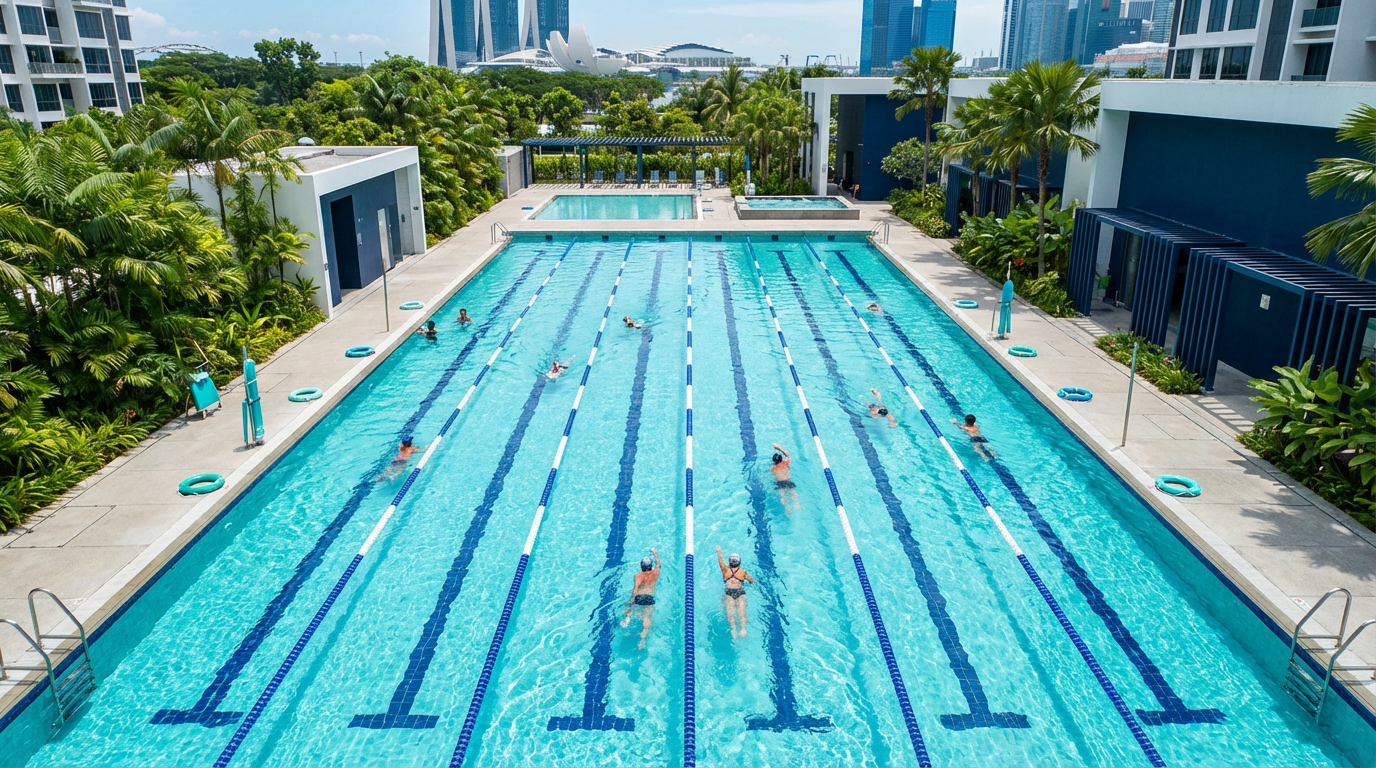
Competition Pools measure either 50 meters (Olympic standard) or 25 meters (short course) in length, with depths ranging from 1.35 to 2 meters. These pools feature lane markings, starting blocks, and timing equipment, making them suitable for competitive training and official assessments. Swimmers pursuing SwimSafer certifications typically complete their assessments in competition pools meeting specific dimensional requirements.
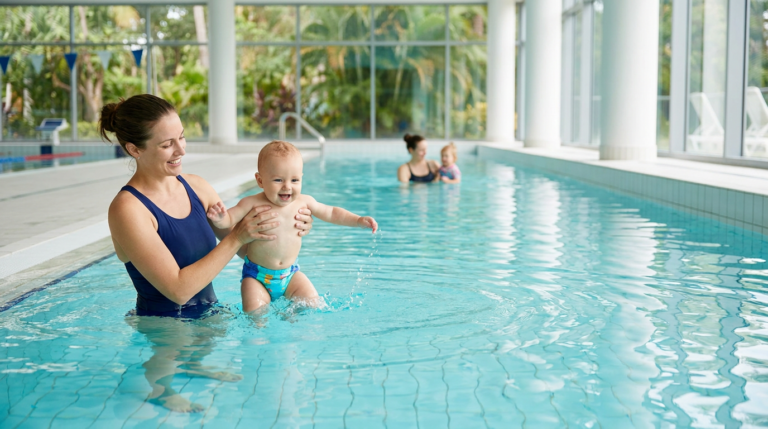
Teaching Pools feature shallower depths (0.8 to 1.2 meters) specifically designed for beginners and young children. These pools provide safer environments for initial water familiarization and basic skill development, allowing students to stand comfortably while learning fundamental techniques. Most public complexes include dedicated teaching pools separate from competition facilities.
Leisure Pools incorporate varied depths, gentle slopes, and sometimes interactive water features. While less suitable for structured training, these pools serve important recreational functions and help young children develop water confidence in less intimidating environments.
Quality swimming facilities provide amenities that enhance user experience and safety:
Some venues offer specialized features supporting specific aquatic disciplines:
Facilities supporting artistic swimming (synchronized swimming) require specific depth profiles and often feature underwater sound systems. Water polo training needs deeper pools with goal installations. Underwater hockey programs require pools with excellent underwater visibility and sufficient depth for safe play.
These specialized requirements mean certain programs operate only at specific venues equipped to support their unique needs safely and effectively.
Selecting appropriate swimming facilities depends on several factors including your objectives, skill level, schedule flexibility, and budget considerations. Making informed choices ensures better experiences and outcomes.
Parents introducing children to swimming should prioritize facilities with dedicated teaching pools, family-friendly amenities, and less intimidating environments. Shallow pools where children can stand comfortably reduce anxiety and accelerate initial learning. Proximity to home matters significantly for young families, as convenience directly impacts program consistency and long-term success.
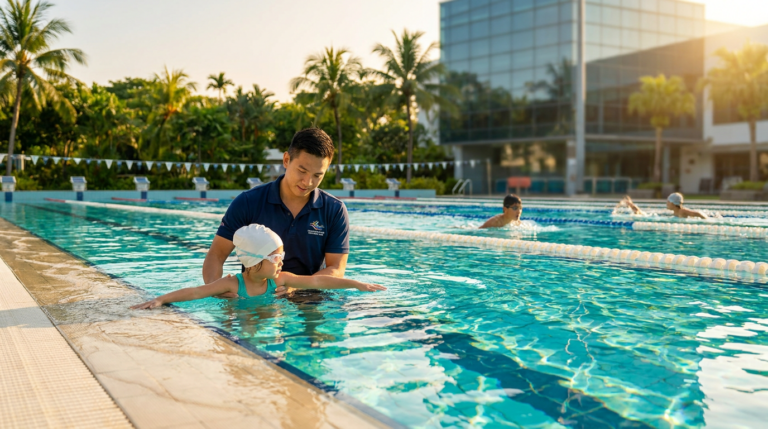
Swimming programs aligned with SwimSafer 2.0 standards provide structured progression through six stages, from basic water confidence to survival skills and stroke development. These programs, available across public and private venues, typically charge between $35 to $55 per group session, with pricing varying based on facility type, class size, and instructor qualifications.
Competitive swimming development requires access to regulation-length pools with proper lane configurations and timing systems. Training consistency demands facilities with reliable availability, minimal crowding, and professional coaching support. Many competitive swimmers train at country clubs or through school programs specifically because these venues offer dedicated lane time during peak training hours.
Singapore's competitive swimming pathway has produced numerous national athletes, with programs across the island identifying and developing talent from young ages through systematic training. Facilities supporting competitive development typically partner with nationally certified coaching programs that understand progression from age-group swimming through elite performance levels.
Adult fitness swimmers often prioritize convenience, consistent water quality, and adequate lane space during preferred swimming times. Public pools offer excellent value, though crowding during evening and weekend peaks can limit effective training. Many serious fitness swimmers invest in country club memberships or utilize less busy mid-morning or early evening timeslots for better swimming conditions.
Specialized aquatic sports require specific facilities and expert instruction. Programs in artistic swimming, water polo, diving, and underwater hockey operate at select venues equipped with necessary features and safety provisions. These disciplines complement traditional swimming development, offering pathways for athletes seeking variety or discovering talents in alternative aquatic sports.
Singapore's aquatic education framework centers on the SwimSafer 2.0 program, developed through collaboration between the National Water Safety Council and Sport Singapore. This nationally recognized certification system provides structured progression for swimmers of all ages, emphasizing both technical skill development and crucial water safety knowledge.
SwimSafer 2.0, implemented following a comprehensive review in 2016-2017, represents the gold standard in Singapore's aquatic education. The program teaches fundamental swimming skills while integrating essential water safety and personal survival education. Unlike pure stroke development programs, SwimSafer 2.0 ensures swimmers understand water hazards, recognize dangerous situations, and possess skills to help themselves and others in aquatic emergencies.
The program consists of six progressive stages, each building on previous competencies:
Assessment for SwimSafer certifications must occur at designated CAMS centres, ensuring standardized evaluation against national benchmarks. These centres, including both ActiveSG facilities and approved private venues like Orchid Country Club, maintain strict standards for assessment validity.
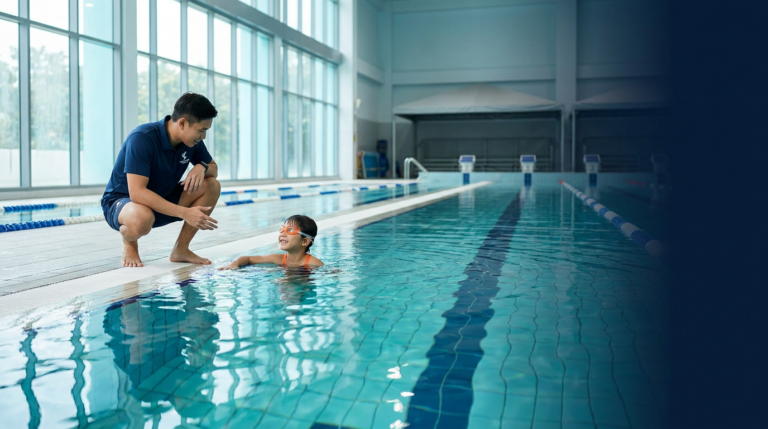
Singapore's swimming instruction landscape includes numerous providers operating across various facilities. Quality programs share several characteristics: nationally certified instructors, structured curricula aligned with SwimSafer 2.0 standards, appropriate student-to-instructor ratios, and systematic progress tracking.
Pricing for group swimming lessons typically ranges from $35 to $55 per session, varying based on factors including instructor qualifications, class sizes, venue quality, and program duration. Private or semi-private instruction commands premium pricing, generally between $60 to $120 per session, reflecting individualized attention and accelerated progression potential.
Organizations with extensive track records demonstrate their capability through measurable outcomes. Programs that have trained thousands of students, developed competitive athletes, and maintained long-term operations provide reliability that newer providers cannot yet demonstrate. For families serious about swimming development, investigating provider credentials, certification alignments, and historical results offers valuable decision-making information.
For swimmers completing SwimSafer progression, multiple pathways enable continued development. Competitive swimming programs develop technical excellence, race strategies, and athletic conditioning necessary for inter-school and club-level competition. Singapore Swimming Proficiency Award (SSPA) certifications provide alternative benchmarks focused on stroke technique and performance standards.
Specialized aquatic disciplines offer exciting alternatives for swimmers seeking variety. Artistic swimming combines swimming, dance, and gymnastics in synchronized performances demanding strength, flexibility, and teamwork. Water polo blends swimming with ball-handling and strategic gameplay. Underwater hockey introduces unique challenges of three-dimensional play in a submerged environment. These disciplines not only develop comprehensive aquatic competence but also create opportunities for national team selection and international competition.
Singapore's aquatic development system has produced remarkable results, with hundreds of athletes progressing through youth development programs into national teams. This success reflects systematic training, quality coaching, appropriate facility access, and pathways allowing talented swimmers to pursue excellence while maintaining academic progress through initiatives like Direct School Admission (DSA) programs recognizing sporting achievement.
Maximizing your swimming facility experience involves understanding practical considerations that enhance safety, comfort, and effectiveness.
Public swimming complexes experience predictable utilization patterns. Weekday mid-mornings and early afternoons typically offer the least crowded conditions, ideal for focused training or young children's lessons. Evening hours from 6:00 PM to 8:00 PM and weekend afternoons represent peak periods with significantly higher attendance, potentially limiting lane availability and increasing noise levels.
School holiday periods see elevated daytime utilization at all facilities. Planning visits during off-peak times provides better swimming conditions, particularly for skill development requiring concentration and space.
Essential items for pool visits include:
For children's lessons, consider bringing snacks for post-session energy replenishment and a change of warm clothes for comfort.
Always supervise children closely regardless of their swimming ability. Even competent swimmers can encounter unexpected difficulties. Familiarize yourself with pool depth markings, entry and exit points, and emergency equipment locations. Respect facility rules regarding diving, running on decks, and designated swimming areas.
For individuals learning to swim or building confidence, choosing appropriate pool areas matching current abilities prevents dangerous situations. Teaching pools provide safer environments for skill development before progressing to deeper competition pools.
Singapore swimming facilities maintain regulations ensuring safety and hygiene. Common requirements include mandatory showering before pool entry, swimming cap usage, and restrictions on food and glass containers in pool areas. Some facilities implement specific lane etiquette during lap swimming times, designating lanes by speed to minimize conflicts between swimmers of different abilities.
Familiarizing yourself with specific facility rules before visiting prevents confusion and ensures compliance with important safety protocols.
Singapore's comprehensive swimming infrastructure reflects the nation's commitment to aquatic education, water safety, and sports development. From accessible public complexes serving communities across the island to specialized facilities supporting elite athlete development, the diversity of swimming pools available ensures every Singaporean can access appropriate venues for their aquatic pursuits.
Whether beginning your swimming journey, supporting your child's water safety education, pursuing competitive excellence, or simply enjoying recreational swimming, understanding Singapore's pool landscape helps you make informed decisions about where and how to swim. The integration of world-class facilities with structured programs like SwimSafer 2.0 has created an ecosystem where aquatic competence flourishes, producing both safer communities and internationally competitive athletes.
Success in swimming development comes not merely from pool access but from combining appropriate facilities with quality instruction, consistent practice, and progressive challenge. The foundation built through comprehensive water safety education creates capabilities extending far beyond the pool, developing confidence, discipline, and skills that serve individuals throughout their lives.
With over 20 years of experience training more than 25,000 students across multiple aquatic disciplines, SPEEDISWIM offers professionally structured programs aligned with SwimSafer 2.0 and national certifications. Our qualified coaches operate across premier facilities, providing pathways from beginner water confidence through competitive excellence.
Whether you're seeking swimming lessons for your child, competitive training programs, or specialized aquatic disciplines, we're here to help you achieve your goals safely and effectively.