As parents consider enrolling their children in swimming lessons, one of the most common questions emerges: "How many lessons will my child actually need?" It's a reasonable question that reflects both practical concerns about time and financial investment, as well as the desire to set realistic expectations. The answer, while not a simple number, is grounded in decades of aquatic education research and practical experience with thousands of young swimmers.
At SPEEDISWIM, our 20+ years of experience teaching over 25,000 students has given us unique insights into children's swimming progression. The truth is that swimming proficiency isn't achieved in a fixed number of lessons—it develops through a combination of consistent practice, proper instruction, developmental readiness, and individual learning pace. However, research and structured programs like SwimSafer 2.0 provide evidence-based frameworks that help parents understand realistic timelines.
This article examines what the evidence tells us about swimming lesson requirements, explores how different factors influence learning speed, and provides concrete expectations based on age, frequency, and learning objectives. Whether you're wondering about basic water safety skills or competitive swimming readiness, understanding these timelines will help you make informed decisions about your child's aquatic education journey.
Realistic timelines based on 20+ years of teaching 25,000+ students
Water confidence, face submersion, assisted movement 3-5 meters
Independent movement 5-10 meters, rhythmic breathing begins
25 meters independent freestyle, water safety skills (SwimSafer Stage 3)
Multiple strokes, 50-100 meters continuous, survival skills (SwimSafer Stage 4-5)
All competitive strokes, rescue skills, ready for specialized training
Twice weekly lessons produce 50% faster progress than once weekly
Professional coaches reduce required lessons by 30-40% vs. inexperienced instructors
Regular schedule beats total lesson count for long-term retention
SPEEDISWIM offers SwimSafer 2.0-aligned programs taught by professionally qualified coaches with over 20 years of experience teaching 25,000+ students.
The question of how many swimming lessons a child needs depends fundamentally on how we define "learning to swim." For some parents, this means basic water safety and the ability to swim 25 meters independently. For others, it encompasses comprehensive aquatic competence across different strokes, water conditions, and survival scenarios. Research from aquatic education specialists suggests that achieving basic swimming competence—defined as swimming 25 meters unassisted with proper breathing technique—typically requires between 20 to 30 hours of quality instruction for children starting around age 5-6.
However, this baseline figure represents only the beginning of true aquatic proficiency. The American Academy of Pediatrics and similar international bodies emphasize that swimming is a developmental skill that builds progressively over time, much like reading or mathematics. A child who completes 20 lessons has achieved fundamental skills, but continued instruction develops efficiency, endurance, multiple stroke techniques, and the critical water safety judgment that can prevent drowning.
At SPEEDISWIM, we've observed that children who continue lessons beyond basic proficiency develop significantly stronger swimming capabilities and water confidence. The structured SwimSafer Program acknowledges this reality by organizing skill development into progressive stages, each building upon previous competencies. Complete aquatic proficiency—including multiple strokes, survival skills, and water safety knowledge—typically requires 60 to 100 lessons spread over 2-3 years of consistent training.
Age dramatically influences both the number of lessons required and the realistic pace of skill acquisition. Younger children require more repetition and time to develop the coordination, strength, and cognitive understanding necessary for independent swimming. Older beginners often progress more quickly due to superior motor control and comprehension, though they may face different challenges around fear or self-consciousness.
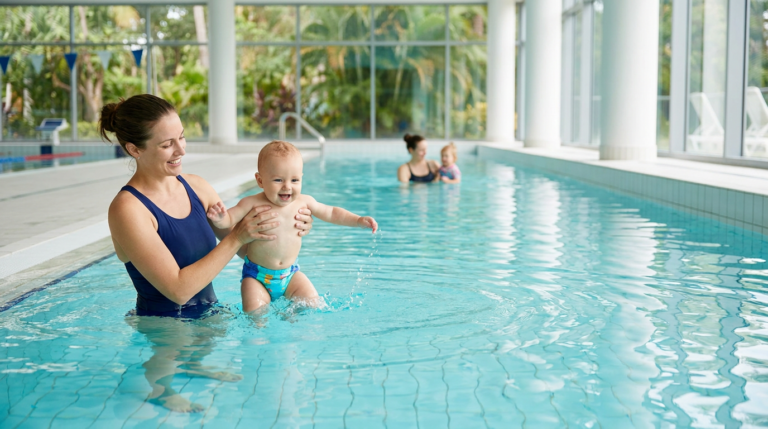
For preschool-aged children, the primary focus is water familiarization, comfort, and foundational safety skills rather than independent swimming. Children in this age group typically need 40 to 60 lessons to achieve basic water confidence and simple propulsion skills. These lessons establish crucial comfort with water on the face, submersion, floating, and assisted movement. The developmental limitations of this age group—including limited arm strength, coordination challenges, and shorter attention spans—mean progress occurs in smaller increments. Consistency is essential; children this young benefit most from shorter, more frequent sessions rather than longer, less regular lessons.
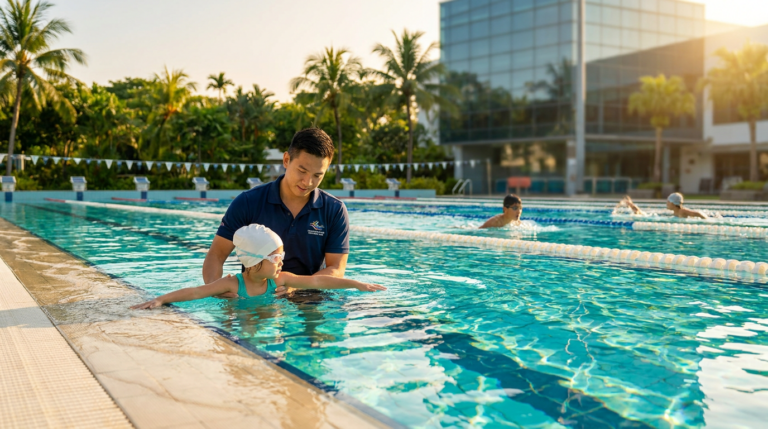
This age range represents the optimal window for most children to develop independent swimming skills. With improved motor control, strength, and cognitive abilities, children aged 5-7 typically require 20 to 40 lessons to achieve basic independent swimming over 10-25 meters. During this phase, children transition from assisted movement to independent propulsion, develop rhythmic breathing patterns, and begin learning proper freestyle technique. Our experience at SPEEDISWIM shows that children in this age group who attend lessons twice weekly generally achieve basic swimming independence within 4-6 months, progressing through the early SwimSafer stages with appropriate instruction.
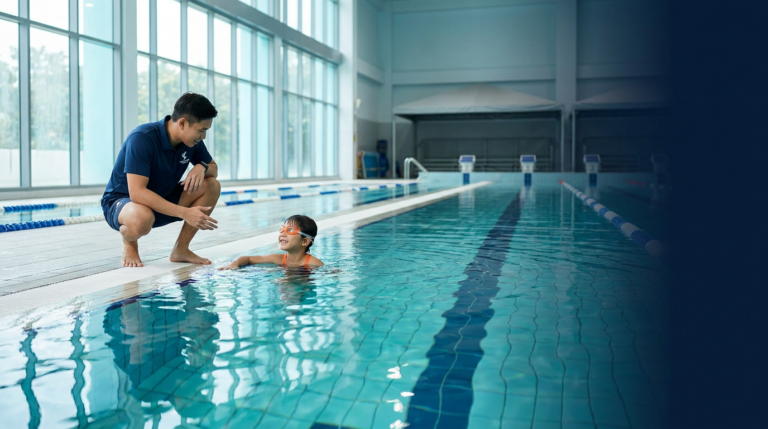
Older beginners in this age range often demonstrate rapid initial progress, frequently achieving basic swimming competence in 15 to 25 lessons. Their advanced coordination, strength, and ability to understand technical instruction accelerate skill acquisition. However, these children may need additional lessons to overcome fear or anxiety that younger children haven't yet developed. Once basic skills are established, continuing lessons to develop multiple strokes, improve technique, and build endurance typically requires an additional 30-50 lessons. This age group is also ideal for transitioning to more specialized programs like Competitive Swimming for those showing interest and aptitude.
SwimSafer 2.0, developed by the National Water Safety Council in collaboration with Sport Singapore, provides an evidence-based progression framework that helps contextualize lesson requirements. This program, which SPEEDISWIM implements across all our venues, emphasizes skill development alongside water safety and personal survival education. Understanding this framework gives parents realistic benchmarks for their child's progression and the lesson investment required at each stage.
The SwimSafer 2.0 program consists of six progressive stages, each with specific skill requirements and competencies. Stage 1 (Introduction to Water Skills) focuses on water confidence, submersion, and basic movement, typically requiring 10-15 lessons for children to achieve competency. Stage 2 (Fundamental Water Skills) develops independent movement over short distances and basic floating, generally requiring an additional 10-15 lessons. Most children spend 20-30 total lessons mastering these foundational stages.
Stages 3 and 4 represent the transition to true swimming proficiency, with Stage 3 requiring 50-meter swimming ability with coordinated breathing and Stage 4 demanding 100-meter competence plus survival techniques. These intermediate stages typically require 15-20 lessons each, meaning children need approximately 50-70 total lessons to reach this level. Stages 5 and 6 focus on advanced skills, multiple stroke techniques, personal survival competencies, and rescue skills, requiring an additional 30-40 lessons. Children who complete all six SwimSafer stages have typically participated in 80-110 lessons, representing true comprehensive aquatic competence.
This structured progression ensures that children don't just learn to swim, but develop the water safety knowledge and survival skills that make swimming a genuine life skill rather than merely a recreational activity.
While age-based guidelines provide useful benchmarks, individual variation in learning speed can be substantial. Understanding the factors that influence progression helps parents set realistic expectations for their own child rather than comparing them to arbitrary standards or other children.
Prior water exposure significantly impacts learning speed. Children with regular bath time water play, previous pool experience, or beach familiarity typically progress 20-30% faster than those with limited water contact. This early comfort with water sensations—getting face wet, submersion, water temperature—provides a foundation that formal lessons can build upon more quickly. Conversely, children with water anxiety or traumatic water experiences may require additional lessons focused specifically on comfort and confidence before technical skill development can progress effectively.
Physical development and coordination create natural variation in learning pace. Some children develop the motor planning, core strength, and limb coordination required for efficient swimming earlier than others. This isn't a reflection of overall intelligence or athleticism—simply natural developmental variation. Children with strong core stability and bilateral coordination (using both sides of the body in coordinated patterns) typically master swimming movements more quickly than those still developing these capabilities.
Lesson quality and instructor expertise dramatically affect how efficiently children progress. A professionally qualified coach with specialized training in child development and aquatic pedagogy can often help children achieve in 20 lessons what less experienced instructors might require 30-40 lessons to accomplish. At SPEEDISWIM, our coaches undergo rigorous training in both technical swimming instruction and age-appropriate teaching methodologies, ensuring that each lesson maximizes learning potential. This expertise is particularly valuable for children who struggle with specific skills or need customized approaches to overcome learning barriers.
Individual temperament and learning style also influence progression. Cautious children who prefer to master each skill thoroughly before advancing may take longer to complete levels but often demonstrate superior retention and confidence. Bold children who embrace new challenges quickly may progress faster initially but sometimes need to revisit fundamentals to ensure proper technique. Neither approach is superior—they simply represent different learning paths that require different lesson quantities and pacing.
When considering how many lessons a child needs, frequency of instruction matters as much as total quantity. The spacing and consistency of lessons dramatically affect both learning speed and skill retention, meaning that 30 lessons spread over different timeframes produce vastly different outcomes.
Research in motor skill acquisition demonstrates that distributed practice—shorter sessions with minimal time between them—produces superior learning compared to massed practice—longer sessions with extended gaps. For young swimmers, this means that two 45-minute lessons per week typically produce better results than one 90-minute lesson weekly, even though the total instruction time is identical. The nervous system needs repeated exposure with short intervals for motor patterns to consolidate effectively.
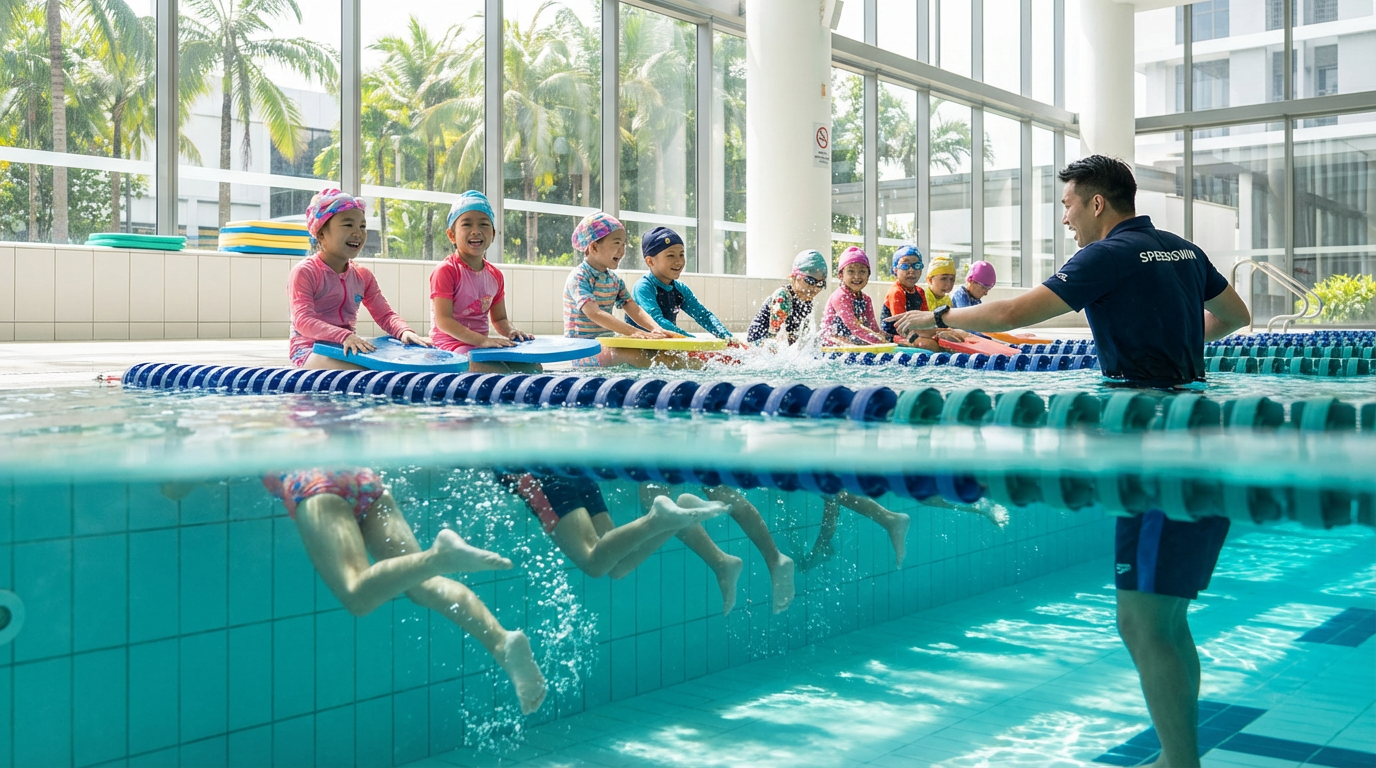
At SPEEDISWIM, we've observed that children attending lessons twice weekly typically achieve basic swimming competence in about half the calendar time of children attending once weekly, but with only 20-30% more total lessons. For example, a child attending twice weekly might achieve Stage 3 SwimSafer competency in 30 lessons over 15 weeks, while a once-weekly student might require 35-40 lessons over 35-40 weeks to reach the same level. The more frequent practice prevents skill regression between sessions and maintains the physical conditioning required for swimming.
During school holidays or intensive programs, even more frequent lessons—three to five times weekly—can produce accelerated progress, though attention must be paid to fatigue and maintaining enthusiasm. Intensive programs work particularly well for older beginners or children preparing for specific events. However, sustainability matters; a consistent twice-weekly schedule maintained over months typically produces better long-term results than intensive periods followed by long breaks.
The implication for parents is clear: when planning your child's swimming education, focus on establishing a sustainable, consistent schedule rather than simply accumulating a certain number of lessons irregularly. A child who completes 40 well-spaced lessons over 6 months will typically demonstrate superior skills compared to a child who takes 40 lessons over 18 months with frequent interruptions.
Understanding specific milestones helps parents recognize progress and maintain appropriate expectations throughout their child's swimming journey. These benchmarks are based on children attending lessons twice weekly with consistent practice.
After 10 lessons: Most children demonstrate water confidence, willingness to get their face wet, and can perform basic submersion. They typically show assisted movement over short distances (3-5 meters) and beginning floating skills. This stage represents crucial comfort development rather than independent swimming.
After 20-25 lessons: Children generally achieve independent movement over 5-10 meters using basic propulsion techniques. They can perform voluntary submersion, demonstrate beginning rhythmic breathing, and show improved body position in water. This milestone represents the transition from water familiarization to actual swimming, though technique remains rudimentary.
After 40-50 lessons: Most children can swim 25 meters independently with recognizable freestyle technique, including coordinated arm movement and breathing patterns. They demonstrate multiple entry and exit techniques, basic floating and treading water skills, and improved water safety awareness. This level represents functional swimming ability and typically corresponds to SwimSafer Stage 3 competency.
After 60-80 lessons: Children display proficiency in multiple strokes (freestyle and backstroke at minimum), can swim 50-100 meters continuously, and demonstrate survival skills including clothed swimming and rescue techniques. Technique refinement becomes the focus, with attention to efficiency, speed, and endurance. This level corresponds to SwimSafer Stages 4-5 and represents comprehensive swimming competence.
After 100+ lessons: Children demonstrate advanced proficiency across all four competitive strokes, possess strong water safety and rescue skills, and may be ready for specialized training in Competitive Swimming, Artistic Swimming, Water Polo, or other aquatic disciplines. This level represents mastery of core swimming competencies and the foundation for specialized athletic development.
Understanding the lesson requirements for swimming proficiency helps parents plan the financial investment involved. In Singapore, group swimming lessons typically range from $35 to $55 per session, while private or semi-private lessons command premium pricing from $60 to $120 per session. These figures help contextualize the total investment required for different competency levels.
For basic swimming competence (approximately 30-40 group lessons), parents should anticipate an investment of $1,050 to $2,200 over 4-6 months with twice-weekly attendance. This represents the minimum foundation for water safety and independent swimming ability. For comprehensive aquatic proficiency through SwimSafer Stage 5-6 completion (approximately 80-100 lessons), the total investment typically ranges from $2,800 to $5,500 over 12-18 months of consistent training.
While these figures represent significant commitments, swimming education provides lifelong benefits that extend far beyond recreational enjoyment. Swimming is a critical life skill that dramatically reduces drowning risk—the leading cause of accidental death in young children globally. Additionally, swimming develops physical fitness, coordination, discipline, and confidence that transfer to other areas of life. At SPEEDISWIM, we've witnessed how swimming education shapes not just aquatic ability but overall child development, making it one of the most valuable investments parents can make in their child's safety and wellbeing.
For families seeking to optimize their investment, group lessons provide excellent value while offering social learning benefits. Children who continue lessons beyond basic competency and explore specialized disciplines like Water Polo or Underwater Hockey often develop deeper passion for aquatics that sustains lifelong fitness and recreation.
Parents sometimes become discouraged when their child doesn't progress as quickly as expected, particularly when comparing lesson counts to swimming distance. However, meaningful progress encompasses far more than how many meters a child can swim. Recognizing these broader indicators helps maintain perspective and celebrate important developmental achievements.
Water confidence and attitude represent crucial progress markers. A child who initially cried at pool entry but now enters enthusiastically has made profound advancement, even if swimming distance remains limited. Similarly, a child who previously refused submersion but now voluntarily puts their face in water has overcome a significant barrier that will accelerate future skill development. These psychological and emotional achievements create the foundation for technical skill acquisition.
Technique refinement and efficiency matter more than distance for long-term development. A child who swims 15 meters with proper body position, coordinated breathing, and efficient arm movement has achieved more meaningful progress than one who swims 25 meters with poor technique sustained through sheer effort. Quality movement patterns established early prevent the difficult process of correcting ingrained bad habits later. Our coaches at SPEEDISWIM prioritize technique development because we know it accelerates future progress and prevents injury.
Water safety awareness and judgment represent critical but less visible achievements. A child who checks water depth before entering, understands pool rules, recognizes when they're tired, or can identify safe versus unsafe water conditions has developed knowledge that could save their life. These competencies develop gradually throughout swimming lessons and represent essential learning outcomes beyond swimming ability itself.
Independence and problem-solving in aquatic environments indicate advancing proficiency. A child who can recover from unexpected submersion, return to the wall when tired, or self-correct body position without instructor intervention demonstrates real aquatic competence. These capabilities develop through accumulated experience and quality instruction, typically requiring dozens of lessons to establish reliably.
The question "How many swimming lessons does a child need?" ultimately depends on your definition of swimming competence and your child's individual characteristics. For basic independent swimming ability, most children require 20-40 quality lessons delivered consistently over 3-6 months. For comprehensive aquatic proficiency including water safety, survival skills, and multiple stroke techniques, expect 60-100 lessons over 12-24 months of regular training.
However, these numbers represent general frameworks rather than rigid requirements. Your child's age, prior experience, physical development, learning style, and the quality of instruction all influence the actual lessons required. The most important factors are consistency of practice, quality of instruction, and maintaining a long-term perspective that views swimming as a developmental journey rather than a destination reached after a specific number of lessons.
At SPEEDISWIM, our 20+ years of experience with over 25,000 students has taught us that every child's swimming journey is unique. The structured SwimSafer 2.0 framework we implement provides clear milestones and evidence-based progression, but we customize the pace and approach to each individual learner. Swimming education is one of the most valuable investments you can make in your child's safety, physical development, and lifelong fitness. The number of lessons required matters less than the commitment to consistent, quality instruction that builds not just swimming ability, but genuine water confidence and competence that lasts a lifetime.
SPEEDISWIM offers comprehensive swimming programs aligned with SwimSafer 2.0 standards, taught by professionally qualified coaches with over 20 years of experience. Whether your child is just beginning their aquatic journey or ready to advance to specialized programs, we provide the expertise and structured progression to help them achieve their full potential in the water.