Watching others glide effortlessly through water while you stand nervously at the pool's edge is a familiar feeling for many Singaporeans. Whether you're an adult who never learned as a child or a parent wanting to equip your children with essential water safety skills, taking that first step into swimming can feel overwhelming. The good news? Thousands of non-swimmers in Singapore successfully transform into confident swimmers every year, and with the right approach, you can too.
As an island nation surrounded by water and home to countless pools, beaches, and water-based recreational activities, swimming isn't just a pleasant skill in Singapore—it's a fundamental life competency. The ability to swim opens doors to water sports, enhances family outings, and most importantly, could save your life or someone else's in an emergency situation.
This comprehensive guide breaks down the swimming learning process into manageable, sequential steps that mirror the proven methodologies used by professional aquatic centres across Singapore. Drawing from over two decades of swimming instruction experience with more than 25,000 students, we'll walk you through each stage of your transformation from non-swimmer to confident aquatic enthusiast, addressing common fears and challenges along the way.
Singapore's relationship with water extends far beyond our geographical status as an island. Our national identity intertwines with aquatic environments through recreational beaches at Sentosa and East Coast Park, community swimming complexes in virtually every neighborhood, and water-based national service training for some servicemen. Despite this aquatic accessibility, a significant portion of Singapore's population cannot swim confidently or at all.
The National Water Safety Council recognizes this gap, which is precisely why initiatives like SwimSafer were developed and subsequently enhanced into SwimSafer 2.0 in 2017. These programs emphasize that swimming proficiency combines three critical elements: technical skill development, water safety knowledge, and personal survival capabilities. Learning to swim isn't merely about recreational enjoyment—it's about ensuring you and your loved ones can respond appropriately in aquatic emergencies.
Beyond safety considerations, swimming offers remarkable health benefits. It provides a full-body workout that's gentle on joints, making it ideal for all ages and fitness levels. Regular swimming improves cardiovascular health, builds muscular strength and endurance, and offers stress relief through the meditative quality of rhythmic movement through water. For children, early swimming proficiency builds confidence, discipline, and provides a foundation for potential participation in competitive aquatic sports later in life.
Before diving into the technical steps of learning to swim, proper preparation sets the foundation for success. Your mindset matters tremendously in this journey. Many adult learners carry anxiety from childhood experiences or simply feel self-conscious about starting something new later in life. Recognize that learning swimming as an adult is incredibly common, and professional instructors work with nervous beginners daily. Children, meanwhile, often approach water with natural curiosity, though some may need gentle encouragement to overcome initial hesitation.
Essential equipment for beginning swimmers is refreshingly minimal. You'll need a properly fitted swimsuit that allows unrestricted movement, swimming goggles that create a watertight seal around your eyes, and optionally a swim cap to keep hair manageable and reduce drag. For younger children or particularly anxious beginners, flotation aids like kickboards or pool noodles can provide psychological comfort during initial sessions, though structured programs will strategically reduce dependence on these aids as confidence builds.
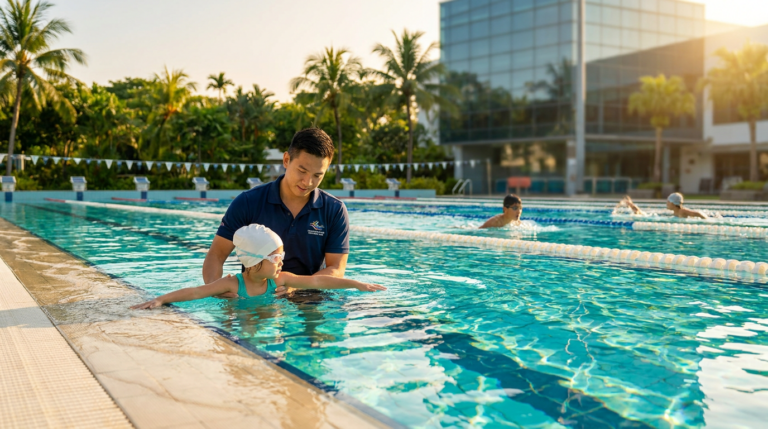
Choosing your learning environment also impacts your progress. While some brave souls attempt self-teaching, enrolling in a structured program with qualified instructors dramatically accelerates learning and ensures proper technique from the start. Poor habits developed through trial-and-error are difficult to correct later. Professional swimming programs in Singapore typically operate in controlled pool environments at country clubs, community centres, and international schools, where water temperature, depth, and safety conditions optimize learning conditions.
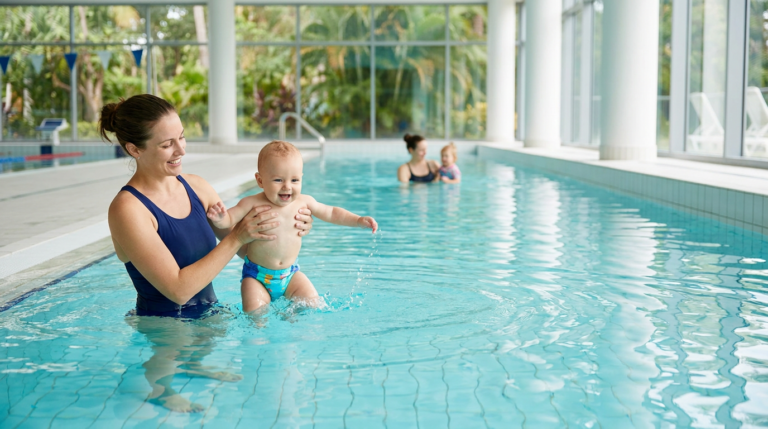
Your swimming journey begins not with strokes or techniques, but with developing comfort in an aquatic environment. Water familiarization addresses the psychological barriers that prevent many people from progressing beyond the shallow end. This foundational stage involves gradually acclimating your body and mind to the sensations of being surrounded by water, understanding how water supports you differently than solid ground, and learning to trust that water is a safe environment when approached with proper knowledge.
Start in shallow water where you can comfortably stand with your head well above the surface. Walk around the pool, feeling the water's resistance against your movements. Practice submerging different body parts sequentially: your hands, then arms, then shoulders, gradually working toward submerging your entire body up to your neck. This progressive exposure allows your nervous system to adjust without triggering panic responses.
A critical milestone in this stage is becoming comfortable with getting your face wet. Many beginners instinctively keep their faces away from water, which creates tension and inhibits proper swimming form. Practice splashing small amounts of water on your face, then progress to submerging your chin, then your mouth, and eventually your entire face. Take your time with this progression. There's no universal timeline—some learners achieve comfort in one session, while others need several sessions to feel confident.
During this familiarization phase, you'll also begin understanding water buoyancy. Try gentle bobbing movements, bending your knees to submerge and then straightening them to rise. Notice how water naturally wants to push you upward. This realization that water actively supports your body rather than pulling you down represents a profound psychological shift for many non-swimmers. Professional instructors facilitate this stage with structured activities that make familiarization feel playful rather than intimidating, particularly for younger learners.
Once you've established basic comfort in water, the next crucial skill is breath control. Proper breathing technique separates struggling swimmers from confident ones, yet it's often overlooked by self-taught learners who focus prematurely on arm and leg movements. Effective breath control involves coordinating inhalation and exhalation with your movements, preventing water intake, and maintaining a calm, rhythmic breathing pattern even during physical exertion.
Begin practicing breath control in shallow water where you feel completely secure. Take a deep breath through your mouth, hold it, and submerge your face completely underwater. Hold your breath comfortably for a few seconds, then lift your face out and exhale. Repeat this process multiple times until it feels natural. Progression involves extending the duration you can comfortably hold your breath underwater, though competitive breath-holding isn't the goal—controlled, relaxed breathing is.
The next progression introduces underwater exhalation, which is fundamental to all swimming strokes. Instead of holding your breath while submerged, practice exhaling slowly through your nose or mouth while your face is underwater. This technique prevents water from entering your nasal passages and establishes the breathing rhythm you'll use during actual swimming. Many programs use bubble-blowing exercises that make this skill engaging for children while building the same critical competency.
A common challenge at this stage is coordinating breathing with movement. Practice bobbing exercises where you submerge completely, exhale underwater, then surface to quickly inhale before submerging again. This rhythmic pattern mirrors the breathing cycle used in strokes like freestyle and breaststroke. Quality instruction during this phase ensures you develop correct breathing habits from the start, preventing the gasping, panicked breathing patterns that plague many self-taught swimmers.
Understanding that your body naturally floats is intellectually different from experiencing it firsthand. Floating skills build confidence, conserve energy, and form the foundation for proper body position during all swimming strokes. This stage transforms your relationship with water from standing vertically (as on land) to achieving horizontal body alignment, which is essential for efficient swimming.
Start with back floating, which many instructors introduce first because it allows breathing without any face submersion. In shallow water, practice sitting back into a reclined position while keeping your instructor or the pool edge within reach. Extend your arms out to the sides, tilt your head back so your ears are in the water, and allow your legs to rise. The key is relaxing completely—tension causes your hips and legs to sink. Your body will naturally find its floating equilibrium when you stop fighting it. Some body types float more readily than others due to body composition, but everyone can achieve sufficient buoyancy for swimming with proper technique.
Once comfortable floating on your back, progress to front floating (also called prone floating). Take a breath, extend your arms forward, lower your face into the water, and allow your legs to lift behind you. This position feels more vulnerable than back floating since you can't breathe, making your previous breath control practice essential. Initially, you might only hold this position for a few seconds before standing up, but gradually you'll build the confidence to remain floating longer.
Professional swimming programs often incorporate the mushroom float or jellyfish float during this stage, where you tuck your knees to your chest while submerged, demonstrating how your body naturally bobs to the surface. These exercises aren't just playful activities—they're proving to your nervous system that water is a supportive medium. Understanding horizontal body position at this stage prevents the common beginner mistake of swimming with hips too low, which creates excessive drag and makes swimming exhausting.
With floating and breathing skills established, you're ready to add propulsion, starting with leg movements. Kicking serves dual purposes in swimming: it provides forward momentum and maintains proper body position by keeping your legs near the surface. Different strokes utilize different kicking techniques, but most programs begin with the flutter kick used in freestyle swimming.
The flutter kick originates from your hips, not your knees. Your legs should remain relatively straight with only a slight knee bend, and your ankles should be loose and flexible, allowing your feet to whip through the water. Think of your legs as long flippers rather than rigid poles. The motion is alternating and continuous, with one leg kicking downward while the other recovers upward. Common mistakes include excessive knee bending (which looks like cycling), kicking too deeply (which causes your hips to sink), or keeping ankles rigid (which reduces propulsion).
Practice kicking while holding a kickboard or the pool edge, maintaining a horizontal body position with your face in the water. Focus on generating propulsion from steady, moderate kicks rather than frantic, splashing ones. Quality instruction helps identify whether your kicks are productive or simply creating turbulence. As your kicking improves, practice without the kickboard support, maintaining a streamlined front float position while your kicks provide forward movement.
For programs following the SwimSafer Program framework, kicking skills are progressively developed across stages, with specific distance and technique requirements at each level. This structured progression ensures students build genuine competency rather than superficial familiarity. The ability to kick effectively for extended distances without exhaustion indicates you're ready to coordinate arm movements with your established leg technique.
Adding arm movements transforms you from someone practicing swimming skills into an actual swimmer. Most structured programs introduce freestyle (front crawl) as the first stroke because it's mechanically efficient and builds endurance effectively. However, some programs may begin with breaststroke, particularly for learners who feel anxious about extended face submersion, since breaststroke allows forward-facing breathing.
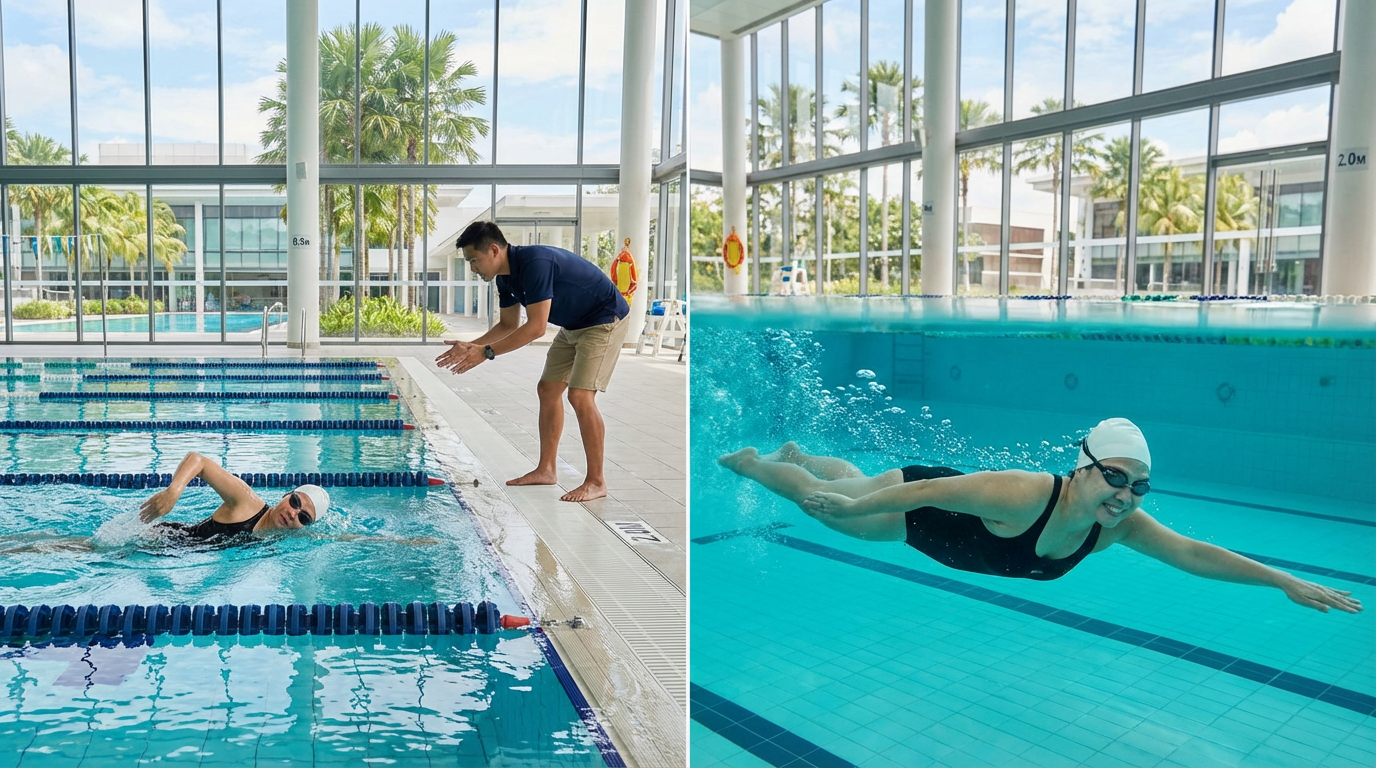
Freestyle arm technique involves alternating arm movements in a continuous cycle. One arm extends forward and enters the water, pulls through the water alongside your body providing propulsion, exits near your hip, recovers above water, and returns to the entry position while the opposite arm performs the same sequence. Your hand should enter the water fingertips first, with your arm extended but not locked. The underwater pull is where power comes from—your hand acts like a paddle, pulling water toward your feet as your body moves forward over your hand.
Initially, practice arm movements while standing in shoulder-deep water, focusing on the motion pattern without worrying about coordination. Progress to performing arm strokes while slowly walking forward, then while kicking with a pull buoy between your legs (which supports your lower body so you can focus on arms). The final progression combines arm movements with kicking—this is when coordination becomes challenging. Your arms and legs must work in rhythm without you consciously thinking about every movement.
Breathing coordination represents the most challenging aspect of learning freestyle. Proper technique involves rotating your entire body slightly as one arm recovers, turning your head to the side (not lifting it forward) to grab a quick breath, then returning your face to the water as you exhale. Many beginners hold their breath, creating oxygen debt that causes premature fatigue. Quality coaching during this stage prevents developing poor breathing habits that limit your swimming efficiency for years. Swimming programs with low student-to-instructor ratios can provide the individualized correction necessary to master this complex coordination.
Once you've achieved basic stroke competency, the focus shifts to building endurance and swimming continuously for longer distances. Many beginners can swim technically correct strokes for short bursts but lack the cardiovascular fitness and efficient technique to maintain swimming for extended periods. This stage involves gradual progression, allowing your body to adapt to swimming's unique physical demands.
Start by setting achievable distance goals. If you can currently swim one pool length (typically 25 meters in Singapore's pools), aim for one and a half lengths, then two lengths, progressively extending your range. Quality matters more than speed at this stage—swimming slowly with proper technique builds better fitness and skills than thrashing quickly with poor form. Focus on maintaining relaxed, rhythmic breathing and smooth, controlled movements even as fatigue builds.
Structured swimming programs incorporate interval training even for beginners, alternating periods of swimming with rest periods. This approach builds endurance more effectively than attempting to swim until exhaustion. You might swim two lengths, rest for 30 seconds, then repeat several times. As your fitness improves, the rest intervals shorten and the swimming intervals lengthen. Professional programs track your progression systematically, ensuring you're advancing at an appropriate pace without plateauing or overexerting.
This stage also introduces additional strokes beyond your first learned stroke. The four competitive strokes—freestyle, backstroke, breaststroke, and butterfly—each develop different muscle groups and movement patterns. Learning multiple strokes prevents overuse injuries, provides variety that makes swimming more engaging, and develops comprehensive aquatic competency. Programs aligned with SwimSafer 2.0 progressively introduce stroke variations with specific technical requirements at each stage, ensuring well-rounded skill development.
SwimSafer 2.0 represents Singapore's national swimming proficiency framework, developed through collaboration between the National Water Safety Council and Sport Singapore. Introduced as a refreshed version of the original SwimSafer program in 2017, SwimSafer 2.0 provides a structured, progressive curriculum that teaches swimming skills, water safety knowledge, and personal survival techniques to people of all ages and abilities.
The program consists of six progressive stages, each with specific skill requirements, distance benchmarks, and water safety knowledge components. Stage 1 focuses on water familiarization and basic movement for complete beginners. Stage 2 introduces fundamental propulsion and breathing skills. Stage 3 develops stroke techniques and personal water safety. Stage 4 refines stroke efficiency and introduces basic rescue skills. Stage 5 emphasizes endurance and more advanced rescue techniques. Stage 6 represents advanced swimming proficiency with leadership and lifesaving capabilities.
What distinguishes SwimSafer 2.0 from casual swimming lessons is its comprehensive approach. Students don't simply learn mechanical swimming movements—they develop understanding of water safety principles, learn to recognize and respond to aquatic dangers, practice survival techniques like treading water and survival swimming, and gain knowledge about preventing water-related accidents. This holistic curriculum reflects Singapore's commitment to reducing drowning incidents and creating a water-safe population.
Aquatic centres offering SwimSafer 2.0 programs employ instructors certified in the framework's teaching methodology. Assessment occurs through the Centralised Assessment Management System (CAMS), ensuring standardized evaluation across different teaching venues. Successful students receive nationally recognized certification at each stage, providing tangible validation of their competency progression. For parents and adult learners, enrolling in a SwimSafer-aligned program ensures you're following Singapore's gold standard for swimming education rather than inconsistent, unstructured lessons.
Singapore offers abundant swimming instruction options, from ActiveSG community programs to private lessons at country clubs and specialized aquatic centres. Making an informed choice significantly impacts your learning experience and progression speed. Several factors deserve consideration when selecting your swimming program.
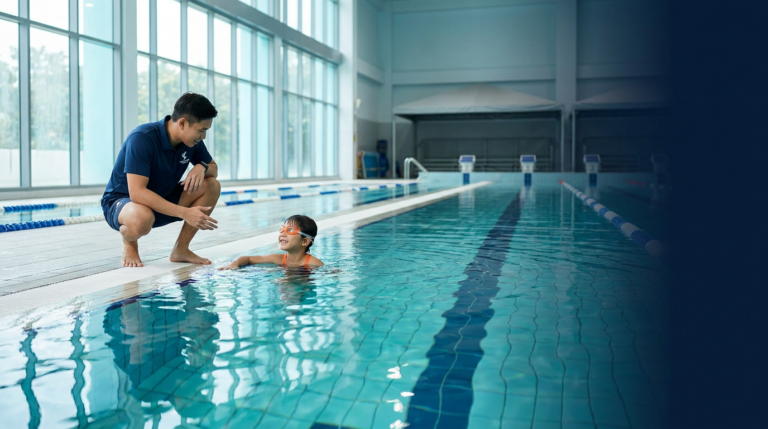
Instructor qualifications should top your evaluation criteria. Professional swimming instructors possess certifications from recognized bodies and undergo regular training updates. Experienced instructors can identify technical flaws invisible to beginners, provide corrections that accelerate learning, and create safe learning environments that build confidence rather than fear. An aquatic centre with over two decades of teaching experience and thousands of successfully trained students demonstrates proven instructional quality and systematic methodology.
Class size and structure directly affect the individualized attention you receive. Group lessons offer social learning environments and cost efficiency, with prices typically ranging from $35 to $55 per session in Singapore. However, larger groups mean less individual correction time. Semi-private or private lessons, generally ranging from $60 to $120 per session, provide personalized instruction tailored to your specific challenges and learning pace. For nervous beginners or those with previous negative experiences, private instruction's individualized approach often justifies the premium investment.
Consider the program's curriculum structure and whether it follows recognized frameworks like SwimSafer 2.0. Structured programs with clear progression pathways, skill benchmarks, and assessment criteria ensure systematic development rather than random lesson content. Look for programs that emphasize not just stroke mechanics but also water safety, survival skills, and theoretical knowledge. The presence of CAMS certification capability indicates the program meets national standards and provides recognized credentials upon completion.
Facility quality and location convenience also matter for consistency. Programs operating in well-maintained pools at comfortable temperatures create better learning conditions. Convenient locations increase the likelihood you'll maintain regular attendance, which is crucial since swimming skills develop through consistent practice rather than sporadic sessions. Some aquatic centres operate across multiple venues including international schools and country clubs, offering scheduling flexibility that accommodates various commitments.
For families with children showing competitive potential or adults interested in pursuing swimming beyond basic competency, consider programs that offer progression pathways into advanced training. Established aquatic centres often provide routes from learn-to-swim programs into competitive swimming, specialized disciplines like artistic swimming, water polo, or other aquatic sports. An organization with a proven track record of developing national-level athletes and supporting Direct School Admission (DSA) pathways demonstrates capability in nurturing talent beyond recreational swimming.
Achieving basic swimming competency—being able to swim multiple laps with proper technique and confidence—represents a significant accomplishment, but it's just the beginning of what aquatic activities can offer. Many swimmers who initially sought basic water safety skills discover unexpected passion for aquatic sports and continue developing their abilities far beyond their original goals.
Competitive swimming offers goal-oriented training for those who thrive on measurable improvement and enjoy the structure of organized sport. Competitive programs focus on refining technique, building speed and endurance, and participating in swim meets where you can test your abilities against others in your age and skill category. Singapore's swimming community includes numerous competitions at various levels, from interclub meets to national championships, providing competitive opportunities regardless of when you started swimming.
Alternative aquatic disciplines provide variety beyond traditional lap swimming. Artistic swimming (formerly synchronized swimming) combines swimming skills with dance, gymnastics, and artistic expression, appealing to those who enjoy creative movement. Underwater hockey transforms swimming into a team sport played on the pool bottom, developing breath control, diving skills, and strategic thinking. Water polo combines swimming endurance with ball-handling skills and team tactics. Each discipline offers unique challenges and social communities, expanding swimming from solitary exercise into diverse aquatic engagement.
For those drawn to water safety and helping others, progression into lifesaving certification channels your swimming competency into potentially life-saving capabilities. Advanced SwimSafer stages introduce rescue techniques and water safety leadership, while dedicated lifesaving courses develop comprehensive rescue skills, first aid knowledge, and emergency response capabilities. These qualifications can lead to employment as lifeguards or swimming instructors, transforming your learned skill into professional opportunities.
Many adult swimmers discover that swimming becomes their preferred fitness activity, offering low-impact cardiovascular exercise that can continue throughout life. Unlike high-impact sports that become difficult with age, swimming actually becomes more accessible as you develop efficiency and technique. The meditative quality of rhythmic swimming provides stress relief and mental clarity that gym workouts often lack. Masters swimming programs cater specifically to adult swimmers, offering structured training, social connection with fellow adult swimmers, and optional competition opportunities without the intensity of youth competitive programs.
Transforming from a non-swimmer to a confident, capable swimmer is a journey measured not in days but in consistent, progressive practice. Each stage we've outlined—from initial water familiarization through breath control, floating, propulsion, stroke coordination, and endurance building—represents a manageable step that thousands of Singaporeans successfully navigate every year. The key is approaching swimming as a skill developed through patient, structured learning rather than expecting immediate mastery.
Your success in this journey depends significantly on the quality of instruction you receive. While determination and practice are essential, professional guidance ensures you develop correct techniques from the start, avoid dangerous habits, and progress efficiently without frustration or injury. Singapore's swimming infrastructure, supported by national frameworks like SwimSafer 2.0 and established aquatic centres with decades of teaching experience, provides world-class resources for learning this vital life skill.
Whether your goal is basic water safety, fitness improvement, competitive achievement, or simply enjoying Singapore's abundant aquatic recreational opportunities with confidence, the path begins with that first step into the water. The transformation from apprehensive non-swimmer to someone who moves through water with ease and joy is not only possible—it's entirely within your reach with the right approach, quality instruction, and commitment to the process.
Join over 25,000 students who have learned to swim with confidence through SPEEDISWIM's proven programs. With over 20 years of experience and professionally qualified coaches across multiple venues, we provide the structured, supportive environment you need to transform from non-swimmer to confident aquatic enthusiast.