Teaching your child to swim ranks among the most important life skills you can provide. In Singapore, where water activities are woven into our tropical lifestyle and nearly every residential development features a swimming pool, water competency isn't just a recreational advantage—it's a critical safety requirement.
Yet many parents struggle with fundamental questions: When is my child truly ready to start lessons? What type of program suits their age and temperament? How do I navigate the SwimSafer certification pathway? With swimming programs ranging from parent-and-baby classes to competitive squad training, the options can feel overwhelming.
This comprehensive guide breaks down swimming class selection by developmental stage, helping you make informed decisions based on your child's age, abilities, and learning goals. Drawing on over two decades of aquatic education experience and insights from training more than 25,000 students, we'll walk you through what to expect at each age, how to identify quality instruction, and when children might be ready to progress beyond recreational swimming into competitive disciplines.
The question of when to start swimming lessons doesn't have a universal answer. While some programs accept infants as young as six months, readiness depends on multiple factors beyond chronological age. Physical coordination, emotional maturity, attention span, and comfort level around water all play crucial roles in determining the ideal starting point.
Most pediatric experts agree that formal swimming instruction becomes most effective around age four, when children have developed sufficient muscle control and can follow multi-step instructions. However, earlier water familiarization classes serve valuable purposes—building comfort, teaching basic water safety awareness, and establishing positive associations with aquatic environments. The key is matching program expectations to your child's developmental capabilities rather than forcing readiness.
Parents should also consider practical factors like water temperature sensitivity, separation anxiety, and toilet training status. A child who becomes distressed when separated from parents may benefit from waiting a few months, while an exceptionally water-confident toddler might thrive in earlier structured lessons. Trust your instincts about your child's individual readiness, and remember that starting later doesn't prevent eventual swimming competency or even competitive excellence.
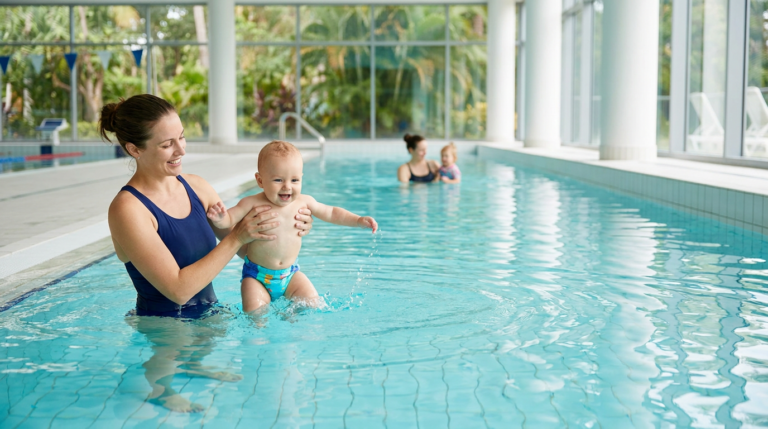
Swimming programs for the youngest age group focus primarily on water acclimatization rather than stroke development. These parent-accompanied classes introduce babies and toddlers to aquatic environments through play-based activities, gentle submersion exercises, and sensory experiences that build comfort and confidence.
Typical infant swimming sessions run 30 minutes or less, recognizing young children's limited attention spans and temperature regulation challenges. Activities include supported floating on backs and stomachs, gentle kicks while held by parents, simple songs with water play, and gradual face wetting. Instructors guide parents through safe holds and techniques while monitoring each child's comfort level. The atmosphere remains playful and pressure-free, with the primary goal being positive water experiences.
At this stage, children aren't developmentally capable of true swimming or self-rescue. Programs claiming to teach "survival swimming" to infants should be approached cautiously—while some babies can be conditioned to float when submerged, this doesn't constitute comprehensive water safety and may create false parental confidence. Quality programs emphasize constant supervision and realistic expectations about young children's aquatic capabilities.
Early water exposure offers genuine benefits: enhanced parent-child bonding, improved body awareness and coordination, and normalized relationships with water that may ease later formal instruction. Children who attend infant programs often show less fear and greater comfort during subsequent swim lessons. However, these advantages don't guarantee faster skill acquisition or eliminate drowning risk, making continued vigilant supervision absolutely essential.
The preschool years represent the sweet spot for beginning formal swimming instruction. Most children in this age range have developed the physical coordination, cognitive ability, and attention span needed to learn fundamental swimming skills. This is when many families transition from parent-accompanied classes to independent lessons where children work with instructors in small groups.
Preschoolers typically begin with basic water orientation—submerging faces, blowing bubbles, floating with assistance, and learning to enter and exit pools safely. As confidence builds, they progress to supported front and back glides, basic kicking techniques, and elementary arm movements. Most children in this age group work toward swimming short distances (5-10 meters) independently, though proficiency varies significantly based on individual development and lesson frequency.
The SwimSafer Program Stage 1 aligns well with preschool capabilities, focusing on water confidence, basic movement, and foundational safety knowledge. Children learn to recognize pool depth markers, understand basic water safety rules, and develop an awareness of their own abilities and limitations. Quality instruction at this stage balances skill development with safety education, ensuring children understand what they can and cannot do independently in water.
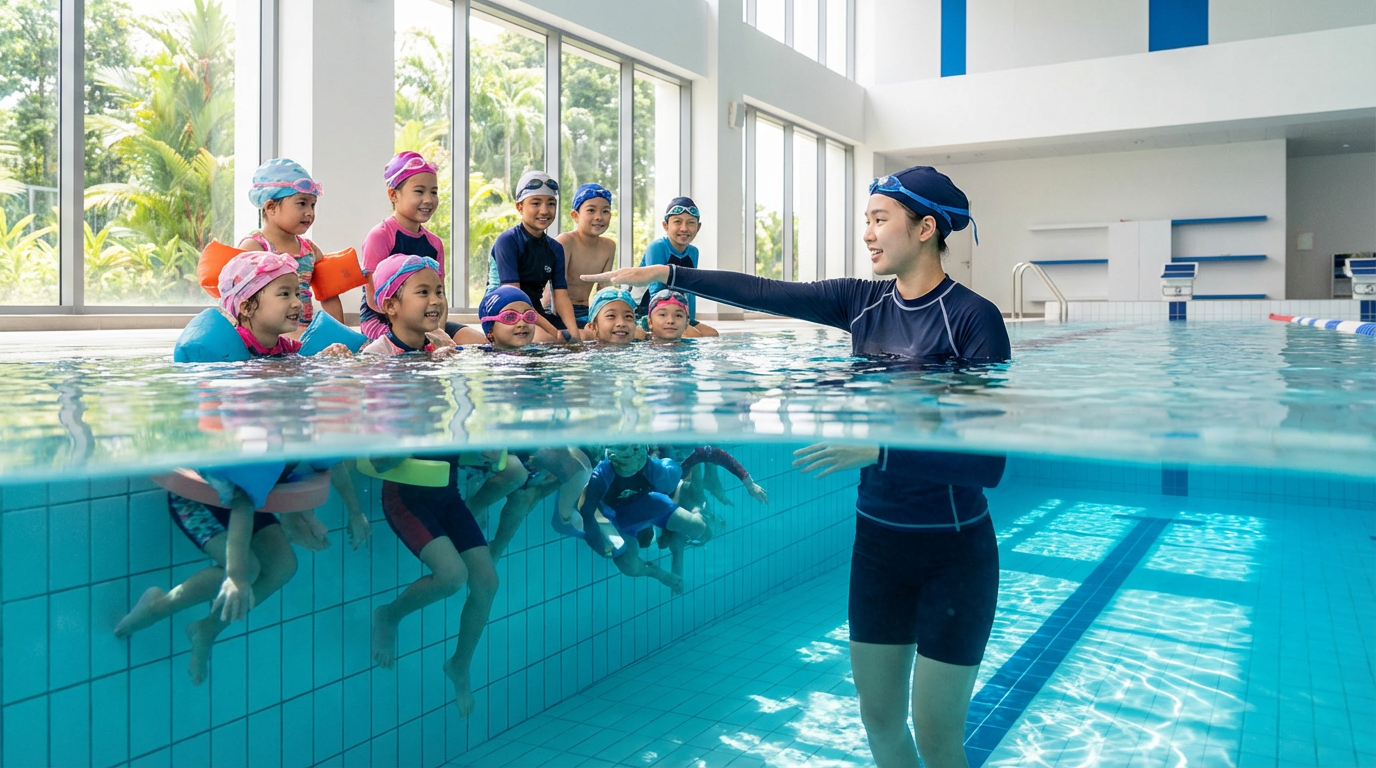
Preschool swimming classes work best with small student-to-instructor ratios (ideally 4:1 or smaller) and consistent scheduling. Children this age thrive on routine and familiar environments, so frequent, shorter sessions (two to three times weekly for 30-40 minutes) typically produce better results than single weekly hour-long classes. The instructor's ability to engage young learners through games, songs, and positive reinforcement often matters more than the specific curriculum, as maintaining enthusiasm directly impacts skill retention.
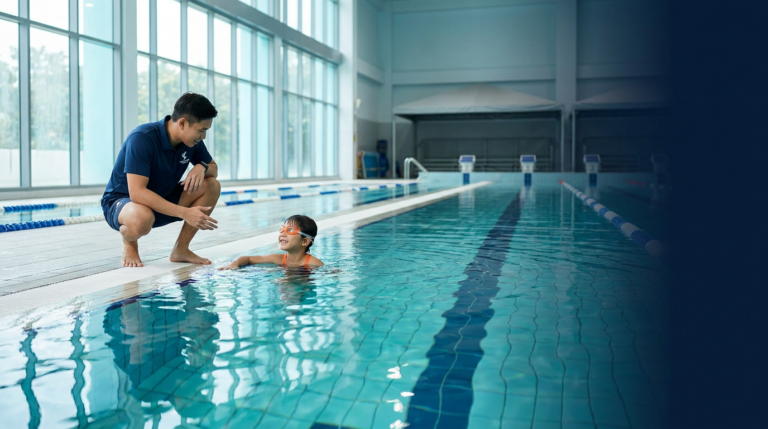
Primary school children who are beginning swimmers or working on fundamental skills occupy a unique position. They possess greater physical strength, coordination, and learning capacity than preschoolers, allowing for faster skill acquisition. However, some may carry water-related fears or self-consciousness about starting "late" that require sensitive instruction approaches.
Children in this age bracket can often progress through basic swimming stages more rapidly than younger learners. Their improved body awareness, stronger muscle control, and ability to understand and apply technique corrections enable efficient skill development. Many can achieve basic swimming competency—defined as swimming 25 meters continuously with recognizable stroke technique—within one to two terms of regular instruction.
The SwimSafer 2.0 framework provides clear progression pathways for this age group. Students typically work through Stages 1-4, which cover water confidence through to stroke refinement and survival skills. These stages emphasize skill development alongside water safety and personal survival education, teaching children not just how to swim but how to stay safe in various aquatic environments. The program's structure allows children to see measurable progress through stage completion, providing motivating milestones.
Parents sometimes worry that children starting swimming lessons at age seven or eight have "missed" optimal learning windows. In reality, older beginners frequently catch up to peers within a year or two of consistent instruction. The key is finding programs that group students by ability rather than strictly by age, preventing unnecessary embarrassment and ensuring appropriate challenge levels. Instructors experienced in working with older beginners understand how to build confidence while accelerating skill development through age-appropriate explanations and practice structures.
Older children and teenagers pursuing swimming lessons typically fall into two categories: those seeking basic water competency for safety and recreation, and those interested in swimming as fitness or competitive pursuit. Both groups benefit from age-appropriate instruction that respects their cognitive maturity while addressing their specific goals.
Teens learning to swim for the first time may feel self-conscious, particularly if peers are already proficient. Private or semi-private lessons often work better for this age group initially, allowing focused instruction without perceived judgment. As confidence builds, transitioning to small group classes with similarly skilled students provides social motivation and normalized learning experiences. Quality programs create supportive environments where older beginners can learn without embarrassment.
For students with basic competency seeking refinement, this age offers excellent opportunities for stroke technique improvement, endurance building, and specialty stroke development. The physical strength and cardiovascular capacity of adolescence enables rapid fitness gains, and their cognitive development allows them to understand biomechanical concepts that improve efficiency and speed.
Older children with solid swimming foundations might explore specialized aquatic disciplines. Competitive swimming offers fitness benefits, goal-setting opportunities, and potential pathways through school teams and national development programs. Alternative aquatic sports like water polo, artistic swimming, and underwater hockey provide team-based experiences that may appeal to students seeking social connection alongside physical development.
Organizations with comprehensive aquatic programs can assess individual strengths and interests, guiding students toward disciplines that match their abilities and preferences. Some students discover unexpected talents in specialty areas, while others simply enjoy the variety and challenge of exploring different aquatic sports.
SwimSafer 2.0 represents the national standard for swimming proficiency in Singapore. Developed through collaboration between the National Water Safety Council and Sport Singapore, this framework teaches people of all ages to swim safely and competently in various aquatic environments. Understanding the SwimSafer pathway helps parents set realistic expectations and track meaningful progress.
SwimSafer 2.0 consists of six progressive stages, each building on previous skills while introducing new competencies. Stage 1 (Water Confidence) focuses on basic entries, exits, and simple movements. Stage 2 (Water Skills) develops fundamental propulsion and breathing techniques. Stage 3 (Personal and Water Safety) introduces basic stroke development and safety knowledge. Stage 4 (Stroke Development) refines technique across multiple strokes. Stage 5 (Stroke Refinement) emphasizes efficiency, endurance, and survival skills. Stage 6 (Survival Techniques) teaches advanced survival strategies and rescue awareness.
Each stage includes specific skill assessments, swimming distances, and knowledge components. Students must demonstrate competency across all requirements before progressing, ensuring comprehensive development rather than just advancing based on time spent in lessons. This competency-based approach prioritizes genuine skill mastery over simple participation.
SwimSafer certification provides standardized benchmarks recognized across Singapore's aquatic industry. Many schools reference SwimSafer stages when assessing swimming capabilities for camps, overseas trips, and water-based activities. The certification also creates clear progression pathways that motivate continued learning and provide tangible achievement recognition. For families, SwimSafer stages offer an objective framework for evaluating progress and identifying when children have achieved genuine water safety competency.
Some children demonstrate exceptional swimming aptitude, water confidence, or competitive drive that warrants exploring pathways beyond recreational swimming. Recognizing and nurturing this talent requires understanding how competitive swimming development works and what commitments different levels require.
Natural swimming talent manifests in various ways: rapid skill acquisition, exceptional body position and feel for the water, high intrinsic motivation to improve, or remarkable endurance relative to peers. Coaches experienced in talent identification can assess whether a child's abilities and temperament suit competitive development. Not every strong swimmer wants or needs competitive training, but for those who do, proper guidance can unlock remarkable potential.
Established aquatic centers with proven competitive track records offer significant advantages for talent development. Access to qualified coaches, structured training progressions, and pathways to national development programs creates environments where talented swimmers can reach their potential. Over two decades, SPEEDISWIM has groomed more than 1,000 athletes across multiple aquatic disciplines, with over 50 swimmers selected for National Youth and National Teams—demonstrating the effectiveness of comprehensive, professionally guided development.
Competitive swimming requires substantial time commitments that increase with performance level. Developmental squad swimmers might train three to four times weekly, while national-level athletes often train six to eight sessions per week plus competition weekends. Parents should consider family logistics, academic demands, and the child's genuine enthusiasm before committing to competitive pathways. The journey works best when swimmers themselves drive the commitment, supported by families who facilitate without pressuring.
Many competitive swimmers also benefit from programs like Direct School Admission (DSA), which recognize sporting talents in secondary school admissions. Swimmers with competitive achievements and clear development trajectories can leverage these pathways, though academic performance and well-rounded development remain important. Quality competitive programs support student-athletes in balancing sporting excellence with academic responsibilities.
With numerous swimming programs available across Singapore, selection can feel daunting. Several key factors help parents identify programs that will effectively serve their children's needs while providing safe, quality instruction.
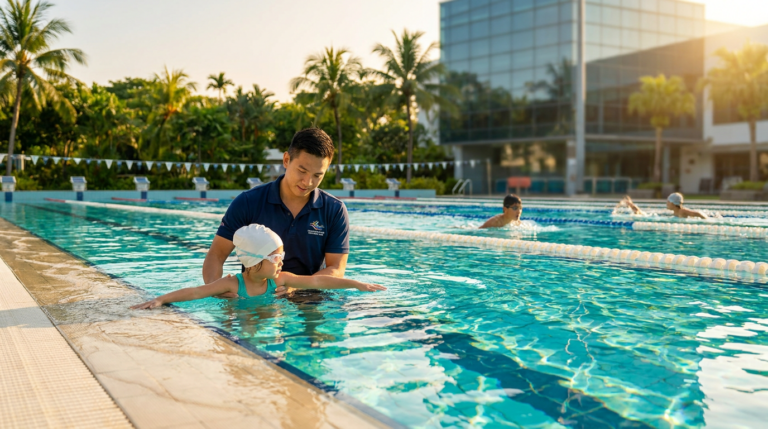
Coach quality represents the single most important factor in swimming lesson effectiveness. Look for instructors with recognized certifications from organizations like the Singapore Swimming Coaches Association (SSPA) or equivalent international bodies. Beyond credentials, consider teaching experience, particularly with your child's age group. Coaches who understand child development, can adapt to different learning styles, and create positive, encouraging environments produce better outcomes than those with technical knowledge alone.
Programs employing professionally qualified coaches demonstrate commitment to quality instruction. Centers that invest in ongoing coach development, maintain high coaching standards, and match instructors to appropriate student groups typically deliver superior results. Don't hesitate to ask about coach qualifications, teaching philosophy, and experience when evaluating programs.
Effective swimming programs follow structured curricula aligned with recognized frameworks like SwimSafer 2.0. Clear skill progressions, defined assessment criteria, and transparent advancement standards ensure systematic development rather than random lesson content. Programs should provide regular progress updates and clear communication about what children are working toward and how they're advancing.
Class sizes matter significantly, particularly for younger children and beginners. Smaller groups enable individualized attention, more practice time per student, and better safety supervision. While private lessons offer maximum individual focus, semi-private and small group settings (3-6 students) often provide optimal balances between personalized instruction and peer motivation.
Pool characteristics affect learning comfort and outcomes. Teaching pools with shallow areas suit beginners better than standard lap pools. Water temperature matters especially for young children, who chill more quickly than adults. Facility cleanliness, maintenance standards, and safety equipment availability reflect operational quality and commitment to student wellbeing.
Location convenience influences attendance consistency, which directly impacts skill development. Programs at multiple venues, including international schools and country clubs, offer families flexibility to choose locations that fit their routines, making regular attendance more sustainable over time.
Reputable programs typically offer trial lessons or assessment sessions before enrollment. These opportunities allow you to observe teaching methods, assess your child's comfort with the instructor and environment, and evaluate whether the program's approach matches your expectations. Take advantage of these opportunities rather than committing blindly based on marketing materials alone.
Swimming lesson pricing in Singapore varies considerably based on format, location, instructor qualifications, and facility type. Understanding typical cost ranges helps families budget appropriately and identify whether pricing reflects reasonable value or potential quality concerns.
Group swimming lessons typically range from $35 to $55 per session, with variations based on class size, program reputation, facility quality, and instructor experience. Programs at the lower end of this range may have larger class sizes, less experienced instructors, or shorter session durations. Mid-range pricing generally reflects established programs with qualified coaches, reasonable class sizes (4-6 students), and comprehensive curricula. Premium pricing sometimes indicates exclusive facilities, renowned coaching, or specialized programs but doesn't automatically guarantee superior outcomes.
When evaluating group lesson pricing, consider cost-per-month rather than per-session if programs require term commitments. Factor in whether assessments, certifications, or progress reports involve additional fees. Some programs include SwimSafer certification costs in tuition, while others charge separately for assessments.
Private or semi-private lessons command premium pricing, generally ranging from $60 to $120 per session depending on instructor credentials, location, and session length. These formats suit children needing intensive skill development, those with special needs requiring adapted instruction, or older beginners preferring individual attention. While more expensive than group lessons, the personalized focus can accelerate progress for students who benefit from customized pacing and technique feedback.
Semi-private lessons (two to three students) offer middle-ground options—more affordable than fully private instruction while maintaining small ratios and significant individual attention. For families with multiple children at similar skill levels, semi-private lessons can provide both value and quality.
The cheapest option rarely delivers the best value. Consider what pricing includes: qualified instruction, safe facilities, clear progression pathways, recognized certifications, and positive learning environments. Programs with proven track records, experienced coaches, and comprehensive aquatic offerings may cost more initially but often deliver faster skill development, better safety outcomes, and potential pathways to advanced aquatic opportunities that budget programs cannot match.
Choosing the right swimming program for your child represents an investment in their safety, confidence, and lifelong relationship with water. By understanding age-appropriate expectations, recognizing quality instruction indicators, and selecting programs aligned with your child's developmental stage and goals, you set the foundation for swimming success.
Whether your child is taking their first water experiences as a toddler, building fundamental skills as a primary schooler, or exploring competitive pathways as a talented swimmer, the right program makes all the difference. Look for organizations with proven track records, professionally qualified coaches, structured curricula aligned with national standards like SwimSafer 2.0, and comprehensive aquatic offerings that can grow with your child's evolving interests and abilities.
Remember that every child develops at their own pace. Some will take to water immediately, while others need patient, gradual exposure. What matters most is consistent, quality instruction in supportive environments that prioritize both skill development and genuine water safety understanding. The investment you make today in your child's swimming education pays dividends throughout their lifetime in confidence, safety, and opportunities to enjoy Singapore's aquatic lifestyle.
With over 20 years of experience training more than 25,000 students, SPEEDISWIM offers comprehensive swimming programs for all ages and abilities. From beginner water confidence to competitive squad training, our professionally qualified coaches provide structured, SwimSafer 2.0-aligned instruction across multiple convenient locations.