Every elite Singaporean swimmer who has represented the nation on the regional or global stage started somewhere — often in a modest lane at a local age group meet, heart racing, goggle straps tightened for the first time. For parents of young swimmers and aspiring competitive athletes, understanding how youth swimming competitions in Singapore are structured is the first step toward helping a child grow from a confident recreational swimmer into a podium contender.
Singapore has one of Southeast Asia's most well-organised youth aquatic competition systems, offering a clear and progressive pathway from entry-level club meets all the way to national championships and regional representation. Whether your child has just completed their SwimSafer 2.0 certification and is asking what comes next, or they are already training with a club and eyeing their first qualifying standard, this guide covers everything you need to know — age categories, competition formats, qualifying standards, the DSA pathway, and how to choose the right programme to get them there.
Competitive swimming offers children far more than medals and ribbons. It builds discipline, time management, resilience, and goal-setting habits that serve young people well beyond the pool. In Singapore specifically, swimming is one of the few sports with a structured talent pipeline that extends from primary school age all the way through national representation — meaning the investment a child makes in the sport at age eight can realistically lead to school team selection, national age group recognition, and even international competition by their mid-teens.
The sport also carries genuine academic advantages. Swimming is one of the most popular choices under Singapore's Direct School Admission (DSA) scheme, giving talented student-athletes the opportunity to gain entry into secondary schools based on their sporting achievements and potential. For families looking at the full picture, competitive swimming is one of the most rewarding long-term commitments a young athlete can make.
In Singapore, youth swimming competitions are typically organised around age group categories that allow swimmers to race against peers of similar developmental stages. Swimming Singapore, the national governing body, uses the following primary age group divisions for competitive events:
Age is typically calculated based on the swimmer's age on the first day of the competition or the calendar year of the event, depending on the specific meet's rules. Parents and coaches should always verify the age classification rules for each individual competition before registration.
Singapore's competitive swimming ecosystem is layered progressively, designed so that young swimmers can enter at an appropriate level and advance as their performance improves. Here is how that pathway typically unfolds.
For most young swimmers, the competitive journey begins at club-level meets and invitational competitions. These events are organised by individual swimming clubs, aquatic centres, or schools and are generally open to swimmers regardless of their qualifying times. They serve as an ideal introduction to the race-day environment — warm-ups, marshalling, heat sheets, electronic timing, and results boards — without the pressure of strict qualifying standards. Many organisations running competitive swimming programmes use these meets as important milestones in a young athlete's development calendar.
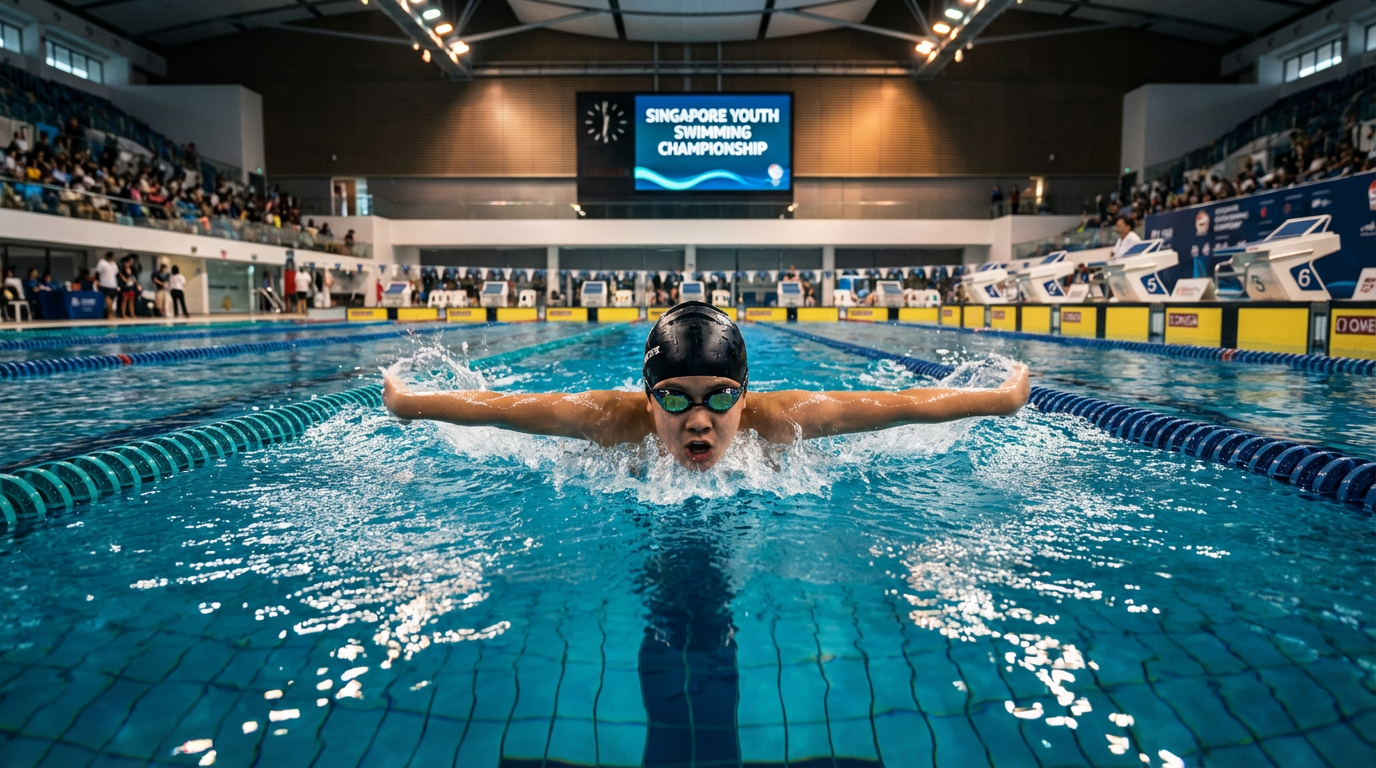
Swimming Singapore organises the Singapore Age Group Swimming Championships, one of the most important annual competitions for developing swimmers. Held across multiple sessions to accommodate the volume of young competitors, this meet typically features all four strokes (freestyle, backstroke, breaststroke, and butterfly) across various distances, as well as individual medley events. Qualifying times are required for most events, which means consistent training is essential before a swimmer can participate. Achieving a top-eight or top-three finish at age group level is considered a meaningful competitive benchmark and often catches the attention of selectors for national programmes.
Organised under the banner of the National School Games (NSG), the NSG Swimming Championships is one of the most prestigious school-level competitions in Singapore. Swimmers compete representing their primary or secondary schools, and the competition is divided into A, B, and C divisions based on school level and age. For many student-athletes, this is the highlight of their school sports calendar — a chance to earn school colours, contribute to team points, and demonstrate the kind of performance that supports DSA applications. Training for NSG-level performance typically requires early specialisation and a structured training load that goes well beyond recreational swimming lessons.
The Singapore National Swimming Championships represent the pinnacle of domestic competitive swimming. Open to swimmers who have achieved the relevant qualifying standards, this meet attracts the country's top talent across all age groups and serves as a key selection event for national teams competing in regional and international tournaments such as the Southeast Asian (SEA) Games, ASEAN School Games, and World Aquatics Championships. Exceptionally talented age groupers who have punched through open qualifying times may find themselves racing alongside senior national athletes — a powerful motivational experience for any young competitor.
Most structured competitions in Singapore beyond the introductory club-meet level require swimmers to have previously achieved a qualifying time in their target event. These times are set by Swimming Singapore and updated periodically to reflect the improving standards of the national talent pool. Qualifying times serve two important purposes: they ensure competitive fields are appropriately matched, and they give young swimmers a concrete, measurable target to train toward.
For parents new to the competitive scene, it is worth understanding that qualifying times are recorded during sanctioned meets with electronic timing systems — not during training sessions or informal time trials. This makes consistent competition participation important, not just consistent training. Coaches play a critical role in helping swimmers peak at the right moment and select appropriate events to chase qualifying cuts.
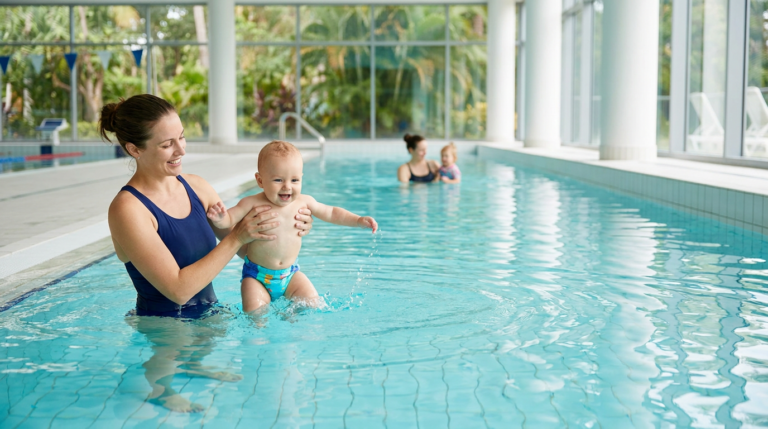
SwimSafer 2.0 is Singapore's national learn-to-swim standard, developed through a collaboration between the National Water Safety Council and Sport Singapore. The programme was originally launched in 2010 and refreshed between 2016 and 2017 to place greater emphasis on water safety, personal survival skills, and structured stroke development across six progressive stages. Children who complete the full SwimSafer 2.0 curriculum emerge with a solid technical foundation in all four competitive strokes and a strong understanding of water safety principles.
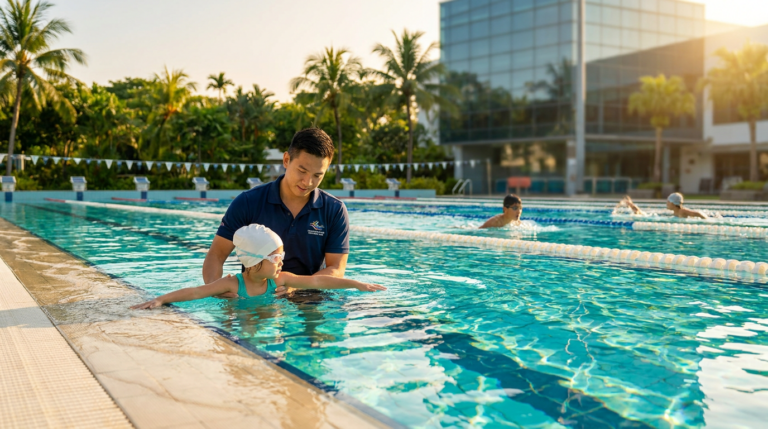
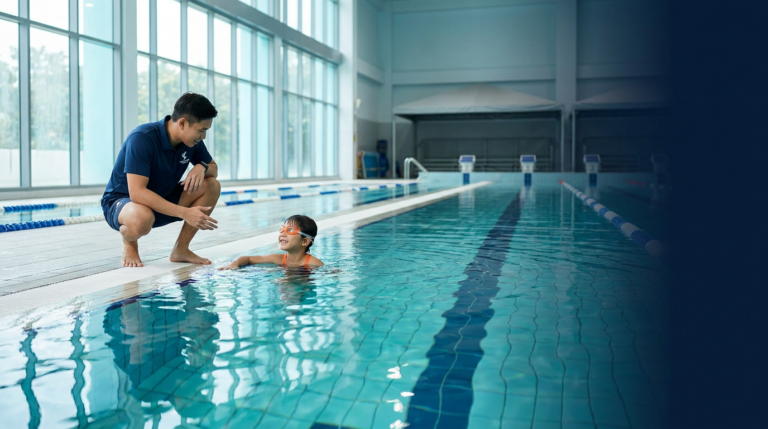
For many children, completing SwimSafer stages 3 through 6 naturally reveals a talent and passion for swimming that points toward competitive training. The transition from a SwimSafer programme to a structured competitive squad is one of the most common and rewarding pathways in Singapore's aquatic development system. Coaches trained to assess technique and potential during SwimSafer lessons are well-placed to identify children who are ready to take that next step.
The jump from recreational swimming to competition requires more than faster strokes. Young swimmers need mental preparation, race strategy awareness, and an understanding of competition etiquette alongside their physical conditioning. Here are the most important preparation areas to focus on:
Group swimming lessons in Singapore typically range from $35 to $55 per session, while private or semi-private coaching commands $60 to $120 per session. For competitive development, many families find that a combination of squad training several times per week, supplemented by occasional private technical sessions, offers the best balance of progress and cost efficiency.
Singapore's Direct School Admission (DSA) scheme allows primary school students with demonstrated talent in sports including swimming to apply for secondary school placements ahead of the standard PSLE-based admissions process. Swimming is consistently one of the most popular DSA categories, reflecting the sport's strong infrastructure and the number of talented young swimmers the system produces each year.
To be competitive for DSA-Swimming, students typically need a meaningful competition record — results from age group championships, NSG meets, or club-level competitions that demonstrate both achievement and potential. Schools look for consistency of performance, coachability, and the character qualities that competitive swimmers tend to develop. Organisations with a proven track record in elite athlete development, such as SPEEDISWIM — which has supported over 50 swimmers selected for National Youth and National Teams — are well-positioned to guide families through this process and provide the documentation and coaching support that DSA applications require.
Not all competitive swimming programmes are built the same. When evaluating options for your child, look beyond marketing claims and focus on the factors that actually drive long-term athlete development. Qualified coaches with recognised certifications, a structured periodisation plan for the training year, transparent communication with parents, and a healthy team culture are all non-negotiable indicators of programme quality.
It also helps to choose an organisation that operates across multiple aquatic disciplines. Exposure to sports like artistic swimming, water polo, and even underwater hockey can build broader athletic qualities — coordination, spatial awareness, teamwork — that feed back into competitive swimming performance. A truly comprehensive aquatic environment gives young athletes the richest possible foundation, whether their goal is a personal best at an age group meet or a place on the national team.
Singapore's youth swimming competition landscape is rich, well-structured, and genuinely meritocratic — every talented, hardworking young swimmer has a pathway to follow, from their first invitational heat right through to national representation. The key is starting with the right foundation, finding coaches who understand both the technical and human sides of athlete development, and trusting the process as your child grows into their potential.
Whether your son or daughter is just finishing their SwimSafer 2.0 stages and catching the competition bug, or they are already chasing qualifying times with national ambitions firmly in mind, the most important decision you can make right now is choosing an environment where they are coached well, supported fully, and inspired every single session.
With over 25 years of experience developing elite swimmers in Singapore — including more than 50 athletes selected for National Youth and National Teams — SPEEDISWIM has the coaching expertise, structured programmes, and competition support your child needs to thrive. From SwimSafer certification through to competitive squad training and DSA preparation, we are with your family every stroke of the way.