As a parent considering swimming lessons for your child or simply planning regular pool visits, you've likely wondered about the safety of chlorinated water. The distinctive smell of chlorine, stories about skin irritation, and concerns about chemical exposure are common worries that many Singapore parents share. It's a valid question that deserves a thorough, evidence-based answer.
The good news is that when properly maintained, chlorinated pools are safe for children and represent one of the most effective ways to prevent waterborne illnesses in aquatic facilities. At SPEEDISWIM, with over 20 years of experience training more than 25,000 students across Singapore, we've seen firsthand how properly managed pool chemistry supports healthy swimming environments where children can safely learn this essential life skill.
This comprehensive guide will help you understand the facts about chlorine safety, distinguish between myths and realities, and make informed decisions about your child's swimming activities. Whether you're enrolling your child in structured programs like the SwimSafer program or enjoying recreational pool time, understanding pool chemistry will give you confidence in the aquatic environments your children use.
Chlorine serves as the primary disinfectant in most swimming pools worldwide, and for good reason. This chemical compound effectively eliminates harmful bacteria, viruses, and other microorganisms that naturally accumulate in water shared by multiple swimmers. Without proper disinfection, pools would become breeding grounds for pathogens that cause ear infections, skin rashes, respiratory illnesses, and even serious gastrointestinal diseases.
When chlorine is added to pool water, it undergoes a chemical reaction that produces hypochlorous acid and hypochlorite ions. These compounds work by penetrating the cell walls of microorganisms and destroying the enzymes and structures inside, rendering them harmless. This process happens continuously in a properly maintained pool, providing ongoing protection for all swimmers. The effectiveness of chlorine as a disinfectant has made it the gold standard for public and private pool sanitation for nearly a century.
In Singapore's tropical climate, where warmth and humidity create ideal conditions for microbial growth, proper pool sanitation becomes even more critical. Professional aquatic facilities must maintain vigilant chemical monitoring to ensure water remains safe for the thousands of children who use these pools each week. At facilities where structured programs operate, including competitive swimming training and learn-to-swim courses, water quality standards are typically maintained at even higher levels than basic recreational pools.
The straightforward answer is yes—chlorine is safe for children when pools maintain appropriate chemical levels. Decades of scientific research and public health data support the safety of properly chlorinated pools for swimmers of all ages, including infants and young children. The World Health Organization, Centers for Disease Control and Prevention, and Singapore's National Environment Agency all recognize chlorinated pools as safe aquatic environments when properly managed.
Children's bodies are indeed more sensitive than adults' to environmental factors, which is why parents rightfully question chemical exposure. However, the concentration of chlorine in swimming pools is carefully calibrated to kill pathogens while remaining well below levels that would cause harm to swimmers. The typical chlorine concentration in a well-maintained pool (1-3 parts per million) is significantly lower than what's considered safe for drinking water (up to 4 parts per million). To put this in perspective, your child is exposed to similar or higher chlorine levels when drinking tap water or eating at restaurants where produce is washed in chlorinated water.
The real risk to children isn't properly chlorinated water, but rather inadequately sanitized pools where pathogen levels can rise to dangerous levels. Recreational water illnesses have decreased dramatically since chlorination became standard practice. At SPEEDISWIM's various locations across international schools and country clubs, maintaining proper chlorine levels is a non-negotiable priority that protects the thousands of children who participate in our programs annually. Our 20+ years of operation without significant water quality incidents demonstrates that professional pool management creates safe learning environments for young swimmers.
While properly chlorinated pools are safe, some children may experience mild, temporary reactions to pool water. Understanding these effects helps parents distinguish between normal responses and genuine concerns requiring attention. Most reactions attributed to chlorine are actually caused by chloramines (which we'll discuss in detail shortly) or improper pool chemistry rather than chlorine itself.
The most common complaint parents notice is red, slightly irritated eyes after swimming. Contrary to popular belief, this irritation isn't typically caused by too much chlorine but rather by insufficient chlorine that has allowed chloramines to accumulate. When chlorine binds with contaminants like sweat, urine, and body oils brought into the pool by swimmers, it forms chloramines—compounds that are much more irritating than chlorine itself. That strong "chlorine smell" you associate with pools is actually the smell of chloramines, not pure chlorine.
Skin reactions may include mild dryness, itchiness, or occasionally a rash, particularly in children with sensitive skin or pre-existing conditions like eczema. These reactions are generally temporary and resolve within hours of leaving the pool. Proper post-swim hygiene, including thorough rinsing with fresh water and moisturizing, typically prevents or minimizes these effects. At professional swim facilities, where chemical balance is carefully monitored, these reactions are less common than in poorly maintained recreational pools.
Some children may experience mild respiratory symptoms such as coughing or throat irritation during or after swimming. Research indicates that these symptoms are more common in indoor pools where chloramines can accumulate in the air above the water surface, particularly in facilities with inadequate ventilation. Children with asthma or other respiratory sensitivities may be more prone to these reactions, though studies show that swimming itself is actually beneficial for many asthmatic children when pools are properly maintained.
The benefits of swimming for respiratory health generally outweigh the minimal risks for most children. Swimming builds lung capacity, improves breathing control, and provides excellent cardiovascular conditioning in a low-impact environment. Many children who train with us in competitive swimming programs, including those who have competed at national levels, have successfully managed mild asthma while developing elite athletic skills. Proper facility management makes this possible.
Understanding the numbers behind pool chemistry helps parents evaluate whether facilities meet safety standards. In Singapore, pool water quality is regulated by the National Environment Agency (NEA), which establishes clear parameters for public swimming facilities. These standards are designed specifically to protect public health while ensuring effective sanitation.
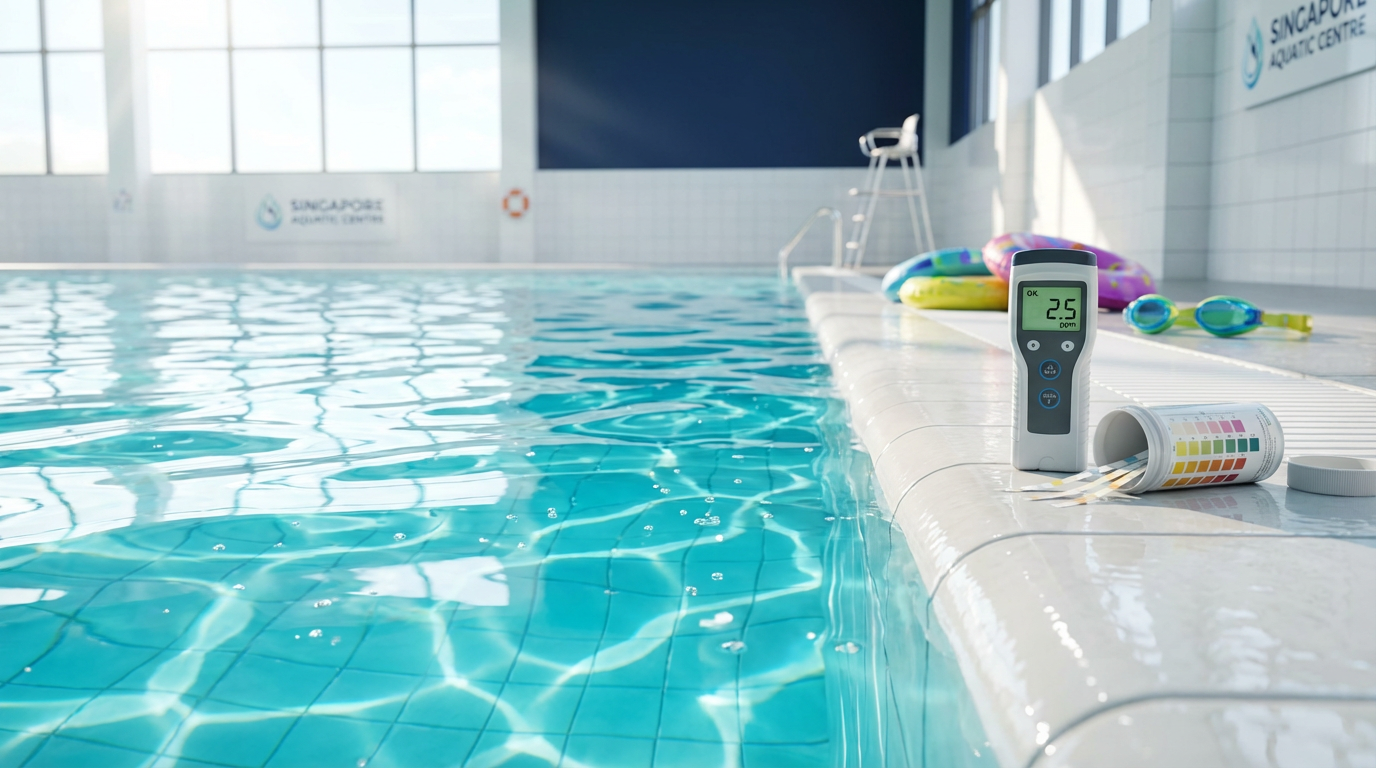
Free chlorine levels should be maintained between 1.0 and 3.0 parts per million (ppm) in most pools. This range provides effective disinfection while remaining comfortable for swimmers. Levels below 1.0 ppm may not adequately sanitize the water, allowing bacteria and viruses to multiply. Levels above 5.0 ppm can cause skin and eye irritation and are generally unnecessary for proper sanitation. Professional facilities test chlorine levels multiple times daily to ensure they remain within this optimal range.
pH levels are equally important and should remain between 7.2 and 7.8, with an ideal range of 7.4 to 7.6. This range is close to the natural pH of human eyes and mucous membranes, which minimizes irritation. pH affects chlorine's effectiveness—water that's too acidic or too alkaline reduces chlorine's sanitizing power and can cause discomfort for swimmers. The pH must be balanced alongside chlorine levels for optimal water quality.
Additional parameters include alkalinity (80-120 ppm), which helps stabilize pH, and cyanuric acid (30-50 ppm for outdoor pools), which protects chlorine from being broken down by sunlight. Professional pool operators at quality facilities monitor all these parameters as part of comprehensive water management. When parents inquire about swimming lessons, asking about water testing frequency and chemical management protocols can provide insight into a facility's commitment to safety.
Much of what parents associate with "too much chlorine" is actually the result of chloramines, the chemical compounds formed when chlorine reacts with contaminants in the water. This distinction is crucial for understanding pool safety and recognizing well-maintained facilities. Chloramines are responsible for that strong chemical smell, eye redness, skin irritation, and respiratory discomfort that many people mistakenly attribute to excessive chlorine.
Here's the paradox that surprises many parents: the stronger the "chlorine smell," the worse the water quality. A properly chlorinated pool with adequate free chlorine and minimal chloramines should have very little odor. When you walk into a pool area and are hit with a strong chemical smell, it indicates that the pool has insufficient free chlorine to break down contaminants effectively, leading to chloramine buildup. Adding more chlorine (a process called "shock treatment" or superchlorination) actually solves this problem by breaking apart chloramines and restoring water quality.
Swimmers themselves contribute to chloramine formation by bringing contaminants into the pool. Sweat, body oils, cosmetics, sunscreen, and yes, urine, all react with chlorine to form chloramines. This is why pre-swim showers are so important—they remove most surface contaminants before swimmers enter the pool. At facilities with comprehensive swim programs, educating students about proper pool hygiene is part of water safety instruction. Teaching children to shower before swimming and to take bathroom breaks regularly helps maintain better water quality for everyone.
Professional pool management addresses chloramines through several methods: maintaining adequate free chlorine levels, ensuring proper water circulation and filtration, shocking the pool regularly to break down chloramines, and adding fresh water to dilute chloramine concentration. Indoor facilities must also maintain proper ventilation to remove chloramines that evaporate into the air. These comprehensive management practices are what distinguish professionally operated aquatic facilities from poorly maintained pools.
While properly maintained pools are safe, parents can take additional steps to minimize any potential effects of pool chemicals on their children. These measures create an extra layer of protection and help children develop healthy swimming habits that will serve them throughout their lives.
Before swimming, ensure your child takes a thorough shower with soap. This removes surface oils, dirt, and contaminants that would otherwise enter the pool and react with chlorine to form irritating chloramines. Apply a thin layer of petroleum jelly around the eyes if your child is prone to irritation—this creates a protective barrier. For children with particularly sensitive skin, applying a water-resistant moisturizer before swimming can provide additional protection. Ensure your child uses the bathroom before entering the pool, both for hygiene and to prevent accidents that contaminate the water.
During swimming, encourage your child to wear properly fitted goggles to protect eyes from both chlorine and chloramines. Goggles also improve underwater visibility, which is beneficial for skill development in structured programs. For children spending extended time in the pool, particularly those in training programs like our water polo or competitive swim teams, taking brief breaks to rinse off can help minimize chemical exposure. Teaching children not to swallow pool water is another important safety habit that reduces exposure and prevents gastrointestinal issues.
After swimming, immediate and thorough rinsing is essential. Have your child shower with soap and shampoo to remove all pool chemicals from skin and hair. Pay special attention to areas where suits fit snugly, as chemicals can concentrate there. Moisturizing skin after showering helps restore the natural oils stripped by pool water and chemicals. For hair, using a clarifying shampoo weekly can prevent buildup of pool chemicals, and applying a leave-in conditioner helps repair any dryness.
These protective measures become routine habits for serious swimmers. The over 1,000 athletes SPEEDISWIM has groomed, including 50+ swimmers selected for National Youth and National Teams, all learned to balance intensive training with proper skin and hair care. These habits allow children to swim regularly—sometimes multiple times per week—without experiencing significant negative effects from pool chemicals.
Understanding how quality aquatic facilities manage water chemistry can help parents evaluate swimming programs and venues. Professional operations like SPEEDISWIM, operating across multiple locations including international schools and country clubs, implement comprehensive water quality management systems that go far beyond basic chlorination.
Testing protocols at professional facilities typically include multiple daily tests of free chlorine, pH, and alkalinity, with adjustments made immediately when parameters drift outside ideal ranges. Many facilities use automated chemical monitoring and dosing systems that provide continuous water quality management, ensuring consistency throughout the day. Weekly or monthly tests assess a broader range of parameters including total dissolved solids, calcium hardness, cyanuric acid, and phosphates. This comprehensive approach prevents the gradual water quality degradation that can occur in facilities with less rigorous management.
Circulation and filtration systems are equally important. Water should turn over completely (pass through the filtration system) every 4-6 hours in recreational pools and even more frequently in heavily used training pools. Professional-grade filtration removes particulate matter and microorganisms, while proper circulation ensures chemicals distribute evenly throughout the pool. Dead zones with poor circulation can develop water quality problems even when overall chemical levels are appropriate.
Regular maintenance includes shocking the pool (raising chlorine levels temporarily to break down chloramines and other contaminants), backwashing filters to maintain filtration efficiency, and adding fresh water to replace water lost to evaporation and backwashing. Tiles, walls, and gutters are cleaned regularly to prevent biofilm development. These maintenance practices, while invisible to most pool users, are critical for maintaining the water quality that allows children to safely participate in programs ranging from basic SwimSafer lessons to elite training in artistic swimming and other competitive disciplines.
The commitment to water quality at professional facilities reflects understanding that children's health and safety are paramount. Parents investing in swimming lessons—which typically range from $35 to $55 per session for group lessons—have the right to expect that facilities maintain the highest water quality standards. This investment in proper pool chemistry is one of the invisible factors that distinguish quality aquatic programs from basic swim instruction.
While most children swim in chlorinated pools without issues, parents should know when to seek medical advice and when to question a facility's water quality. Developing this awareness helps protect your child's health while allowing them to enjoy the tremendous benefits of swimming.
Consult your pediatrician before regular swimming if your child has severe eczema, open wounds, or compromised immune function. While swimming is generally safe even for children with these conditions, your doctor may recommend timing lessons during periods of remission, using protective barriers, or choosing facilities with particularly well-maintained water quality. Children with diagnosed asthma should also discuss swimming with their doctor, though many physicians actively recommend swimming as excellent exercise for asthmatic children. The breathing control developed through swimming often helps children manage their asthma more effectively.
Question a facility's water quality if you notice a strong chemical smell when entering the pool area, as this indicates chloramine buildup rather than proper chlorination. Water that appears cloudy or has visible debris suggests inadequate filtration or chemical imbalance. Slippery or slimy walls indicate biofilm development, showing insufficient sanitation. If your child consistently experiences significant eye irritation, skin rashes, or respiratory symptoms at a particular facility but not at others, this may indicate poor water quality management at that location.
Seek medical attention if your child develops a rash that doesn't resolve within 24 hours of leaving the pool, experiences persistent coughing or wheezing after swimming, develops ear pain or drainage suggesting swimmer's ear, or shows signs of illness like diarrhea, vomiting, or fever after swimming. While most of these conditions are easily treatable, they require professional medical evaluation. Some, like recreational water illnesses, may indicate that pool sanitation was inadequate to prevent pathogen transmission.
Professional swim programs operating at facilities like those where SPEEDISWIM teaches maintain open communication with parents about water quality. Asking about testing protocols, chemical management, and safety procedures during enrollment is appropriate and demonstrates that you're an informed parent making careful choices about your child's activities. Quality programs welcome these questions and can provide detailed information about their water quality management.
The evidence is clear: properly chlorinated pools are safe environments for children to learn swimming, develop athletic skills, and enjoy aquatic recreation. The benefits of swimming—water safety, physical fitness, confidence building, and potentially competitive achievement—far outweigh the minimal risks associated with pool chemicals when facilities maintain appropriate water quality standards.
As parents, your role is to make informed choices about where your children swim. Look for facilities with professional management, ask questions about water quality protocols, and teach your children proper pool hygiene habits. Watch for signs of inadequate pool maintenance and trust your instincts if something doesn't seem right. At the same time, don't let unfounded fears about chlorine prevent your child from accessing the life-saving skill of swimming.
Swimming is both a critical safety skill and a potential pathway to athletic excellence. Organizations like SPEEDISWIM have spent over two decades creating environments where children can safely develop aquatic competence, from foundational water safety through elite competitive achievement. Our track record of training more than 25,000 students, including athletes who have reached National Team selection, demonstrates that with proper facility management, children can swim regularly and intensively while remaining healthy and safe.
Whether your goals are basic water safety through the SwimSafer 2.0 program, recreational enjoyment, or competitive development in disciplines like underwater hockey, choosing a facility with professional water quality management ensures your child can pursue these goals in a safe, healthy environment. The chlorine in properly maintained pools isn't something to fear—it's a critical safety tool that makes aquatic education and recreation possible for children throughout Singapore.
Understanding pool chemistry empowers you to make confident decisions about your child's swimming activities. Chlorine, when properly managed, creates safe aquatic environments where children can learn, play, and compete without significant health risks. The key is choosing professionally operated facilities that prioritize water quality through rigorous testing, appropriate chemical management, and comprehensive maintenance protocols.
Swimming offers children irreplaceable benefits: it's a life-saving skill that builds confidence, provides excellent physical fitness, and opens doors to recreational enjoyment and competitive achievement. Don't let concerns about pool chemicals prevent your child from accessing these advantages. Instead, use your knowledge to evaluate facilities, ask informed questions, and select programs that demonstrate commitment to both water quality and educational excellence.
At SPEEDISWIM, our 20+ years of operation across Singapore's most respected aquatic venues reflects unwavering commitment to student safety alongside world-class instruction. From beginners taking their first strokes to elite athletes competing nationally, every student deserves an environment where water quality supports their health and learning. This commitment has helped us develop over 1,000 athletes and train 25,000+ students who have all benefited from swimming in properly managed, safe aquatic facilities.
Experience the difference that professional water quality management and expert coaching make. With over 20 years of experience and 25,000+ students trained, SPEEDISWIM provides safe, effective swimming instruction across multiple locations in Singapore.
From SwimSafer 2.0 certification to competitive training programs, we offer structured pathways for swimmers of all ages and abilities—all in professionally maintained pools that prioritize your child's health and safety.