As a parent, you want your child to become a confident, capable swimmer. But determining how often your child should attend swimming lessons can feel overwhelming. Too few sessions might slow progress, while too many could lead to burnout or strain your family schedule and budget.
The truth is, there's no one-size-fits-all answer. The optimal swimming lesson frequency depends on your child's age, current skill level, learning pace, and swimming goals. However, research in motor skill acquisition and decades of aquatic education experience have revealed clear patterns about how children learn swimming most effectively.
At SPEEDISWIM, we've spent over 20 years training more than 25,000 students, from beginners taking their first strokes to elite athletes competing nationally. Through this extensive experience, we've identified the frequency patterns that produce the best outcomes for different types of learners. This guide will help you determine the ideal lesson schedule for your child, backed by both sports science and practical coaching insights.
Find the Optimal Schedule for Your Child
Sessions Per Week
The sweet spot for most children to make steady progress without burnout
30-45 min sessions
Frequency over duration
45-60 min sessions
Skill development sweet spot
90-120 min sessions
Elite athlete training
Gaps over 5-7 days cause regression in young learners
Consistent practice builds lasting technique
Regular exposure builds comfort and reduces fear
1-2× weekly
Basic competence and recreational swimming skills
2-3× weekly
Strong technique across all four competitive strokes
4-6× weekly
School teams, club competition, and elite development
✅ Optimal Spacing
2-4 days between sessions (e.g., Monday & Thursday)
❌ Avoid
Consecutive days or week-long gaps for young learners
Years Experience
Students Trained
Athletes Groomed
National Team Athletes
Ready to find the perfect swimming schedule for your child?
Our experienced coaches assess individual abilities and recommend optimal lesson frequencies
tailored to your family's goals with SwimSafer 2.0-aligned programs.
Swimming is a complex motor skill that requires coordination, strength, breathing control, and spatial awareness in an unfamiliar environment. Unlike land-based activities, children must overcome natural survival instincts while learning proper technique. Understanding how the brain and body acquire these skills helps explain why lesson frequency matters so much.
Motor learning research shows that skill acquisition happens in stages: cognitive (understanding what to do), associative (refining movements), and autonomous (automatic performance). For swimming, children need sufficient practice frequency to move through these stages without losing ground between sessions. When gaps between lessons exceed 5-7 days, young learners especially tend to regress, requiring review time that could otherwise advance new skills.
The principle of distributed practice is particularly relevant for swimming instruction. Studies consistently show that shorter, more frequent practice sessions produce better long-term retention than infrequent marathon sessions. A child attending two 45-minute lessons per week will typically progress faster than one attending a single 90-minute weekly session, even though total practice time is identical.
Additionally, swimming requires building both technique and physical conditioning. Cardiovascular adaptation, muscle memory, and water confidence all develop through consistent exposure. Regular sessions allow the body to adapt gradually, reducing fatigue and injury risk while building the endurance needed for proper stroke execution.
Children's developmental stages significantly influence how often they should swim. Younger children have shorter attention spans but learn fearlessness more easily, while older children can handle longer, more intensive sessions but may have developed water anxieties that require patient, consistent exposure.
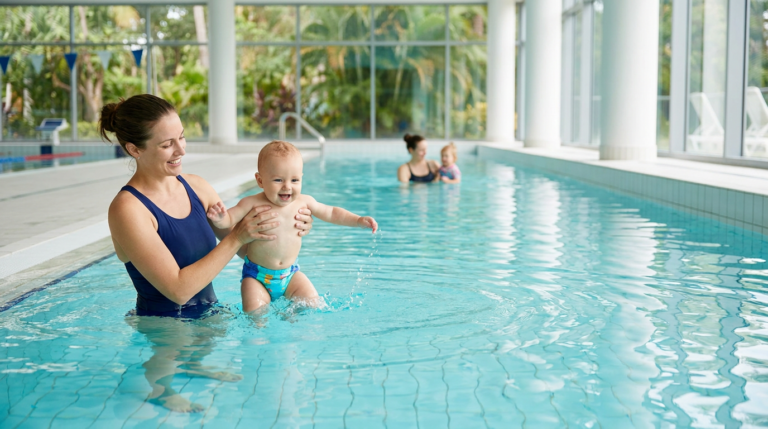
For the youngest swimmers, frequency matters more than duration. Toddlers and preschoolers have limited attention spans (typically 20-30 minutes of focused activity) but benefit enormously from regular water exposure during this critical period for developing comfort and basic water safety skills.
Recommended frequency: 2-3 sessions per week of 30-45 minutes each. This schedule provides enough repetition to build familiarity without overwhelming young children. At this age, the primary goals are water acclimatization, basic safety skills like floating and recovering to the wall, and developing positive associations with swimming.
Through our SwimSafer 2.0-aligned programs at SPEEDISWIM, we've observed that preschoolers attending twice weekly make steady, confidence-building progress. Those attending three times weekly often advance more quickly through foundational skills, though the improvement margin narrows if sessions exceed 45 minutes, as fatigue and distraction increase.
For families with very young children (under 3 years), even one weekly parent-and-child session provides valuable water familiarization, though progress will naturally be slower. The key at this age is consistency over intensity.
Primary school-aged children represent the sweet spot for swimming instruction. They have sufficient attention span, body awareness, and strength to learn proper technique while remaining flexible and fearless enough to try new skills. This age group also aligns with Singapore's SwimSafer Program progression, which emphasizes both skill development and water safety education.
Recommended frequency for beginners: 2 sessions per week of 45-60 minutes each. This schedule allows children to build on previous lessons before forgetting key concepts. Weekly sessions at this stage often result in frustratingly slow progress, with students relearning rather than advancing.
Recommended frequency for intermediate swimmers: 2-3 sessions per week of 60 minutes each. Children working through SwimSafer stages 3-6 benefit from increased frequency as they refine stroke technique and build endurance. The additional session helps solidify proper mechanics before bad habits become ingrained.
At SPEEDISWIM, our most successful learn-to-swim students in this age range typically attend twice weekly during the school term, sometimes increasing to three sessions during school holidays when schedules permit. This pattern balances swimming with academic commitments and other activities while maintaining the consistency needed for steady progression.
Teenagers learning to swim or advanced swimmers pursuing competitive swimming have different frequency needs based on their specific goals. Late-starting teenagers can handle more intensive schedules and often feel motivated to catch up with peers, while competitive swimmers require significantly higher frequency to develop the conditioning and technique needed for competition.
Recommended frequency for teen beginners: 2-3 sessions per week of 60 minutes each. Older beginners often progress quickly once they overcome initial hesitation, as they have greater strength and body awareness than younger children. However, they may also experience more anxiety, making consistent exposure important for building confidence.
Recommended frequency for competitive swimmers: 4-6 sessions per week of 90-120 minutes each. Serious competitive swimmers, such as those in our squad programs, require this frequency to build the aerobic base, stroke efficiency, and race skills needed for competition. Our competitive swimmers who've advanced to National Youth and National Teams typically train 5-6 times weekly, with periodized intensity varying by competition season.
SPEEDISWIM has groomed over 1,000 athletes across multiple aquatic disciplines including water polo and artistic swimming, with over 50 swimmers selected for national representation. This success stems partly from appropriate training frequency matched to competitive demands.
Beyond age, your child's current swimming ability significantly influences optimal lesson frequency. Beginners, intermediate swimmers, and advanced students all have different needs for practice consistency and intensity.
Absolute beginners (non-swimmers or those fearful of water) benefit most from higher frequency with shorter sessions. Two to three 30-45 minute sessions weekly helps these swimmers build water confidence through repetition without the overwhelming fatigue that can reinforce anxiety. The frequent exposure helps normalize the pool environment and establishes basic comfort before progressing to stroke development.
Developing swimmers (those working on fundamental strokes and safety skills) typically thrive with two sessions weekly as a minimum. At this stage, students are building muscle memory for proper technique, and the week-long gap of once-weekly lessons often means starting each session with significant review. Twice-weekly attendance allows coaches to build progressively on the previous session while technique remains fresh.
Proficient swimmers (those who can swim multiple strokes with reasonable technique) can sometimes maintain skills with less frequent lessons, particularly if they practice independently between coached sessions. However, for continued improvement in efficiency, speed, and advanced skills, 2-3 coached sessions weekly remain ideal. Self-practice without coaching can reinforce technical flaws that become increasingly difficult to correct.
Competitive and advanced swimmers require the highest frequency, as mentioned earlier. At this level, swimming transitions from basic skill acquisition to athletic development, requiring consistent training for physiological adaptation and technical refinement that only comes with high-volume, high-frequency practice.
Your child's swimming goals should directly inform lesson frequency. Different objectives require different levels of commitment, and understanding this relationship helps set realistic expectations and budgets.
Water safety and basic competence: If your primary goal is ensuring your child can be safe around water and enjoy recreational swimming, 1-2 weekly sessions provide adequate progression. This frequency allows children to complete programs like SwimSafer 2.0 over a reasonable timeframe (typically 1.5-3 years for the full progression) while balancing other activities and commitments.
Stroke technique and swimming proficiency: Parents wanting their children to become strong, efficient swimmers across all four competitive strokes should plan for 2-3 weekly sessions. This increased frequency produces noticeably better technique, as students have sufficient practice time to refine movements and build the strength needed for proper execution.
Competitive swimming: Children aiming for school teams, club competition, or elite development require 4-6 weekly sessions as discussed earlier. This isn't just about swimming more—it's about the physiological adaptations (improved VO2 max, lactate threshold, muscular endurance) that only develop through consistent, progressive training.
Multi-sport athletes: Children participating in swimming alongside other sports might attend 1-2 swimming sessions weekly while maintaining skills during their swimming "off-season." This approach works well for maintaining competence without the commitment required for advancement, though expectations should be adjusted accordingly.
At SPEEDISWIM, we offer pathways from basic learn-to-swim through to elite competitive programs, including specialized disciplines like underwater hockey. We work with families to recommend appropriate frequency based on individual goals, understanding that objectives may evolve as children develop their abilities and interests.
How you space swimming lessons throughout the week matters almost as much as total frequency. The pattern of practice sessions influences both skill retention and physical recovery, particularly for younger or less experienced swimmers.
Optimal spacing for two weekly sessions: Sessions should ideally be separated by 2-4 days. For example, Monday and Thursday, or Tuesday and Saturday. This spacing allows sufficient recovery (important for young muscles adapting to swimming's demands) while preventing the skill regression that occurs with longer gaps. Avoid scheduling both sessions on consecutive days or at opposite ends of the week (like Monday and Sunday), as these patterns don't optimize the distributed practice effect.
Optimal spacing for three weekly sessions: Alternate-day scheduling works well—for instance, Monday, Wednesday, and Friday, or Tuesday, Thursday, and Saturday. This pattern provides recovery days while maintaining consistent exposure. Some families prefer two weekday sessions plus one weekend session, which also works effectively if weekday sessions aren't too close together.
Competitive swimmer spacing: Advanced swimmers training 4-6 times weekly typically follow schedules with no more than one full rest day per week. These athletes have developed the conditioning to handle consecutive training days, and their programs include periodized intensity (harder and easier sessions) to manage fatigue while maintaining frequency.
One common mistake parents make is assuming weekend-only double sessions (Saturday and Sunday) can substitute for properly spaced twice-weekly lessons. While better than once weekly, this pattern creates a five-day gap that results in some skill regression, particularly for younger or less experienced swimmers. The consecutive sessions also mean the second often involves some fatigue, reducing its effectiveness compared to sessions with recovery time between them.
Swimming lessons represent a significant family investment, and finding the right balance between optimal frequency and budget constraints is a practical concern for most parents. Understanding the cost-effectiveness of different lesson frequencies helps make informed decisions.
In Singapore, group swimming lessons typically range from $35 to $55 per session, meaning twice-weekly lessons cost approximately $280-440 monthly, while three sessions weekly run $420-660 monthly. Private or semi-private lessons command premium pricing, generally ranging from $60 to $120 per session, reflecting the individualized attention and flexible scheduling they offer.
Return on investment considerations: While once-weekly lessons cost less upfront, they often require significantly longer to achieve the same skill milestones as twice-weekly attendance. A child might complete SwimSafer Stage 1-2 in 6 months with twice-weekly lessons versus 12-15 months with weekly sessions. Over this extended timeline, weekly lessons may actually cost more in total while producing slower, more frustrating progress.
Additionally, inconsistent attendance at lower frequencies often means paying for review and re-teaching rather than new skill acquisition. We've observed that students attending regularly twice weekly typically require fewer total sessions to reach proficiency than those attending sporadically or only once weekly, even accounting for the doubled frequency.
Budget-conscious strategies: If budget constraints prevent twice-weekly lessons year-round, consider these approaches:
The key is prioritizing consistency within whatever frequency you choose. Regular attendance at one session weekly produces better results than sporadic attendance at two sessions weekly with frequent cancellations or schedule changes.
Singapore's unique environment creates both opportunities and considerations for swimming lesson frequency. As a tropical island nation surrounded by water, with swimming pools in most residential areas and swimming included in the national school curriculum, Singaporean children have exceptional access to aquatic facilities and strong cultural emphasis on swimming proficiency.
The SwimSafer 2.0 program, developed by the National Water Safety Council in collaboration with Sport Singapore, provides a structured framework that influences frequency recommendations. This refreshed initiative (updated from the original 2010 SwimSafer program) emphasizes skill development alongside water safety and personal survival education. The program's progressive stages are designed with twice-weekly attendance as the baseline for reasonable progression timelines.
Schools increasingly incorporate swimming into physical education curricula, with many primary schools conducting swimming programs. Parents should consider how school swimming sessions factor into total weekly water time. If your child swims at school once weekly, adding one coached lesson creates the beneficial twice-weekly frequency. However, school sessions often focus on water safety and basic skills rather than stroke refinement, so they complement but don't fully replace structured lessons for children aiming beyond basic competence.
Singapore's year-round tropical climate means no seasonal interruptions to swimming instruction, unlike temperate countries where outdoor pools close during winter. This consistency allows Singaporean swimmers to maintain frequency without the skill regression that occurs during extended breaks. However, it also means families can become complacent about scheduling, assuming they can "always start lessons later." Research in skill acquisition suggests that early, consistent swimming instruction (starting in preschool years with regular frequency) produces the best long-term outcomes for both safety and proficiency.
At SPEEDISWIM, we operate across multiple venues including international schools and country clubs, with our Orchid Country Club location serving as one of the official Non-ActiveSG Pool CAMS (Centralised Assessment Management System) Centres. This infrastructure allows us to offer consistent scheduling options that help families maintain optimal lesson frequency regardless of location or schedule constraints.
Determining how often your child should attend swimming lessons ultimately depends on their age, current ability, goals, and your family's schedule and budget. However, the research and our two decades of experience training thousands of swimmers point to clear patterns: most children benefit from 2-3 sessions weekly, spaced appropriately throughout the week, with frequency adjusted as skills and objectives evolve.
For beginners and young children, this frequency provides the consistency needed to build water confidence and fundamental skills without the regression that occurs with longer gaps between sessions. For intermediate swimmers working through programs like SwimSafer 2.0, twice-weekly attendance balances progression with other commitments. For competitive aspirants, significantly higher frequency becomes necessary to develop the conditioning and technique required for athletic performance.
Remember that consistency within your chosen frequency matters more than perfect frequency with irregular attendance. A child attending one session weekly without fail will progress better than one sporadically attending twice weekly. Start with a realistic frequency your family can maintain long-term, and adjust as your child's skills, interests, and goals develop.
Swimming is both a critical life skill and a potential pathway to athletic achievement and lifelong fitness. Investing in appropriate lesson frequency during childhood pays dividends in safety, confidence, and physical development that extend far beyond the pool.
SPEEDISWIM's experienced coaches can assess your child's current abilities and recommend an optimal lesson frequency tailored to their individual needs and your family's goals. With over 20 years of experience training more than 25,000 students from beginners to national team athletes, we understand how to structure programs that produce results.
Contact us today to discuss your child's swimming journey and explore our SwimSafer 2.0-aligned programs, competitive pathways, and flexible scheduling options across our multiple Singapore venues.