Finding the right swimming facility in Singapore can make all the difference in your family's aquatic journey, whether you're looking for weekend recreation or a place to develop serious water competency. Located in the heart of northwest Singapore, Choa Chu Kang Swimming Complex has served the local community for years as an accessible, well-maintained aquatic facility under the ActiveSG network. This public swimming complex offers a range of pools and features that cater to swimmers of all ages and abilities, from toddlers taking their first splash to fitness enthusiasts completing their daily laps.
As Singapore continues to emphasize water safety and swimming proficiency through initiatives like the national SwimSafer 2.0 program, understanding what facilities like Choa Chu Kang Swimming Complex offer becomes increasingly important for families. While public pools provide excellent recreational opportunities, many parents eventually seek more structured learning environments to ensure their children develop proper technique and water safety skills. This guide will walk you through everything you need to know about Choa Chu Kang Swimming Complex, from its facilities and programs to practical visiting tips, helping you decide how this facility fits into your family's aquatic development plans.
Choa Chu Kang Swimming Complex is part of Singapore's extensive ActiveSG network of sports facilities, strategically positioned to serve residents in the Choa Chu Kang, Yew Tee, and surrounding northwest neighborhoods. As one of the more established public swimming complexes in the region, it provides an affordable alternative to private club facilities while maintaining decent standards of cleanliness and safety. The complex operates year-round and sees particularly high traffic during weekends, school holidays, and evening hours when working parents bring their children for recreational swimming.
The facility's location makes it convenient for residents across several HDB estates and private condominiums in the area. Unlike some newer ActiveSG complexes that feature elaborate water play areas and Olympic-standard competition pools, Choa Chu Kang Swimming Complex focuses on providing essential swimming amenities that meet community needs without unnecessary frills. This practical approach keeps entry fees affordable while ensuring adequate facilities for families, fitness swimmers, and casual visitors alike.
For families new to the northwest region or those comparing different swimming venues, it's worth understanding that while public complexes like this one offer accessibility and affordability, the swimming experience differs significantly from what you'll find at country clubs or specialized aquatic centers. The atmosphere tends to be more crowded during peak hours, and the availability of structured swimming instruction varies based on ActiveSG's scheduled programs rather than the comprehensive, year-round curricula offered by dedicated swim schools.
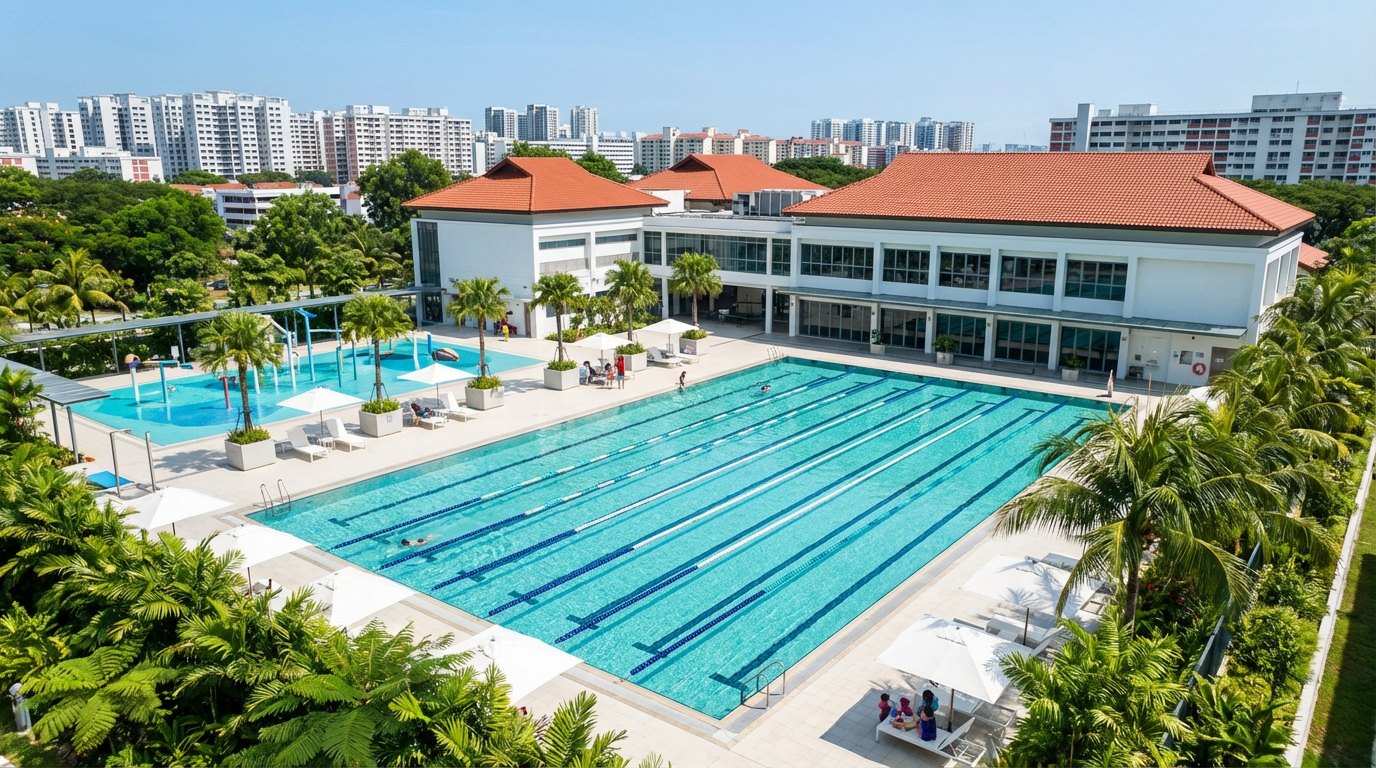
Choa Chu Kang Swimming Complex comprises several distinct pool areas designed to accommodate different age groups and swimming abilities. Understanding what each facility offers helps you plan your visit more effectively and ensures you're using the appropriate pool for your skill level or your children's needs.
The complex features a standard competition pool that serves lap swimmers and those practicing more advanced swimming techniques. This pool maintains consistent depth suitable for competent swimmers and is typically divided into lanes during busier periods, though lane discipline can vary considerably depending on crowd management. Alongside the main pool, you'll find a teaching pool with shallower depths specifically designed for beginners and young children. This area provides a safer environment for those still building water confidence, though parents should note that supervision remains entirely their responsibility during recreational swimming sessions.
Water quality and temperature are generally maintained to acceptable standards, with regular chlorination and filtration keeping the pools clean. However, as with most public facilities, water temperature isn't heated to the warmer levels that many young children prefer, which can sometimes make initial water entry challenging for temperature-sensitive swimmers. The pool surrounds feature non-slip surfaces and clearly marked depth indicators, standard safety features that help prevent accidents when properly observed.
Beyond the main swimming pools, the complex includes a children's wading pool area with gentler water depths appropriate for toddlers and very young children. This separate area allows the youngest visitors to play in water safely while parents maintain close supervision. The wading pool occasionally features small water play elements, though these are relatively basic compared to the elaborate splash zones found at newer aquatic facilities like those at some recent ActiveSG developments.
The facility layout provides adequate deck space around pools for families to set up their belongings, though finding prime spots near the pool edge during weekend peak hours can prove challenging. Shaded areas are limited, so visitors planning extended stays should consider bringing sun protection, especially during midday hours when Singapore's tropical sun is most intense.
ActiveSG facilities, including Choa Chu Kang Swimming Complex, periodically offer swimming lessons and programs as part of the national effort to improve swimming proficiency across Singapore. These programs align with the SwimSafer 2.0 framework, the national water safety initiative developed by the National Water Safety Council in collaboration with SportSG. SwimSafer 2.0 represents the refreshed version of the original 2010 program, emphasizing skill development alongside water safety and personal survival education for people of all ages and abilities.
The availability of structured swimming lessons at public complexes operates on a scheduled basis, with registration periods opening at specific times throughout the year. Class sizes in these programs tend to be larger than what specialized swim schools offer, and instructor-to-student ratios may not provide the individualized attention that accelerates skill development. For families seeking consistent, year-round instruction with smaller class sizes and coaches who can track individual progress across multiple aquatic disciplines, dedicated aquatic centers often prove more effective than intermittent public facility programs.
It's important to distinguish between recreational swimming at public facilities and structured swimming education. While Choa Chu Kang Swimming Complex provides an excellent venue for families to enjoy water-based recreation and for competent swimmers to maintain fitness through regular laps, recreational swimming alone rarely develops the technical proficiency and water safety skills that formal instruction provides. Children who only experience casual pool visits may become comfortable in water without learning proper stroke mechanics, breathing techniques, or the survival skills emphasized in comprehensive programs like SwimSafer 2.0.
Parents serious about their children's swimming development often use public facilities for supplementary practice between formal lessons rather than as the primary learning environment. This approach combines the affordability and accessibility of public pools with the structured progression and expert coaching that specialized programs deliver. Organizations with over two decades of experience in aquatic education, like those that have trained tens of thousands of students and groomed competitive athletes, offer depth of expertise and curriculum consistency that intermittent public programs cannot match.
Choa Chu Kang Swimming Complex provides the standard amenities expected at public aquatic facilities, ensuring visitors can change, shower, and store belongings with reasonable convenience. Understanding what's available and what you should bring helps ensure a smooth, enjoyable visit.
The complex offers separate male and female changing rooms equipped with lockers, showers, and toilet facilities. Locker availability can be limited during peak periods, so arriving early gives you better chances of securing storage for your valuables. Family changing rooms provide space for parents with young children of the opposite gender, though these facilities may have queues during busy times. The changing areas are functional rather than luxurious, meeting basic needs without the enhanced amenities found at premium facilities.
Shower facilities provide fresh water for rinsing before and after swimming, an important step for both hygiene and chlorine removal. Visitors should bring their own toiletries, towels, and any other personal care items, as the facility doesn't provide these amenities. Hair dryers are not typically available in public changing rooms, so families with young children or those with long hair should plan accordingly.
For the best experience at Choa Chu Kang Swimming Complex, consider bringing these essentials:
Choa Chu Kang Swimming Complex's location in northwest Singapore makes it accessible via several transportation options, though your choice will depend on where you're coming from and your preference for convenience versus cost. The facility's proximity to HDB estates means many local residents can walk or cycle to the complex, contributing to the strong neighborhood feel during peak hours.
The complex is served by several bus routes that connect it to Choa Chu Kang MRT station and surrounding neighborhoods. Visitors coming from other parts of Singapore can take the MRT to Choa Chu Kang station on the North-South Line or Bukit Panjang LRT, then continue by bus or a short taxi ride. Journey times vary considerably depending on your origin point, with residents of nearby estates enjoying 10-15 minute commutes while those from central or eastern Singapore should expect 45-60 minutes via public transport.
For families carrying swimming bags, towels, and supplies for multiple children, the bus journey with transfers can prove cumbersome. Many families find that the convenience of driving or taking a direct taxi/private hire vehicle outweighs the modest transportation cost savings, especially when visiting with young children or elderly family members.
The swimming complex provides parking facilities, though spaces fill quickly during weekends and evening hours when demand peaks. Parking rates follow standard ActiveSG facility pricing, remaining affordable for typical visit durations. Drivers should plan to arrive at least 15-20 minutes before their intended swimming time during busy periods to account for parking search time and the walk to the pool entrance.
Making the most of your visit to Choa Chu Kang Swimming Complex requires some planning, particularly if you're bringing young children or visiting during peak periods. These practical tips help ensure a smoother, more enjoyable experience while avoiding common frustrations that catch unprepared visitors off guard.
Timing your visit strategically can dramatically improve your experience. Weekday mornings and early afternoons see significantly lighter crowds than weekends and after-school hours. If your schedule permits, visiting during off-peak times means more pool space, easier locker access, and a generally more relaxed atmosphere. School holiday periods bring increased crowds throughout the day, so plan accordingly if you prefer quieter swimming conditions.
Managing expectations around facilities helps prevent disappointment. Public swimming complexes provide functional amenities at affordable prices, but they operate differently from private clubs or specialized swimming centers. Crowd control, noise levels, and the variable swimming abilities of other pool users create an environment quite different from more controlled settings. Parents accustomed to quieter, more structured environments may find the public pool atmosphere challenging, especially with very young children.
Supervising children attentively remains your responsibility throughout your visit. While lifeguards are present, they monitor overall pool safety rather than providing individual childcare. The number of simultaneous swimmers, particularly during peak hours, means you must maintain constant visual contact with non-swimmers and weak swimmers. Many parents find that the distraction-filled environment of public pools makes it difficult to relax while ensuring adequate supervision, particularly when managing multiple children of different ages and abilities.
Starting with shorter visits helps gauge your family's comfort with the facility. Initial trips of 60-90 minutes allow you to experience the changing rooms, pool conditions, and general atmosphere without overcommitting. You can gradually extend visit duration as you become familiar with the layout and your children's stamina and interest levels. Remember that young children tire quickly in water, and overtired children become more prone to accidents and meltdowns during the changing and departure process.
While facilities like Choa Chu Kang Swimming Complex serve an important role in providing accessible recreational swimming opportunities, many families eventually recognize that casual pool visits alone don't develop the comprehensive swimming skills and water safety knowledge that Singapore's SwimSafer 2.0 framework targets. The difference between recreational swimming and structured aquatic education becomes particularly apparent when parents observe their children's progression—or lack thereof—after months of regular pool visits.
Children who receive professional instruction in structured programs demonstrate markedly different water competency compared to those who learn informally. Proper stroke mechanics, breathing techniques, water safety awareness, and survival skills require expert coaching and progressive curricula that build systematically on previous learning. Organizations with extensive experience in aquatic education—those that have trained over 25,000 students across more than two decades—understand how to structure learning sequences that transform beginners into confident, capable swimmers.
Comprehensive swimming programs offer several advantages that recreational swimming cannot replicate. Smaller class sizes ensure that coaches can observe each student's technique, provide individualized corrections, and track progress across sessions. Qualified coaching teams bring professional expertise that accelerates learning while preventing the development of bad habits that later require correction. Structured progression through SwimSafer 2.0 levels provides clear milestones and nationally recognized certifications that document your child's capabilities.
For families serious about swimming development, whether as a life skill or potential competitive pursuit, specialized aquatic centers operating across multiple venues including international schools and country clubs provide consistency and quality that intermittent public programs struggle to match. These organizations often serve as official Non-ActiveSG Pool CAMS (Centralised Assessment Management System) Centres, authorized to conduct SwimSafer assessments and certifications that validate your child's swimming proficiency.
The pathway from recreational swimming to competitive swimming begins with solid foundational skills developed through quality instruction. Organizations with proven track records of grooming over 1,000 athletes across multiple aquatic disciplines—including competitive swimming, artistic swimming, water polo, diving, and even specialized disciplines like underwater hockey—offer pathways that extend far beyond basic water safety.
Elite development opportunities separate exceptional programs from basic instruction. Centers that have produced over 50 swimmers selected for National Youth and National Teams, including recognized athletes like SNOC Sportsgirl of the Year 2018, demonstrate their capacity to identify talent and develop it to national-level performance. For student-athletes showing promise, support through DSA (Direct School Admission) talent programs can open educational opportunities tied to athletic development.
Parents often ask about the cost difference between public facility programs and specialized swim schools. While group swimming lessons in Singapore typically range from $35 to $55 per session, with private or semi-private lessons commanding premium pricing between $60 to $120 per session, the investment reflects the quality of instruction, class sizes, coach qualifications, and program comprehensiveness. The SwimSafer Program delivered by experienced providers ensures your children receive instruction aligned with national standards while benefiting from pedagogical expertise accumulated over years of teaching thousands of students.
The long-term value of quality swimming education extends beyond the weekly lesson cost. Children who develop proper technique early progress faster, avoid injury, and build confidence that transfers to other areas of life. Water safety skills can literally save lives, making swimming education one of the most practical investments parents make in their children's development. When you consider that comprehensive programs track student progress across months and years, providing continuity that recreational swimming cannot offer, the value proposition becomes clear.
Choa Chu Kang Swimming Complex serves northwest Singapore families as an accessible, affordable venue for recreational swimming and casual water enjoyment. Its location, facilities, and amenities meet community needs for public aquatic access, providing a space where families can cool off, children can play in water, and fitness swimmers can complete their laps without the premium pricing of private clubs. For residents in the immediate area seeking convenient weekend recreation or supplementary practice between formal lessons, the complex offers practical value.
However, parents focused on their children's swimming development should recognize that recreational facilities and structured swimming education serve different purposes. While public pools provide important access to water-based recreation, comprehensive swimming proficiency—the kind emphasized by Singapore's SwimSafer 2.0 framework—requires progressive instruction from qualified coaches within curricula designed to build skills systematically. Organizations with decades of experience, extensive student success records, and the expertise to develop everyone from beginners to national-level athletes offer pathways that transform swimming from casual recreation into genuine life competency and potentially competitive achievement.
The choice between recreational swimming and structured programs ultimately depends on your family's goals. If you're seeking weekend entertainment and basic water exposure, Choa Chu Kang Swimming Complex serves that purpose well. If you're committed to developing real swimming proficiency, water safety skills, and potentially competitive capabilities, investing in specialized instruction at established aquatic centers provides the foundation your children need to become truly confident, capable swimmers.
SPEEDISWIM has spent over 20 years developing swimmers from beginners to national athletes. With professionally qualified coaches, SwimSafer 2.0-aligned programs, and a proven track record of training more than 25,000 students, we provide the structured learning environment where real swimming proficiency develops.