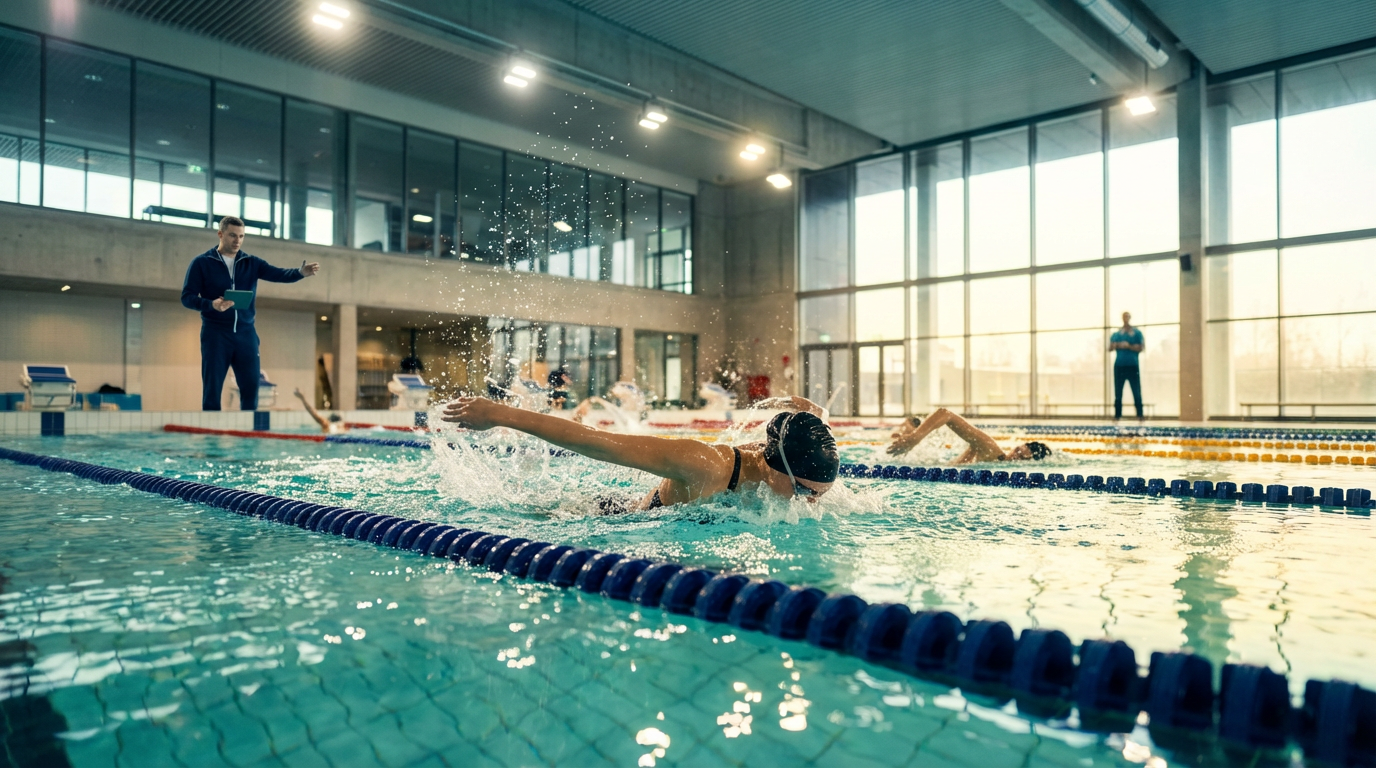
Every elite swimmer you see on the podium at a national championship or international meet has one thing in common: years of deliberate, well-structured training behind them. Competitive swimming is not simply about swimming more laps. It is about swimming the right laps, at the right intensity, at the right time of the season. For parents exploring competitive swimming in Singapore, and for young athletes ready to take their skills beyond recreational lessons, understanding how training programs are built is the essential first step.
This article breaks down the core principles behind competitive swimming training programs, including how sessions are structured week to week, how coaches use periodization to peak athletes for major competitions, and what training volumes are appropriate at different stages of development. Whether your child has just completed their SwimSafer program and is eyeing their first gala, or you are an aspiring competitive swimmer looking to understand what elite preparation looks like, this guide gives you the full picture.
A competitive swimming training program is a systematic, coach-designed plan that directs an athlete's preparation toward specific performance goals, usually timed to peak at important competitions. Unlike recreational swimming, where the aim is general fitness or water confidence, competitive programs are built around measurable outcomes: faster split times, improved stroke efficiency, stronger race finishes, and podium results.
What distinguishes a well-designed competitive program from simply attending more sessions is intentionality. Every workout has a purpose, whether it is building aerobic endurance, sharpening race-pace speed, refining stroke mechanics, or promoting active recovery. Coaches sequence these workouts across days, weeks, and months to ensure athletes are developing in a balanced, progressive way that minimises injury risk while maximising performance gains.
In Singapore, competitive swimming typically begins in earnest after a swimmer has demonstrated solid foundational skills, often after completing structured learn-to-swim pathways. From there, athletes who show aptitude and enthusiasm transition into dedicated competitive swimming programs that build the full range of physical, technical, and psychological skills required to race at club, national, and eventually international level.
At the most basic level, a competitive swimming training program is organised into individual sessions, weekly microcycles, monthly mesocycles, and seasonal macrocycles. Understanding each of these layers helps athletes and parents appreciate why coaches make the decisions they do, and why patience is such a critical virtue in competitive aquatic development.
A typical training session for a junior competitive swimmer lasts between 60 and 90 minutes and is divided into distinct segments. The warm-up activates the body and establishes stroke rhythm, usually covering 400 to 800 metres of easy mixed strokes and drills. The main set is the heart of the session, where the specific training stimulus (aerobic capacity, threshold work, sprint sets, or technique refinement) is delivered. A cool-down follows to flush metabolic byproducts and begin recovery.
Within a training week, sessions are deliberately varied in their intensity and focus. A well-structured weekly microcycle for a developing competitive swimmer might look something like this:
The balance between these session types shifts depending on where the athlete sits within the competitive season, which is precisely where the concept of periodization becomes central.
Periodization is the systematic planning of training across time to bring an athlete to their physical peak at exactly the right moment. Rather than training at the same intensity year-round (which leads to stagnation and burnout), coaches divide the competitive year into distinct phases, each with a different physiological emphasis. This approach is grounded in decades of sports science research and is the foundation of every serious competitive swimming program worldwide.
The base phase typically occurs at the start of a new competitive season, often following a short off-season break. The primary goal during this period is to build a broad aerobic foundation. Training volume is high, intensity is relatively low, and the focus is on accumulating metres in the water and reinforcing sound stroke mechanics. This phase can last anywhere from 8 to 16 weeks depending on the athlete's age and competition calendar. Swimmers may feel fatigued during this block, and that is entirely normal; the body is adapting to increased loads that will pay dividends later in the season.
As the season progresses toward major competitions, training shifts into the build phase. Volume begins to taper slightly while intensity increases. Sets become more race-specific, with a greater proportion of threshold and lactate-tolerance work. Athletes in this phase are learning to hold race pace under fatigue, which is one of the most important skills in competitive swimming. Technical refinement continues, but now with a greater emphasis on maintaining technique at higher speeds. This phase typically runs for 6 to 12 weeks.
The peak phase, often called the taper, is where all the preceding hard work comes together. Total training volume drops significantly, sometimes by 40 to 60 percent from the highest point of the base phase, while intensity remains high or even increases. The reduced volume allows the body to fully recover from accumulated fatigue while retaining all the fitness and speed gains developed across the season. A properly executed taper produces measurable improvements in performance, and most competitive swimmers will achieve their best times of the season during this window. The taper period typically lasts 10 to 21 days depending on the individual athlete and the importance of the target competition.
After major competitions, athletes enter a transition or recovery phase. This is a deliberate period of reduced training load, sometimes involving complete rest or cross-training activities outside the pool. Psychologically and physically, the transition phase is just as important as the hard training phases because it allows athletes to recharge before beginning the next seasonal cycle. Skipping adequate recovery is one of the most common mistakes in youth competitive swimming and a leading contributor to overtraining syndrome and early burnout.
Training volume in competitive swimming is typically measured in kilometres per week. The appropriate volume depends heavily on the athlete's age, development stage, event specialty, and position within the competitive season. Getting volume right is one of the most nuanced aspects of coaching because too little leaves performance gains on the table, while too much without adequate recovery invites overuse injuries and diminishing returns.
As a general framework, coaches and sports scientists broadly align on the following volume ranges for competitive swimmers at different stages:
It is important to note that volume alone does not predict performance outcomes. A focused 20km training week with well-designed sets and quality stroke work will always produce better results than a poorly structured 40km week full of mindless yardage. The phrase "training smart, not just hard" is particularly relevant in competitive swimming, especially for developing athletes whose bodies are still maturing.
Session frequency also matters in this equation. Most competitive junior programs operate on five to seven pool sessions per week. The consistency of showing up, even when sessions feel ordinary, builds the cumulative aerobic and technical base that separates competitive swimmers from recreational ones over time.
Developing young competitive swimmers requires a long-term athlete development perspective. Children aged 10 to 12 are in a sensitive period for aerobic development, making this an ideal window to build a broad fitness base without placing excessive demands on still-developing musculoskeletal systems. During these years, training should emphasise fun, technical mastery, and a love for the sport above all else. Early specialisation in a single stroke or distance event is generally discouraged at this stage.
As athletes move into their mid-teens, training can become progressively more specific and demanding. This is when stroke specialisation, event selection, and more sophisticated periodization strategies become appropriate. It is also the age group where the risk of burnout is highest if training loads are poorly managed or if competitive pressure outpaces an athlete's emotional readiness. The best programs at this level balance serious athletic development with the broader social and academic demands of student life.
For swimmers in Singapore pursuing elite pathways, the Direct School Admission (DSA) talent program provides a structured route to continue competitive development while navigating the academic environment. Coaches who understand both the athletic and personal dimensions of youth development are essential to keeping young athletes engaged, healthy, and progressing toward their potential.
Modern competitive swimming programs extend well beyond the pool. Dryland training, which includes strength and conditioning work performed on land, has become an integral component of high-performance swim preparation. For developing swimmers, dryland sessions focus on building core stability, shoulder strength, hip mobility, and rotational power, all of which directly translate to faster, more efficient swimming.
Recovery practices are equally important and often undervalued by young athletes and their families. Quality sleep, adequate nutrition, hydration, and deliberate rest days are not optional extras in a competitive program; they are training tools in their own right. The physical adaptations that make swimmers faster occur during recovery, not during the training sessions themselves. Coaches who build recovery into their periodization models consistently develop healthier, more durable athletes who stay in the sport longer and peak at higher levels.
Aquatic sports such as water polo and artistic swimming offer complementary physical development for young competitive swimmers, building strength, teamwork, and aerobic fitness through different movement demands. Many elite swimmers who cross-trained in other aquatic disciplines during their early development years cite that breadth as a significant factor in their long-term athletic success.
Since 1998, SPEEDISWIM has been one of Singapore's most trusted names in aquatic athlete development. With over 25,000 students trained and more than 1,000 athletes developed across multiple disciplines, the organisation brings a depth of experience that is rare in the local aquatic landscape. The journey for most competitive swimmers at SPEEDISWIM begins with a strong foundation through the SwimSafer 2.0 program, which aligns with national certification standards and ensures athletes develop not just speed but genuine water competence and safety awareness from the outset.
From that foundation, athletes who demonstrate aptitude and commitment transition into SPEEDISWIM's competitive swimming program, where professionally qualified coaches apply structured periodization principles to develop athletes systematically toward their goals. The program has produced over 50 swimmers selected for Singapore's National Youth and National Teams, a track record that reflects both the quality of coaching and the sustained, long-term approach to athlete development that the organisation prioritises.
SPEEDISWIM's coaches understand that every competitive swimmer's journey is unique. Training volume, session frequency, and periodization strategies are calibrated to each athlete's developmental stage, event specialty, and personal goals. That individualised attention, combined with the institutional knowledge of coaches who have guided athletes from their first lap to national selection, is what makes the difference between programs that produce occasional results and those that consistently develop champions.
Competitive swimming training is a science and an art. The most successful athletes are not simply those who train the hardest; they are those who train with purpose, guided by coaches who understand how to structure volume, manage intensity, and time preparation to peak when it matters most. Periodization, session design, age-appropriate loading, and recovery management are not advanced concepts reserved for elite programs. They are foundational principles that should govern every competitive swimmer's development from their very first gala onward.
If your child is showing the enthusiasm and aptitude to move beyond recreational swimming into genuine competitive development, the structure of the program they join will shape not just their early results but their long-term relationship with the sport. Choosing a program backed by qualified coaches, a proven development philosophy, and a strong track record of athlete success is the most important decision you will make on that journey.
SPEEDISWIM has been developing competitive swimmers in Singapore for over 25 years, with professionally qualified coaches, a proven periodization-based training philosophy, and a track record of national-level athlete development. Whether your child is ready to transition from SwimSafer into competitive training or you are looking for a program that takes athlete development seriously, our team is ready to help you find the right pathway.