Watching your child cling to the poolside, tears streaming down their face while other children splash joyfully nearby, can be heartbreaking for any parent. Water fear in children is more common than you might think, affecting an estimated 1 in 5 children to varying degrees. Whether your child experienced a previous water-related incident, has sensory sensitivities, or simply feels anxious about this unfamiliar element, their fear is real and deserves understanding and patience.
At SPEEDISWIM, we've spent over 20 years helping children overcome aquaphobia and transform into confident swimmers. Having trained more than 25,000 students across Singapore since 1998, our professionally qualified coaches have witnessed countless fearful children evolve into capable swimmers, and even competitive athletes. The journey from fear to confidence doesn't happen overnight, but with the right approach, it absolutely happens.
This comprehensive guide shares 10 proven strategies based on our two decades of experience teaching water safety and swimming skills. These techniques have been refined through thousands of real-world scenarios and are grounded in both child psychology and aquatic education best practices. Whether you're attempting to help your child at home or considering professional lessons, these strategies will provide a roadmap to help your child develop a healthy, positive relationship with water.
Before implementing any strategy, it's important to understand the root of your child's fear. Water presents a genuinely unfamiliar environment where children lose their usual mobility and control. Unlike walking on solid ground, water requires different breathing patterns, movement techniques, and spatial awareness. This fundamental difference can trigger anxiety, especially in children who prefer predictability and control.
Common triggers for water fear include a previous negative experience (such as swallowing water, slipping under unexpectedly, or being splashed), sensory sensitivities to the feeling of water on the face or in the ears, fear of the unknown (not being able to see what's beneath the surface), or simply picking up on parental anxiety. Some children also struggle with the loss of physical boundaries that water creates, particularly if they cannot touch the bottom.
Recognizing that these fears are developmentally normal helps parents approach the situation with compassion rather than frustration. Your child isn't being difficult or stubborn; they're experiencing genuine anxiety that requires patient, systematic desensitization. The good news is that with consistent, pressure-free exposure and proper guidance, the vast majority of children overcome their water fear completely.
Begin building comfort before ever approaching the pool. This strategy might seem counterintuitive, but introducing swimming concepts in a safe, dry environment helps children build confidence without the immediate stress of being near water. Use bath time to practice putting their face near water (not in it yet), blowing bubbles with their mouth, and getting comfortable with water on different parts of their body.
You can also use swimming videos, picture books about swimming, and conversations about what to expect at the pool. Let your child choose their own swimming gear like goggles, a swimsuit they love, or a colorful towel. This investment in the process helps them feel ownership and excitement rather than dread. Role-playing with toys can also be effective—have stuffed animals "learn to swim" in an empty bathtub or basin, narrating the process and emphasizing how the toys feel nervous at first but then have fun.
At SPEEDISWIM, we've found that children who understand what will happen before arriving at their first lesson adapt more quickly. Our SwimSafer Program incorporates this gradual familiarization approach, ensuring children feel prepared and secure before progressing to more challenging skills.
Always start where your child can stand comfortably. The ability to touch the bottom provides an essential sense of security and control for fearful children. Begin in water that's no higher than their waist, or even ankle-deep if that's what they need. There's absolutely no rush to move into deeper water until they're genuinely ready.
During these initial sessions, simply let them play and explore. Bring waterproof toys, practice walking through the water, or play gentle splashing games if they're comfortable. The goal isn't to teach swimming yet but to normalize being in the water environment. Some children need several sessions just getting used to sitting on pool steps before they're ready to venture further.
As comfort grows, you can introduce simple activities like stomping feet, jumping up and down, or walking across the shallow area. These movements help children experience how their body behaves differently in water while maintaining the security of being able to stand up whenever they want. Never pull them deeper or remove that security blanket until they explicitly show readiness and interest.
Transform water exposure into fun rather than a serious lesson. When children associate the pool with play and enjoyment rather than pressure and anxiety, they naturally become more willing to try new things. Frame every activity as a game: "Can you make the biggest splash with your hands?" or "Let's see if we can walk like a dinosaur through the water!"
Avoid treating pool time as a formal lesson where your child must accomplish specific goals. Instead, follow their lead and interests. If they want to spend the entire session pouring water from one container to another, that's perfectly fine. They're still building comfort and familiarity. The moment children sense parental anxiety or impatience about their progress, they often become more resistant and fearful.
Incorporate toys, games, and activities that your child already loves. Waterproof versions of favorite characters, diving rings in bright colors, or simple games like "Simon Says" adapted for the pool can make water time something children look forward to rather than dread. At SPEEDISWIM, our coaches are trained to make every session engaging and age-appropriate, understanding that a child who's having fun learns faster than one who feels stressed.
Getting water on the face is often the biggest hurdle for fearful children. This fear makes sense because getting water in eyes, nose, and mouth triggers discomfort and sometimes panic. The key is to desensitize gradually through a progression that respects your child's pace.
Start with a damp washcloth during bath time, gently wiping the face while your child is relaxed and secure. Progress to pouring small amounts of water over their head (with eyes closed) during baths. Teach them to blow out through their nose while water runs over their face, which prevents water from entering the nasal passages. Practice "motorboat" sounds where they blow bubbles with their mouth in the water, starting with just their lips touching the surface.
Here's a progression that works well for most children:
Never force this progression. Some children move through these stages in days, while others need months. Both timelines are completely normal. The SwimSafer 2.0 program incorporates systematic skill development that allows children to master face-wetting at their own pace while building competence in other areas simultaneously.
Regular, predictable water exposure reduces anxiety over time. Children feel more secure when they know what to expect. Try to establish a consistent schedule for pool visits, whether that's once a week or several times a week. The frequency matters less than the regularity and predictability.
Create a ritual around pool time that remains the same each visit. This might include the order in which your child puts on their swimsuit and goggles, a special snack they have afterward, or a specific warm-up routine you do together before entering the water. These predictable patterns create psychological safety and help children mentally prepare for the experience.
Consistency also means maintaining the same positive, patient attitude every single session. If you show frustration one day but patience the next, children pick up on that inconsistency and may become more anxious. Your steady, calm demeanor becomes an anchor they can rely on, signaling that the pool is a safe place where they're accepted regardless of their progress.
Celebrate every small victory enthusiastically. When a fearful child takes even the tiniest step forward, genuine praise reinforces that brave behavior. Did they put their chin in the water for one second? That deserves celebration. Did they walk two steps deeper than last time? Acknowledge it specifically: "I noticed you went a bit deeper today! You're becoming so brave!"
Avoid comparing your child to siblings or peers. Statements like "Look, that little kid can do it and they're younger than you" create shame rather than motivation. Instead, compare them only to their previous self: "Remember when you wouldn't even sit on the pool steps? Now look at you walking around in the shallow end!"
Consider implementing a reward system for consistent effort (not just results). A sticker chart where they earn a sticker for each pool session attended, regardless of what they accomplished, reinforces the habit of showing up and trying. The reward might be a special activity they choose, a small toy, or extra screen time. The goal is to create positive associations with pool attendance itself.
Observational learning is powerful for anxious children. Watching peers who are comfortable in the water helps demystify swimming and normalizes the activities that seem scary. If possible, take your child to watch swimming lessons or public swim times where they can see other children their age enjoying the water.
Point out children who might have seemed nervous at first but are now having fun. Narrate what you see: "Look at that girl. She's putting her face in the water and she seems really happy about it. I bet she practiced a lot to learn that skill." This helps your child visualize themselves succeeding and understand that fear is something that can be overcome.
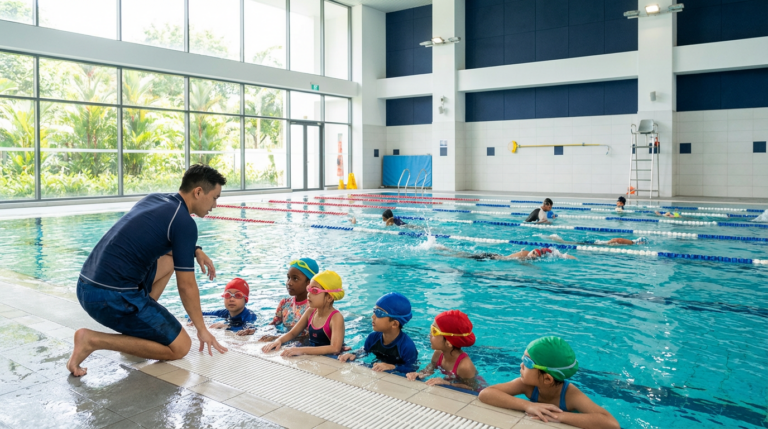
Group lessons can be particularly effective for this reason, though only when your child is ready. At SPEEDISWIM, our group classes are carefully organized by age and ability level, ensuring children learn alongside peers at similar stages. Watching a classmate accomplish something new often inspires others to try, creating a supportive environment where children encourage each other. Our 20+ years of experience has shown us that the social element of swimming often helps fearful children make breakthroughs they might not achieve in isolation.
Many children fear water due to sensory processing issues rather than psychological fear alone. The feeling of water in ears, on the face, or the echoing sounds of an indoor pool can be genuinely overwhelming for sensory-sensitive children. Identifying and accommodating these sensitivities makes an enormous difference.
If your child struggles with water in their ears, special swimmer's earplugs can help. For children bothered by water in their eyes, invest in quality, comfortable goggles and practice wearing them at home first. Some children need to wear swim shirts or full-body swimsuits because they dislike the feeling of water directly on their torso. While these might seem like crutches, they're actually tools that allow the child to focus on skill-building rather than sensory discomfort.
Consider these sensory accommodations:
As children become more comfortable, many naturally give up these aids on their own. The goal is reducing barriers to participation, not forcing children to tolerate discomfort that could be easily addressed.
Forcing a fearful child into water can create trauma that lasts years. This cannot be emphasized enough. Well-meaning parents sometimes think that pushing a child to "just do it" will help them realize there's nothing to fear, but this approach typically backfires spectacularly. Children who are forced often develop deeper, more entrenched fears that become much harder to overcome.
Respect your child's boundaries completely. If they say they're done for the day after five minutes, honor that. If they don't want to put their face in the water today, that's okay. Progress isn't linear; there will be setbacks, bad days, and plateaus. A child who regresses after weeks of progress hasn't failed—they're having a normal human experience with fear.
Your role is to provide opportunities, encouragement, and support, not to force outcomes. Think of yourself as opening doors that your child can choose to walk through when they're ready. Some children need months of gentle exposure before they're ready to actually swim. That timeline is perfectly acceptable and doesn't indicate failure by either parent or child.
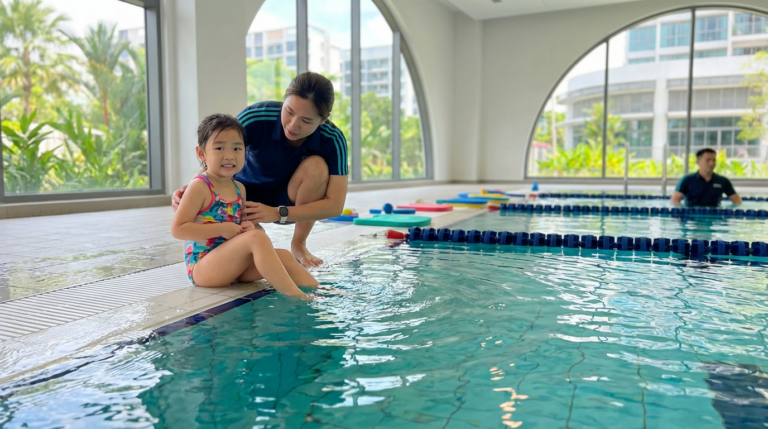
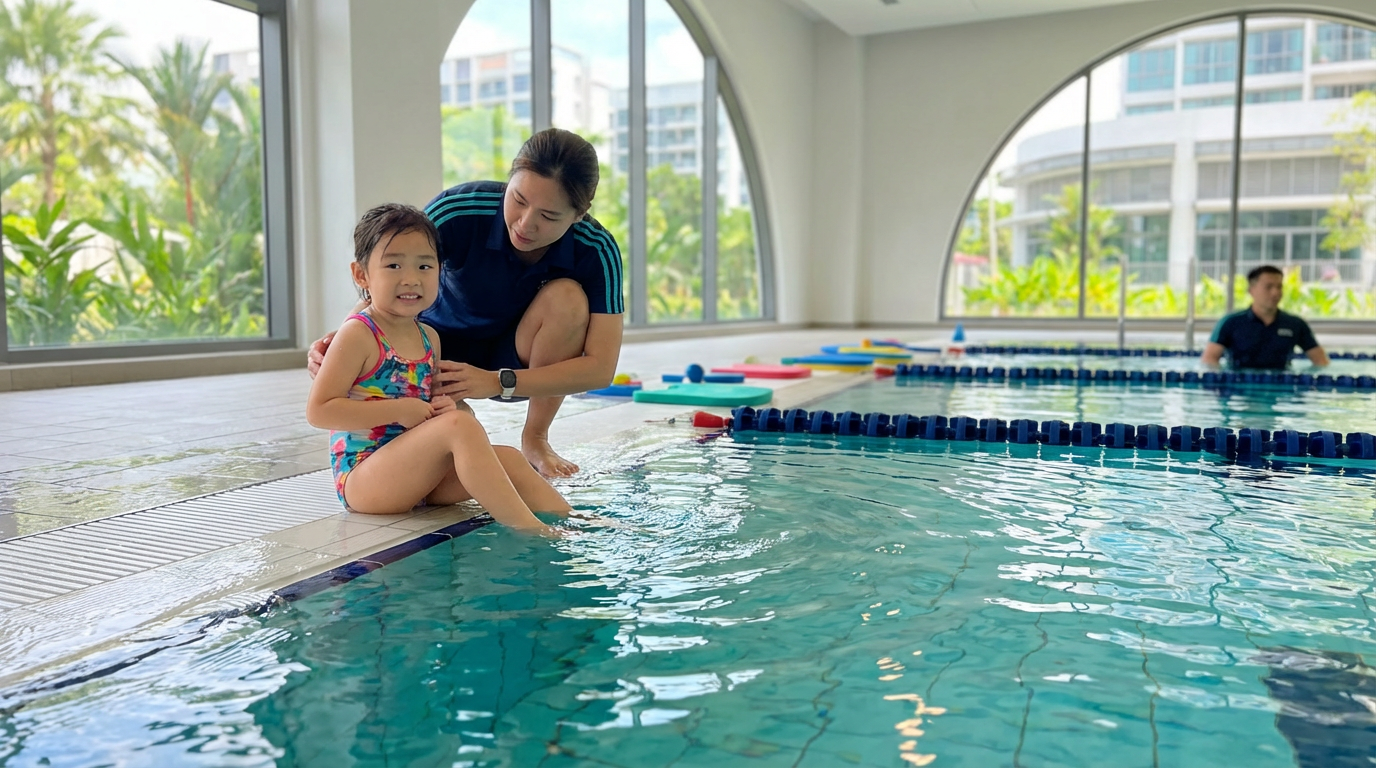
Professional swim instructors have specialized training in helping fearful children. While parental support is crucial, there comes a point where working with trained professionals accelerates progress significantly. Qualified swim coaches understand child development, have seen hundreds of fearful children succeed, and know exactly how to break down skills into manageable steps.
Professional instructors also provide an emotional advantage: children often respond differently to coaches than to parents. The coach-student dynamic doesn't carry the same emotional weight as the parent-child relationship, allowing some children to push their boundaries more easily. Additionally, coaches remain consistently calm and patient because they're not emotionally invested in the same way parents are.
At SPEEDISWIM, our professionally qualified coaches have helped thousands of initially fearful children become confident swimmers over our 20+ years of operation. Our SwimSafer 2.0 program is specifically designed to develop water confidence alongside technical skills, emphasizing water safety and personal survival education. We understand that every child progresses at their own pace, and our structured approach allows for individualization within a proven framework.
When considering professional lessons in Singapore, group swimming lessons typically range from $35 to $55 per session, while private or semi-private instruction ranges from $60 to $120 per session. For severely fearful children, the investment in private lessons may be worthwhile initially, as the one-on-one attention allows for completely customized pacing and maximum sensitivity to your child's needs.
While most childhood water fear resolves with patience and appropriate strategies, some situations warrant professional intervention beyond swimming lessons. If your child's fear is accompanied by severe panic attacks, physical symptoms like vomiting or hyperventilation at the mere mention of water, or if the fear is spreading to other areas of life (like refusing baths), consulting a child psychologist may be helpful.
Similarly, if you've been implementing these strategies consistently for six months or more without any progress whatsoever, professional guidance can help identify if there's an underlying issue such as a sensory processing disorder or past trauma that needs specialized attention. A qualified child psychologist can work alongside swim instructors to create a comprehensive approach that addresses both the psychological and physical aspects of the fear.
Remember that seeking help isn't a sign of failure. It's a sign that you're committed to supporting your child's wellbeing and willing to access all available resources. Many children who work with both therapists and swim instructors make remarkable progress that might not have happened with either intervention alone.
The journey to water confidence isn't just about learning to swim—though that's certainly important for safety. Children who overcome water fear develop broader life skills that extend far beyond the pool. They learn that fears can be conquered through patience, practice, and persistence. They discover their own capacity for bravery and resilience. They experience the pride that comes from achieving something genuinely difficult.
Swimming itself offers tremendous physical and mental health benefits. It's a low-impact, full-body exercise that builds cardiovascular fitness, strength, and coordination. For children, swimming provides sensory input, spatial awareness development, and confidence in their physical capabilities. Many children who start as fearful beginners eventually discover a genuine love for aquatic activities, with some even pursuing competitive swimming, water polo, or artistic swimming as they grow.
At SPEEDISWIM, we've witnessed countless transformation stories over our two decades of teaching. Children who once cried at the sight of water have gone on to represent Singapore at national competitions, with over 50 of our swimmers selected for National Youth and National Teams. While not every child will become a competitive athlete, every child deserves the safety, confidence, and joy that comes with being comfortable in water. The investment of time, patience, and appropriate instruction pays dividends throughout their entire life.
Helping a child overcome water fear requires patience, consistency, and compassion. There's no universal timeline for this journey—some children make rapid progress while others need months or even years to feel truly comfortable. Both paths are completely normal and acceptable. What matters most is maintaining a supportive, pressure-free environment where your child feels safe to face their fears at their own pace.
The ten strategies outlined in this guide—from dry-land familiarization to professional instruction—provide a comprehensive roadmap based on proven methods that have worked for thousands of children. Remember to celebrate small victories, respect your child's boundaries, and never force the process. With your support and the right approach, your child can absolutely develop confidence and competence in the water.
If you've been implementing these strategies and feel your child would benefit from professional guidance, consider the value that experienced instructors bring. At SPEEDISWIM, our 20+ years of experience and track record with over 25,000 students demonstrates our commitment to helping every child succeed, regardless of their starting point. Water safety is a life skill that every child deserves to master, and we're here to support that journey.
Our professionally qualified coaches at SPEEDISWIM have over 20 years of experience helping fearful children become confident swimmers. With proven SwimSafer 2.0 programs and patient, personalized instruction, we'll support your child every step of the way.