The moment a swimmer launches from the pool edge or starting block can determine the outcome of an entire race. A well-executed dive provides crucial momentum, optimal body position, and those valuable tenths of seconds that separate podium finishes from fourth place. Yet for many swimmers, diving remains one of the most technically challenging and psychologically intimidating aspects of aquatic training.
Whether you're a parent watching your child progress through SwimSafer levels, an adult learner conquering water confidence, or an aspiring competitive swimmer aiming for personal bests, understanding proper dive techniques is essential for both performance and safety. The progression from tentative pool edge entries to explosive racing starts requires methodical skill development, patient practice, and expert coaching guidance.
At SPEEDISWIM, we've spent over two decades refining dive instruction across all skill levels. From introducing basic pool entries in our SwimSafer Program to perfecting the millisecond-precise starts that have propelled over 50 of our athletes into National Youth and National Teams, we understand the technical nuances and developmental progressions that transform hesitant beginners into confident competitors. This comprehensive guide draws from our extensive coaching experience to break down swimming dive techniques from foundational concepts through advanced competitive starts.
Before attempting any dive, swimmers must grasp the fundamental principles that govern safe and effective water entry. A proper swimming dive isn't simply jumping into the pool; it's a carefully coordinated sequence of body movements designed to minimize splash, maximize forward momentum, and establish optimal underwater positioning for efficient swimming.
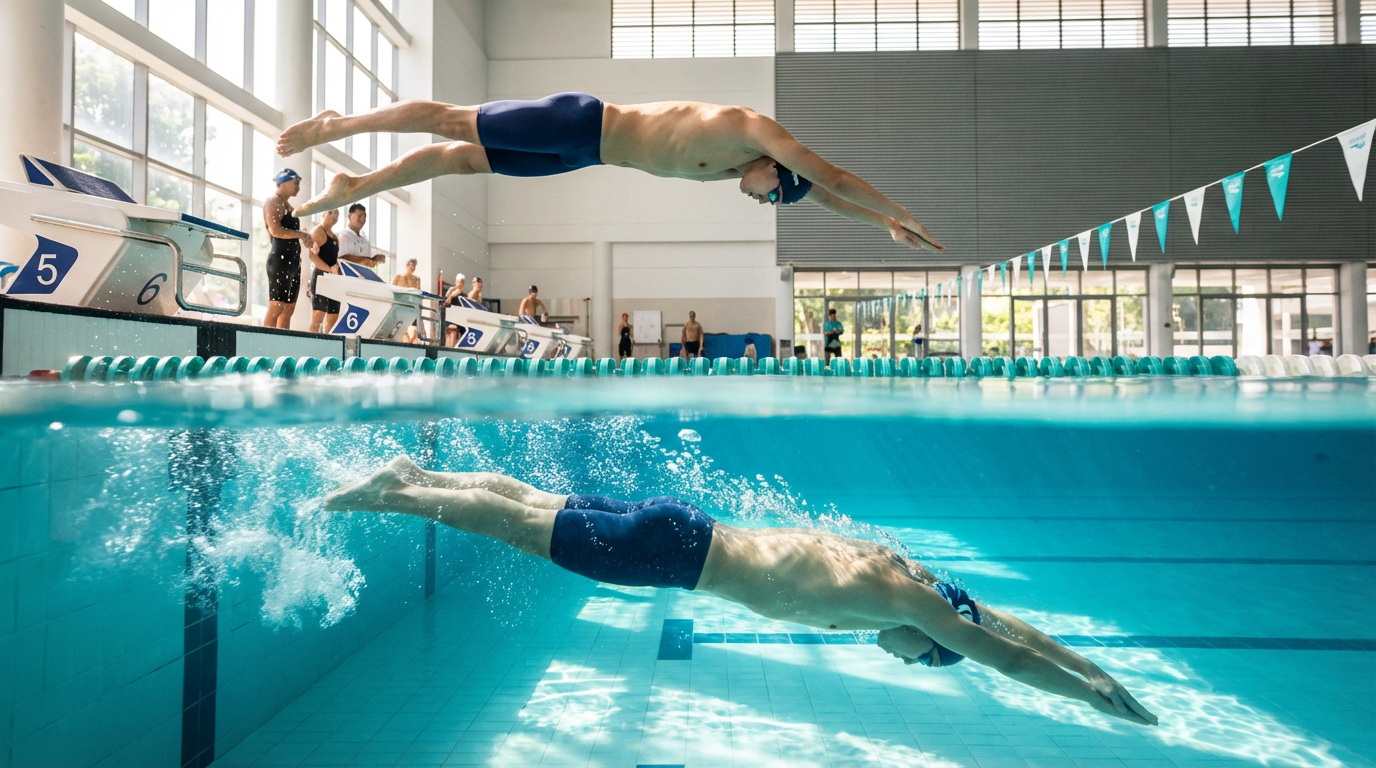
The anatomy of any successful dive includes four distinct phases: the starting position, where body alignment and muscle engagement prepare for launch; the flight phase, during which the swimmer travels through the air with specific body angles; the entry, where hands, head, and body pierce the water surface cleanly; and the glide phase, which capitalizes on the dive's momentum before transitioning to active swimming. Each phase requires precise technique, and weaknesses in any single element compromise the entire dive's effectiveness.
Water depth and supervision requirements form the non-negotiable safety foundation for dive training. Singapore's SwimSafer 2.0 program emphasizes these safety protocols throughout skill progression, ensuring swimmers only attempt dives appropriate for their ability level and environmental conditions. Shallow water entries must use different techniques than deep water dives, and beginners should always train under qualified supervision until techniques become second nature.
Understanding streamline position is critical before progressing beyond basic entries. This fundamental body position, with arms extended overhead, hands stacked, head tucked between arms, and body fully elongated, creates the hydrodynamic shape that allows swimmers to slice through water with minimal resistance. Every dive, regardless of complexity, aims to achieve this streamline position immediately upon water entry.
Pool edge diving represents the essential starting point for dive progression. This technique builds water confidence, establishes proper entry mechanics, and creates the foundation upon which all advanced diving skills develop. For swimmers in SwimSafer Stage 3 and beyond, pool edge diving marks a significant milestone in aquatic competency.
The sitting dive serves as the gentlest introduction to head-first water entry. Swimmers begin seated at the pool edge with feet on the wall or gutter, hands positioned on the deck beside their hips. From this stable position, they lean forward with arms extended overhead in streamline position, gently rolling into the water with minimal height. This controlled entry allows beginners to experience the sensation of head-first entry without the psychological challenge of standing height or the technical demands of forceful propulsion.
Key teaching points for sitting dives include keeping the chin tucked to the chest throughout the entry, maintaining arm extension to protect the head, and creating a smooth roll rather than a forceful push. The water should be at least 1.5 meters deep, and instructors should remain within arm's reach during initial attempts. Many swimmers require 10-15 practice repetitions before the movement pattern feels natural and comfortable.
Once sitting dives demonstrate consistent form, swimmers advance to kneeling dives, which introduce slightly greater height and require more active body control. The swimmer kneels on one knee at the pool edge with the opposite foot planted flat, toes curled over the edge. Arms extend overhead in streamline position, and the swimmer leans forward while pushing gently off the planted foot, entering the water at a steeper angle than the sitting dive.
This progression develops the fundamental pushing motion that will later power explosive racing starts. Coaches should emphasize the forward lean that shifts the body's center of gravity beyond the pool edge before the push occurs, ensuring the swimmer falls into the dive rather than jumping upward. The entry point should be approximately one meter from the wall, and the glide should carry the swimmer forward several meters before surfacing.
The standing pool edge dive represents the culmination of beginner progression and the technique most recreational swimmers will use throughout their aquatic experiences. Swimmers stand at the pool edge with toes curled over the lip, feet hip-width apart, and knees slightly bent. Arms begin at the sides or overhead, depending on the variation being taught.
The execution sequence begins with a forward weight shift that brings the shoulders beyond the toes, followed by a coordinated arm swing (if starting from the sides) and leg extension that propels the body forward and slightly upward. The ideal trajectory creates a parabolic arc with the hands entering the water first, followed by the head, torso, and finally the legs in one continuous line. The entry angle should be approximately 30-40 degrees from horizontal, allowing the swimmer to glide forward at an efficient depth of 0.5-1 meter below the surface.
Common challenges at this stage include excessive upward jump (creating a high, vertical entry that wastes energy and creates splash), insufficient forward lean (resulting in belly-flop risk), and late head tuck (exposing the face to impact). Our SPEEDISWIM coaches address these issues through progressive drills, video feedback, and targeted corrections that build muscle memory for proper technique.
The progression from pool edge to starting block represents a significant psychological and technical leap for developing swimmers. Starting blocks elevate the launch point by 50-75 centimeters, dramatically increasing the flight time, entry velocity, and technical precision required for effective dives. This transition typically occurs when swimmers demonstrate consistent pool edge technique and begin participating in competitive swimming training.
Starting blocks feature angled surfaces, backstroke ledges, and textured footing that change the mechanics of body positioning and push-off compared to flat pool edges. Modern competitive blocks include adjustable rear footrests that enable the track start technique, while traditional blocks accommodate the grab start method. Swimmers must develop familiarity with various block designs, as competition venues often feature different equipment configurations.
The increased height demands enhanced body control during the flight phase. Swimmers must maintain tight core engagement to prevent body pike or arch during the airborne portion of the dive, as any deviation from streamline position increases drag upon entry and disrupts the underwater glide trajectory. The higher entry velocity also requires more aggressive hand positioning to penetrate the water surface cleanly rather than slapping or belly-flopping.
Mental preparation becomes equally important as technical execution when transitioning to blocks. Many swimmers experience apprehension about the increased height, particularly during initial attempts. Progressive exposure, emphasis on proper technique over distance or splash, and positive coaching feedback help swimmers build confidence. At SPEEDISWIM, we've found that swimmers who master pool edge dives thoroughly before attempting blocks adapt more quickly and with less anxiety than those rushed through progressions.
The track start has become the predominant technique in competitive swimming since the introduction of angled starting blocks with rear footrests in the early 2010s. Research consistently demonstrates that track starts produce faster reaction times and quicker entry to the 15-meter mark compared to traditional grab starts, making this technique the preferred method for sprint and middle-distance events.
The track start setup positions one foot forward at the block's front edge with toes curled over, while the rear foot presses against the adjustable footrest positioned at mid to upper calf height. This staggered stance creates a "sprinter's crouch" position that enables explosive forward drive. The weight distribution typically favors 60-70% on the front foot, allowing immediate forward momentum upon the starting signal while maintaining stability during the "set" position.
1. The Ready Position – Upon the command "take your mark," swimmers step onto the block and assume their preferred track stance. Hands grip the front edge of the block with fingers curled underneath and knuckles on top, creating a stable three-point (or four-point with both hands) contact system. The head remains neutral, eyes focused on a spot 2-3 meters ahead of the block, and the body weight shifts forward over the front foot.
2. The Set Position – When commanded to "set," swimmers raise their hips to a height level with or slightly above the shoulders while maintaining hand contact with the block. The rear knee straightens as the back leg loads with spring tension, and the front leg bends to approximately 90-110 degrees. The body's center of gravity moves forward beyond the front foot, creating an unstable position that will explode into forward motion at the signal. This phase requires both physical stillness and mental intensity, as false starts result in disqualification.
3. The Explosive Drive – At the starting signal (buzzer, horn, or gun), swimmers drive forcefully off both feet while releasing the hand grip and swinging the arms forward. The rear leg provides the primary propulsive force, extending powerfully through the hip, knee, and ankle in a coordinated triple extension. The front leg contributes by pushing through the toes and ankle. The arm swing accelerates the body forward and upward, with hands meeting overhead to establish streamline position before water entry.
4. The Flight and Entry – The optimal trajectory creates a low, flat arc that maximizes forward distance while minimizing time in the air. Elite swimmers aim to enter the water 3-4 meters from the block wall, though distance varies based on individual power and technique. The body maintains rigid streamline position throughout flight, with the hands leading entry at an angle approximately 30-35 degrees below horizontal. The hole created by the hands should accommodate the entire body threading through with minimal splash.
Track start mastery requires months of deliberate practice, strength development in the legs and core, and precise timing coordination. At SPEEDISWIM, our competitive swimmers drill start technique regularly, using video analysis and timing systems to measure improvements in reaction time, block time, and 15-meter splits. These measurable metrics help athletes understand how start technique directly impacts race performance.
While the track start has gained popularity in recent years, the grab start remains a valuable technique that some swimmers prefer, particularly those with superior upper body strength or specific biomechanical advantages. This traditional method positions both feet parallel at the front of the block, typically shoulder-width or slightly wider apart, with toes curled over the edge.
The defining characteristic of the grab start is the hand position: swimmers grip the front edge of the block between or outside their feet, depending on personal preference and flexibility. This grip creates a lower center of gravity and allows swimmers to pull their body forward during the drive phase, adding upper body contribution to the predominantly leg-powered propulsion.
From the ready position with hands gripping the block, swimmers respond to "set" by raising the hips high while maintaining the hand grip and bending the knees to approximately 90-120 degrees. The shoulders move forward beyond the toes, and the head remains in a neutral position with eyes focused forward. This coiled position stores elastic energy in the leg muscles while creating forward instability that facilitates quick reaction.
At the starting signal, swimmers simultaneously pull with the arms and drive forcefully through both legs. The arm pull begins the forward motion immediately, providing a reaction time advantage, while the leg drive generates the primary propulsive force. The hands release from the block as the body becomes airborne, swinging forward to meet overhead in streamline position. The trajectory typically creates a slightly higher arc than track starts, with some swimmers entering the water at a steeper angle.
The grab start offers particular advantages for backstroke events during relay exchanges, where swimmers must time their entry based on incoming teammate touch rather than a starting signal. The symmetrical stance and arm position provide better balance for these precision-timed starts. Some breaststroke specialists also prefer grab starts, as the technique's mechanics align well with breaststroke's emphasis on powerful leg drive.
The underwater phase immediately following dive entry represents one of swimming's most critical performance windows. During these first meters, swimmers travel faster than they can possibly swim on the surface, making effective underwater technique essential for competitive success. International swimming rules allow swimmers to remain underwater for up to 15 meters after starts and turns, and elite athletes exploit every legal centimeter of this advantage.
Upon entry, the body should achieve perfect streamline position at a depth of approximately 0.5-1.0 meters below the surface, depending on entry angle and velocity. This depth provides optimal balance between minimizing surface resistance and maintaining efficient glide trajectory. Too shallow, and the body creates surface turbulence; too deep, and valuable forward momentum is lost to downward travel that must be redirected upward.
Dolphin kicks power the underwater phase in freestyle, butterfly, and backstroke events. Most competitive swimmers execute 3-7 dolphin kicks while maintaining streamline position, generating propulsion through powerful hip and core engagement rather than excessive knee bend. The kicks should be compact, powerful, and rhythmic, with the upkick (upward motion) generating nearly as much propulsion as the downkick. Research indicates that effective underwater kicking can maintain speeds exceeding 2.0 meters per second, significantly faster than surface swimming for most athletes.
Breaststroke underwater technique follows specific rules: swimmers may execute one complete arm pull (extending beyond the hips) and one dolphin or breaststroke kick while fully submerged. This "pullout" sequence has evolved into a highly technical skill that significantly impacts breaststroke race outcomes. The timing, power, and streamline maintenance during the pullout separate elite breaststrokers from their competitors.
The transition from underwater to surface swimming requires precise timing and technique. Swimmers should begin their breakout (first stroke) when underwater velocity decreases to approximately their surface swimming speed, typically around the 10-12 meter mark for competitive athletes. The breakout stroke must maintain forward momentum while efficiently bringing the body to the surface, avoiding excessive vertical motion that disrupts horizontal velocity.
Even experienced swimmers frequently demonstrate technical flaws in their diving technique. Identifying and correcting these common mistakes produces immediate performance improvements and reduces injury risk. Our SPEEDISWIM coaching team has observed these recurring issues across thousands of athletes and developed effective correction strategies.
The vertical jump error represents one of the most prevalent mistakes among developing swimmers. Rather than driving forward and slightly upward, swimmers jump straight up, creating a high arc that wastes energy and increases impact force at entry. This often stems from psychological discomfort with forward projection or incomplete understanding of proper trajectory. The correction involves emphasizing forward weight shift before leg drive, practicing shallower water drills that reinforce forward rather than vertical motion, and using visual targets on the water surface that swimmers aim to reach with their entry.
Late head tuck compromises streamline position and risks face impact with the water. Swimmers who fail to tuck their chin to chest throughout the dive often experience uncomfortable face-first entries that reinforce anxiety about diving. The solution requires building awareness of head position through deliberate practice, verbal cuing from coaches during the dive, and potentially using streamline drills on deck to establish proper head-arm-body alignment before attempting water entry.
Bent arms at entry destroy the streamlined position that protects the head and minimizes drag. This mistake typically occurs when swimmers focus excessively on entry distance or lack the core strength to maintain rigid body position during flight. Correction strategies include progressive strengthening exercises for shoulders and core, awareness drills focusing solely on arm position, and reduced-intensity dives that allow swimmers to perfect positioning before adding power.
Insufficient leg extension during the drive phase limits the propulsive force generated from the block or pool edge. Swimmers who push with only partial leg extension leave significant power untapped, resulting in shorter flight distance and reduced entry velocity. Video analysis helps swimmers recognize incomplete extension, while targeted strength training and explosive plyometric exercises develop the power necessary for full triple extension through hip, knee, and ankle.
The progression from identification to correction requires patience, consistent practice, and often external feedback through coaching or video review. At SPEEDISWIM, we incorporate regular dive technique assessments into our training programs, ensuring swimmers at all levels continuously refine their skills rather than reinforcing flawed movement patterns.
Water safety forms the foundation of all aquatic activities, and diving presents specific risks that require careful attention. Singapore's emphasis on water safety through programs like SwimSafer 2.0 reflects the serious approach necessary to prevent diving-related injuries, which can range from minor discomfort to catastrophic outcomes when proper protocols aren't followed.
Water depth requirements must never be compromised. Competitive diving from starting blocks requires minimum water depth of 1.35 meters at the starting end, measured for at least 6 meters from the wall. Pool edge dives need minimum depths of 1.5 meters, though 2.0 meters or greater is strongly recommended. Shallow water entries must use feet-first techniques exclusively. These standards exist because head or neck impact with pool bottoms causes severe injuries that can result in permanent paralysis or death.
Diving should only occur in designated areas with clear visibility to the bottom and surrounding space. Murky water, crowded pool conditions, or areas with underwater obstacles create unacceptable risk. Swimmers must always verify conditions before diving, regardless of familiarity with the venue. Competition facilities undergo rigorous safety inspections, but training environments require personal vigilance.
Progression pacing prevents swimmers from attempting techniques beyond their current ability level. The natural enthusiasm to advance quickly must be balanced against the reality that diving skills develop through hundreds of repetitions and gradual complexity increases. Swimmers who skip foundational steps or rush through progressions demonstrate higher injury rates and often develop fear-based psychological barriers that impede long-term development.
Qualified supervision during dive training provides immediate feedback, safety monitoring, and emergency response capability. While experienced swimmers may practice independently, beginners and those learning new techniques should always train under the guidance of certified instructors. Our SwimSafer Program incorporates appropriate supervision ratios and progressive safety protocols throughout all skill levels.
Medical considerations also impact diving readiness. Swimmers with ear problems, sinus conditions, neck injuries, or other medical concerns should consult healthcare providers before beginning dive training. The forces experienced during water entry and underwater travel can exacerbate certain conditions, and individual medical history must inform training decisions.
The journey from basic pool edge entries to race-winning competitive starts spans months or years, depending on training frequency, coaching quality, and individual aptitude. Understanding this progression helps swimmers set realistic expectations while maintaining motivation through the developmental process. At SPEEDISWIM, we've guided over 1,000 athletes through this transformation, producing more than 50 National Youth and National Team selections who exemplify what dedicated dive training can achieve.
Recreational proficiency typically develops within 3-6 months of consistent practice for swimmers training 2-3 times weekly. At this stage, swimmers execute confident pool edge dives with proper streamline position, controlled entry, and effective underwater glide. They understand safety protocols, recognize appropriate diving conditions, and can self-correct obvious technique errors. This level suits most fitness swimmers, recreational competitors, and those pursuing swimming primarily for health and enjoyment.
Competitive competency requires additional refinement of starting block technique, reaction time development, and integration of underwater skills that maximize the 15-meter advantage window. Swimmers typically reach this level after 12-24 months of focused training that includes specific start practice, strength and power development, and regular competitive experience. They demonstrate consistent sub-0.70 second reaction times, efficient underwater dolphin kicks, and the ability to execute their chosen start technique under competitive pressure.
Elite-level starts represent the pinnacle of technical mastery, where millisecond improvements result from years of refinement. These swimmers have tested both track and grab start variations to determine their optimal technique, developed explosive power through dedicated strength training, and practiced start sequences thousands of times. They understand their individual reaction patterns, adjust technique based on specific race distances and strategies, and maintain consistent execution across multiple events in competition settings. The starts executed by elite athletes like SNOC Sportsgirl of the Year 2018 Debbie Soh Li Fei showcase the seamless integration of technical precision, physical power, and competitive confidence.
The transition between these levels requires structured training that balances technical practice with physical development and competitive exposure. Our Competitive Swimming program at SPEEDISWIM provides this comprehensive approach, combining expert coaching from qualified instructors with regular competition opportunities and supportive athlete development pathways. Swimmers benefit from training across multiple venues including international schools and country clubs, experiencing different pool configurations and competitive environments that build adaptability and confidence.
Cross-training in related aquatic disciplines can accelerate dive development. Athletes in our Water Polo program develop explosive power and spatial awareness that transfers to starting skills, while Artistic Swimming participants build exceptional body control and kinesthetic awareness. This multidisciplinary exposure creates well-rounded aquatic athletes with diverse skill foundations.
Goal-setting and progress tracking maintain motivation throughout the lengthy development process. Swimmers should establish specific, measurable objectives for each training phase, such as improving reaction time by 0.05 seconds, adding one additional underwater dolphin kick, or achieving consistent 15-meter splits within a target range. Regular assessment through timing systems, video analysis, and coach evaluation documents improvement and identifies areas requiring continued focus.
The pathway from tentative pool edge entries to explosive competitive starts embodies the broader transformation that swimming training facilitates. Beyond the technical skills and competitive advantages, swimmers develop confidence, resilience, goal-orientation, and the understanding that mastery emerges from sustained commitment to incremental improvement. These life skills extend far beyond the pool, preparing young athletes for success in academic pursuits, professional careers, and personal challenges throughout their lives.
Mastering swimming dive techniques represents a journey that begins with overcoming the psychological barrier of head-first water entry and culminates in the explosive, precisely-timed starts that can determine competitive outcomes. From sitting dives at the pool edge through advanced track starts from competition blocks, each progression builds upon previous skills while introducing new technical and physical demands. The process requires patience, quality instruction, consistent practice, and unwavering attention to safety protocols.
Success in dive development depends heavily on coaching expertise and structured training programs that respect individual readiness while challenging swimmers to expand their capabilities. The technical nuances of body position, trajectory angles, underwater streamline, and propulsive techniques separate adequate dives from exceptional ones, and these details only become refined through hundreds of repetitions under expert guidance.
Whether your swimming goals focus on water safety competency, fitness and recreation, or competitive excellence, investing in proper dive technique pays dividends in performance, confidence, and enjoyment. The skills you develop through systematic dive training create foundations for lifelong aquatic participation and potentially open pathways to competitive success at local, national, or even international levels.
Join SPEEDISWIM and learn from Singapore's most experienced aquatic coaching team. With over 20 years of expertise, structured programs aligned with SwimSafer 2.0 certification, and a proven track record of developing National Team athletes, we provide the expert instruction and supportive environment you need to master swimming dive techniques safely and effectively.
Whether you're beginning your swimming journey, refining recreational skills, or pursuing competitive excellence, our professionally qualified coaches will guide your progression from pool edge entries through advanced racing starts.