The butterfly stroke has earned its reputation as swimming's most challenging and physically demanding technique. Watch an experienced swimmer glide through the water with powerful dolphin kicks and synchronized arm movements, and it looks almost superhuman. For beginners, the thought of learning butterfly can feel overwhelming, even impossible.
Here's the truth: butterfly isn't inherently harder to learn than other strokes; it's just different. What makes it challenging is that it requires precise coordination and relies heavily on core strength and rhythm. But with proper instruction and a systematic approach, any swimmer who has mastered the basic strokes can learn butterfly technique.
At SPEEDISWIM, we've spent over 20 years teaching swimmers of all levels, from complete beginners through our SwimSafer Program to competitive athletes who've gone on to represent Singapore at national levels. We've seen thousands of swimmers conquer their fear of butterfly by breaking down this complex stroke into manageable components.
This comprehensive guide will demystify the butterfly stroke, showing you exactly how to approach each element with confidence. Whether you're working toward competitive swimming goals or simply want to add this impressive stroke to your repertoire, you'll find a clear roadmap to success.
Before we dive into technique, let's address why butterfly has such an intimidating reputation. Understanding these challenges helps you approach your training with realistic expectations and the right mindset.
Physical demands: Butterfly requires significant core and upper body strength. Unlike freestyle or backstroke where you can recover between strokes, butterfly demands continuous power output. Your entire body must work in coordinated waves of movement, engaging muscles from your shoulders down to your toes.
Coordination complexity: The timing between your arm pull, dolphin kick, and breathing must be precise. Miss the rhythm by even a fraction of a second, and the stroke falls apart. This coordination doesn't come naturally to most swimmers initially, which is why structured progression is essential.
The intimidation factor: Many swimmers attempt butterfly too early in their swimming journey, before developing the foundational strength and water confidence needed. This premature attempt leads to frustration and reinforces the belief that butterfly is "too hard." In reality, timing matters greatly when learning this stroke.
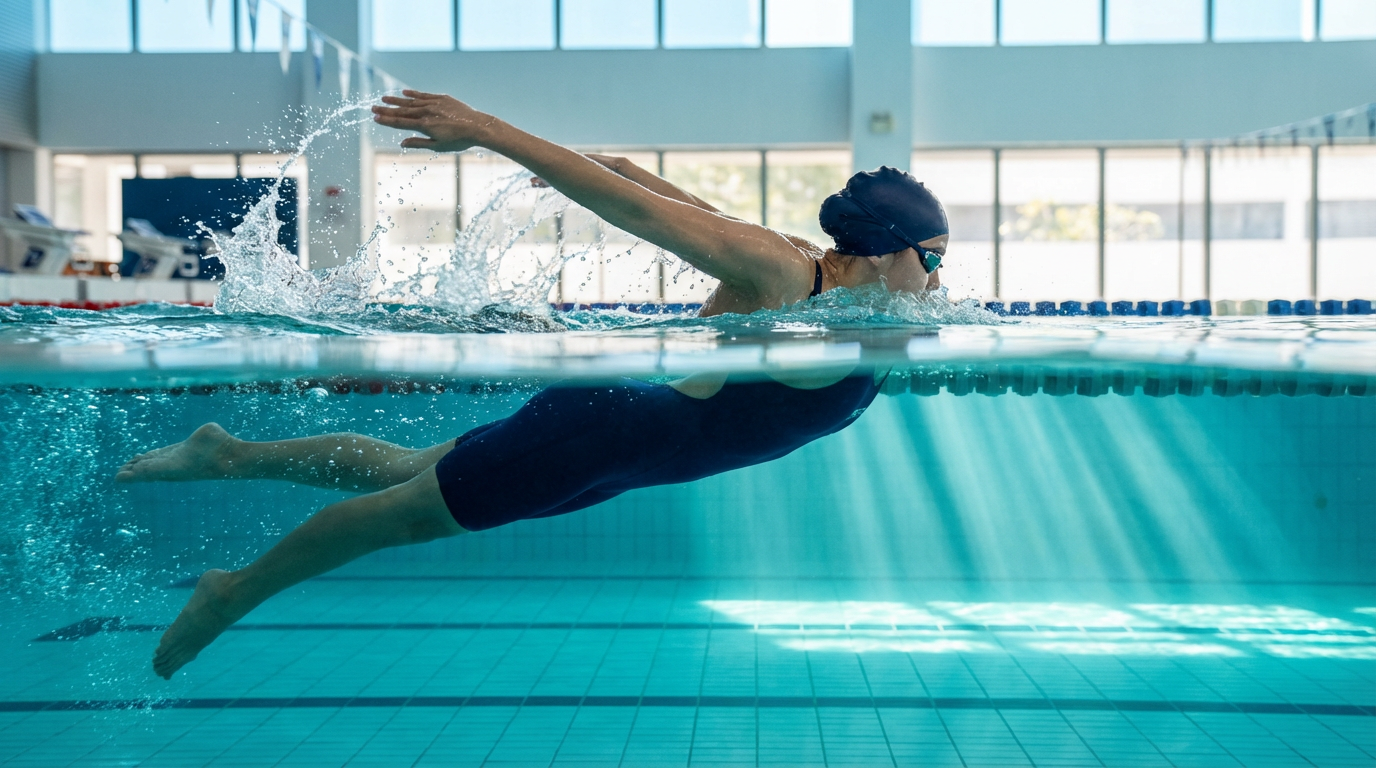
The butterfly stroke consists of simultaneous over-water arm recovery, an underwater pull, and a dolphin kick. Unlike the alternating movements in freestyle or backstroke, both arms move together in a windmill motion while your legs perform an undulating dolphin kick.
The stroke follows a specific rhythm: typically two dolphin kicks per arm cycle. The first kick, called the power kick, happens as your hands enter the water. The second kick, or finishing kick, occurs as your hands exit near your hips. This timing creates the characteristic wave-like body motion that propels you forward efficiently.
Energy efficiency: Despite its demanding appearance, proper butterfly technique actually uses body undulation and momentum to reduce energy expenditure. Poor technique, however, burns energy rapidly and goes nowhere fast. This is why learning correct form from the beginning is crucial rather than trying to power through with brute strength.
The stroke's official name in competitive swimming is simply "butterfly," though many swimmers affectionately call it "fly." It's the newest of the four competitive strokes, developed in the 1930s as a variant of breaststroke before becoming its own recognized stroke in the 1950s.
The foundation of butterfly is the undulating body movement that flows from your head through your torso to your feet. Think of it as creating a wave that travels through your entire body. This undulation isn't just for show; it's the mechanical engine that makes butterfly work.
Starting position: Your body should be nearly horizontal in the water, with your head in a neutral position looking slightly forward and down. Your hips ride just below the surface. Many beginners make the mistake of keeping their body too rigid or their hips too low, which immediately disrupts the stroke's rhythm.
The undulation begins with your chest pressing down into the water. As your chest presses down, your hips naturally rise toward the surface. Then, as your chest rises back up (during the breathing phase), your hips press down, creating the whip-like motion that powers your dolphin kick.
This movement pattern requires core strength and flexibility. Your spine flexes and extends in a controlled manner, similar to the motion of a dolphin or whale swimming. The key is maintaining fluidity rather than forcing sharp, angular movements.
Practice drill: Before attempting the full stroke, practice body undulation while holding a kickboard extended in front of you. Focus solely on creating the wave motion from chest to hips to legs. This drill helps you feel the rhythm without the added complexity of arm movements.
The butterfly arm pull follows a distinctive pattern: entry, catch, pull, push, and recovery. Unlike freestyle where arms alternate, both arms execute these phases simultaneously, which is why the timing feels so different.
Hand entry: Your hands should enter the water shoulder-width apart, thumbs angled slightly down. Entry happens in front of your head when your chest is pressing down. Your hands slice into the water rather than slapping down flat. Think of threading your hands through a narrow opening.
Many beginners enter too wide (outside their shoulders) or too narrow (directly in front of their face). Both errors create drag and disrupt the pull pattern. The shoulder-width entry sets up an efficient pull pathway.
After entry, your hands sweep outward and slightly down to "catch" the water. Your elbows bend and stay higher than your hands throughout this phase. The pull traces a keyhole shape underwater: out, down, in, and back.
The power comes from pulling water backward and slightly inward toward your centerline. Your hands accelerate throughout the pull, reaching maximum speed as they push past your hips. This acceleration is critical; a constant-speed pull generates much less propulsion.
As your hands exit near your hips, they swing forward over the water in a sweeping arc. Your arms should be relatively straight but relaxed, not locked. The recovery happens while your chest rises for breathing.
Common recovery mistakes: Dragging hands through the water instead of clearing them over the surface, or recovering with excessively bent elbows. Both errors waste energy and slow you down. The recovery should feel like swinging your arms forward with minimal effort, using momentum from the pull phase.
The dolphin kick is the engine of butterfly stroke. While arms provide propulsion and create the stroke's dramatic visual, the kick maintains momentum and drives the body undulation that makes everything else possible.
Mechanics of the kick: Your legs move together in a whipping motion, initiating from your core and hips rather than your knees. The downbeat is the power phase, where your legs press down and back with feet slightly pigeon-toed. The upbeat brings your legs back to the starting position, with knees bending slightly to prepare for the next downbeat.
The kick comes from your whole body, not just your legs. Your hips initiate the motion, which then flows through your thighs, knees, and finally whips through your feet. Beginners often make the mistake of bending too much at the knees, creating a bicycling motion rather than a fluid whip.
The standard butterfly timing uses two kicks for each complete arm cycle. The first kick happens as your hands enter the water. This kick is typically smaller and helps maintain rhythm. The second kick occurs as your hands push past your hips and exit the water. This is your power kick, providing the propulsion boost that helps lift your upper body for breathing and arm recovery.
Getting this timing right takes practice. Many swimmers initially struggle with the coordination, often kicking at random intervals or using only one kick per arm cycle. Structured drills help establish the proper rhythm before you try to swim full butterfly laps.
Ankle flexibility matters: Effective dolphin kick requires flexible ankles that allow your feet to extend and whip through the water. Swimmers with limited ankle flexibility can still perform butterfly, but may need to dedicate extra time to flexibility exercises to maximize their kick efficiency.
Breathing represents one of the biggest challenges in learning butterfly because it must happen quickly without disrupting your stroke rhythm or body position. Poor breathing technique instantly destroys the stroke's flow and leaves you gasping for air.
When to breathe: You lift your head to breathe as your arms finish the pull and begin recovery. Your chin comes forward and slightly up, just enough to clear the water surface. This happens naturally as part of your body's undulation; your chest rises during this phase anyway.
The timing is critical. Breathe too early, and you'll sink. Breathe too late, and you'll disrupt your arm recovery. The breath happens in the split second when your shoulders are at their highest point and your hands are exiting the water near your hips.
Your head should remain in a neutral position, moving with your spine's natural undulation. You're not lifting your head independently; rather, your whole upper body rises slightly as part of the wave motion. Look forward, take a quick breath, then return your face to the water as your arms extend forward.
Beginners often make the mistake of lifting their head too high, which causes the hips to drop and breaks the body's streamline. Your chin should barely clear the water surface. Think "breathe forward" rather than "breathe up."
Breathing frequency: Elite swimmers often breathe every other stroke or even less frequently during races. However, as a beginner, breathe every stroke until you've built sufficient endurance and technique. Consistent breathing helps maintain rhythm and prevents the anxiety that comes from oxygen deprivation.
Understanding each component of butterfly is one thing; coordinating everything into a smooth, rhythmic stroke is another challenge entirely. The timing follows a specific sequence that, once mastered, becomes almost automatic.
Here's the coordination sequence for one complete stroke cycle:
1. Entry and first kick: Your hands enter the water shoulder-width apart as your chest presses down. Simultaneously, your legs execute the first (smaller) dolphin kick. Your face is in the water, head in neutral position.
2. Pull phase: Your hands sweep out, down, in, and back in the keyhole pattern. Your body begins transitioning from chest-down to chest-up position. Your legs prepare for the second kick as your hands approach your hips.
3. Push and second kick: As your hands push past your hips and exit the water, execute your power kick. Your chest rises, bringing your head up for breathing. This is the highest point in your body's undulation.
4. Recovery: Your arms swing forward over the water while you take your breath and return your face to the water. Your chest begins pressing down again, setting up for the next entry and first kick.
This sequence creates the characteristic rhythm of butterfly: "kick-pull-kick-breathe-recover." Many coaches teach beginners to count "one-two" with each kick to establish the rhythm before adding the complexity of arms and breathing.
Nearly every butterfly beginner makes predictable mistakes. Recognizing these errors early helps you correct them before they become ingrained habits that limit your progress.
Raising your head too high during breathing causes your hips to sink, which breaks your streamline and requires extra energy to overcome increased drag. Fix: Focus on breathing forward rather than up. Your chin should barely clear the water. Practice with a coach or film yourself to see your actual head position versus what it feels like.
Bending excessively at the knees creates a bicycling motion that generates minimal propulsion and lots of drag. The kick should initiate from your hips and core. Fix: Practice dolphin kick drills on your front with arms extended, focusing on creating the wave motion from your chest through your entire body. Keep your knees relatively straight, allowing only slight flexion.
Recovering your arms through the water rather than over it wastes enormous amounts of energy and slows you down significantly. Fix: Work on your timing so your second power kick lifts your shoulders high enough to clear your arms over the water. If you lack the strength for this, continue with dolphin kick drills to build power before attempting full stroke.
Random kicking or using only one kick per arm cycle disrupts the rhythm and reduces efficiency. Fix: Practice one-arm butterfly drills (one arm pulling while the other stays extended) to isolate and master the two-kick rhythm. Count "one-two" with each kick until the timing becomes automatic.
Holding your breath creates tension and limits the number of strokes you can complete before exhaustion. Fix: Exhale continuously through your nose and mouth while your face is in the water. This ensures you're ready to take a quick inhale when you breathe, and it helps maintain relaxation throughout your stroke.
Learning butterfly requires systematic progression. Attempting to swim full butterfly laps before mastering the components leads to frustration and poor technique. Follow this progression, spending adequate time on each stage before advancing.
Master the wave motion and dolphin kick before adding arms. Practice vertical dolphin kicks in deep water to build strength. Perform streamline dolphin kicks on your front, back, and sides. Use a kickboard to isolate the kick while maintaining proper body position. Aim for 10-15 meters of smooth, rhythmic kicking before progressing.
Keep one arm extended in front while pulling with the other arm. Maintain the two-kick rhythm throughout. This drill isolates the arm movement and kick timing without the complexity of coordinating both arms. Switch arms every 25 meters. When you can complete 100 meters of one-arm butterfly smoothly, you're ready to progress.
Perform three full butterfly strokes, then transition to freestyle for recovery. This allows you to practice full-stroke coordination without the endurance demands of continuous butterfly. Gradually increase to five strokes, then seven, building stamina while maintaining good technique.
Once you can complete 15-20 consecutive strokes with proper technique, start swimming full 25-meter or 50-meter butterfly lengths. Focus on maintaining rhythm and efficiency rather than speed. Quality always trumps quantity in butterfly training.
Training frequency: Practice butterfly technique 2-3 times per week, with rest days between sessions to allow for recovery. Butterfly is physically demanding, and adequate recovery prevents injury while allowing your neuromuscular system to consolidate the coordination patterns you're learning.
Not every swimmer is ready to learn butterfly at the same point in their swimming journey. Attempting this stroke prematurely often leads to frustration and reinforces the perception that butterfly is impossibly difficult.
Prerequisite skills: Before tackling butterfly, you should be comfortable and proficient with freestyle and backstroke. You need solid water confidence, the ability to swim at least 200 meters continuously, and reasonable core strength. In structured programs like SwimSafer 2.0, butterfly skills are typically introduced at Stage 5 and beyond, after students have mastered fundamental strokes and water safety competencies.
For young swimmers in competitive programs, coaches typically introduce butterfly drills around ages 7-9, though the timing varies based on individual physical development and strength. The emphasis at this age is on proper technique and body awareness rather than swimming long distances.
Adult beginners: Adults learning to swim often worry that butterfly is beyond their reach. While it's true that building the required strength may take longer for adult learners, proper progression makes butterfly achievable at any age. The key is patience and willingness to spend adequate time on foundational drills before attempting full stroke.
At SPEEDISWIM, our qualified coaches assess each swimmer's readiness individually. Some swimmers progress quickly through the prerequisites, while others benefit from extended time building strength and refining technique in other strokes before adding butterfly to their repertoire.
For swimmers interested in competitive swimming, mastering butterfly opens doors to individual medley (IM) events and provides tactical advantages in meets. Butterfly is often the differentiating stroke in competitive swimming; many swimmers can execute decent freestyle and backstroke, but far fewer have strong butterfly technique. Investing time to master butterfly can provide significant competitive edge.
SPEEDISWIM has groomed over 1,000 athletes across multiple aquatic disciplines, with more than 50 swimmers selected for National Youth and National Teams. This track record demonstrates that systematic, expert-guided progression through challenging skills like butterfly produces measurable competitive results.
The butterfly stroke's reputation as swimming's most intimidating technique isn't entirely undeserved. It demands coordination, strength, and precise timing in ways that other strokes don't. However, its difficulty is often overstated, particularly when swimmers approach it with proper progression and quality instruction.
Breaking butterfly down into manageable components—body undulation, dolphin kick, arm movement, breathing, and timing—transforms this seemingly impossible stroke into a series of achievable steps. Each component can be practiced, refined, and mastered individually before integrating everything into the complete stroke. This systematic approach removes the intimidation factor and replaces it with a clear roadmap to success.
Remember that every elite butterfly swimmer started exactly where you are now, struggling with coordination and building the specific strength this stroke requires. The difference between those who master butterfly and those who give up isn't talent; it's consistent practice with proper technique and the patience to progress through each stage thoroughly.
Whether you're learning butterfly for competitive goals, personal achievement, or simply to round out your swimming skills, the investment pays dividends. Beyond the stroke itself, the core strength, body awareness, and coordination you develop through butterfly training enhance your overall swimming ability across all strokes.
With over 20 years of experience teaching swimmers from complete beginners to national-level competitors, SPEEDISWIM understands that quality instruction makes the difference between struggling alone and progressing confidently. Our certified coaches provide the technical expertise, personalized feedback, and structured progression that transforms butterfly from an intimidating challenge into an achievable goal.
Join SPEEDISWIM and learn from Singapore's most experienced aquatic coaches. With over 25,000 students trained and a proven track record of developing competitive swimmers, we'll guide you through every stage of mastering butterfly and beyond.