The decision to enroll your toddler in swimming lessons represents one of the most important safety investments you'll make as a parent. In Singapore, where we're surrounded by water—from condominium pools to beaches and water parks—early aquatic education isn't just about learning a sport. It's about developing life-saving skills that could one day make a critical difference.
Between ages 2 and 4, children experience remarkable physical and cognitive development that makes this an ideal window for water introduction. Their natural curiosity about water, combined with developing motor skills and the ability to follow simple instructions, creates the perfect foundation for swimming education. However, many parents feel uncertain about when to start, what to expect, and how to choose the right program for their little ones.
This comprehensive guide draws on decades of aquatic education expertise to help Singapore parents navigate the world of toddler swimming lessons. Whether you're concerned about water safety, curious about developmental milestones, or simply want to understand what quality instruction looks like for this age group, you'll find evidence-based answers and practical guidance to make informed decisions about your child's swimming journey.
The toddler years represent a critical developmental window for aquatic skill acquisition. Research consistently shows that early water exposure, when conducted properly, builds both physical competence and psychological comfort that becomes increasingly difficult to establish later in childhood. In Singapore's aquatic-rich environment, these early lessons take on even greater significance.
Drowning prevention stands as the primary reason most parents seek early swimming instruction. According to the Singapore Civil Defence Force, drowning remains one of the leading causes of accidental death among young children. While swimming lessons don't make children "drown-proof," they do develop water awareness, basic survival reflexes, and respect for aquatic environments that significantly reduce risk. Children who start lessons between ages 2-4 develop instinctive water responses during a formative period when their brains are exceptionally receptive to new motor patterns.
Beyond safety, early swimming lessons support broader developmental benefits. Water provides a unique sensory environment that enhances spatial awareness, balance, and bilateral coordination. The resistance of water strengthens muscles without stress on developing joints, while breath control exercises improve lung capacity and respiratory function. For toddlers still mastering gross motor skills on land, water offers a forgiving medium where movement feels different, engaging neural pathways in novel ways that support overall physical development.
Perhaps equally important, starting early prevents the development of water anxiety. Children who have positive, age-appropriate water experiences from toddlerhood rarely develop the fear responses that can make later swimming instruction challenging. This psychological comfort extends beyond pools—these children tend to be more confident around beaches, water parks, and other aquatic recreational environments that are integral to Singapore family life.
Not all toddlers are ready for swimming lessons at exactly age 2, and that's perfectly normal. Developmental readiness varies significantly among children, influenced by temperament, prior water exposure, and individual physical development. Understanding these readiness indicators helps you time enrollment for maximum success and enjoyment.
Your toddler should demonstrate basic physical capabilities before formal lessons begin. Look for the ability to walk steadily without frequent falls, as water confidence builds on established land-based balance. They should be able to climb stairs with minimal assistance, indicating the leg strength needed for kicking movements. Head control should be well-established, allowing them to keep their face above water during supported activities. These physical milestones typically consolidate between 24-30 months, though some children reach them earlier or later.
Equally important are cognitive markers that indicate your child can benefit from structured instruction. They should understand and follow simple one-step directions like "hold the wall" or "kick your legs." The ability to separate from parents for short periods without extreme distress is helpful, though many quality programs for this age group incorporate parent participation. An attention span of at least 5-10 minutes for structured activities suggests they can engage with lesson components, even if they can't maintain focus for an entire 30-minute session initially.
Some children show enthusiasm for water—splashing happily during bath time or showing excitement around pools. Others display caution or fear. Neither disposition disqualifies them from lessons; quality programs work with all temperaments. However, extreme water fear may benefit from gradual home-based water play before formal enrollment, allowing you to build positive associations at your child's pace.
Parents sometimes hold unrealistic expectations about toddler swimming outcomes, imagining their 3-year-old will complete lessons swimming laps independently. Understanding age-appropriate learning objectives helps you recognize and celebrate your child's actual achievements, which are significant even if they don't resemble adult swimming.
Water comfort and confidence form the foundation of all toddler swimming education. Initial lessons focus on helping children feel safe and happy in water, gradually expanding their comfort zone from shallow areas to deeper water, from supported to independent movement. This psychological foundation is more important than any specific skill at this developmental stage. A confident 4-year-old who loves water and respects its boundaries is far better positioned for future swimming success than a technically proficient but fearful child.
Within this comfort-building framework, toddlers develop specific foundational skills. Breath control begins with simple activities like blowing bubbles, progressing to brief face submersion and eventually rhythmic breathing patterns. Buoyancy awareness develops through assisted floating experiences, helping children understand how water supports their bodies. Basic propulsion emerges through supported kicking and arm movements, planting the motor patterns that will eventually become recognizable swimming strokes.
Singapore's SwimSafer Program provides a structured framework for these developmental progressions. For toddlers, the focus aligns with SwimSafer 2.0 foundational levels, emphasizing water safety knowledge alongside skill development. Children learn to recognize pool boundaries, understand basic water safety rules, and develop the self-preservation instincts that complement their emerging swimming abilities. This integrated approach ensures that technical skills develop within a broader context of water safety awareness.
Understanding lesson structure helps manage expectations and prepare your toddler for what they'll experience. While specific formats vary among providers, quality toddler programs share common structural elements designed around young children's learning patterns and attention capabilities.
Most toddler lessons run 30 minutes, a duration that balances meaningful instruction with age-appropriate attention spans. Some programs offer 45-minute sessions for older toddlers (ages 3.5-4), but shorter formats typically yield better engagement for 2-3 year olds. Sessions usually occur once or twice weekly, providing sufficient practice frequency while allowing rest and integration time between lessons.
Warm-up activities typically begin each session, using songs, games, or simple movements to help children transition into the water environment. These might include assisted bouncing, ring-around-the-rosy adapted for pools, or splashing games that make water contact fun rather than threatening. For programs with parent participation, this phase helps caregivers relax too, establishing a positive emotional tone that children quickly sense and mirror.
The skill development phase forms the lesson core, though it looks quite different from older children's instruction. Rather than extended drill practice, toddler skill work uses brief, varied activities that target specific abilities. An instructor might have children practice kicking while holding the wall for 30 seconds, then switch to a different activity before attention wanes. Skills repeat across multiple activities rather than through extended single-skill practice, accommodating toddler learning patterns while building muscle memory through distributed practice.
Quality programs incorporate water safety education throughout lessons rather than treating it as separate content. Children learn to enter water safely, practice reaching for the pool edge if they fall in, and develop awareness of water depth markers. These safety elements integrate seamlessly with skill activities, building protective habits alongside swimming abilities.
Lessons conclude with cool-down activities that are often the most enjoyable for children. Simple games, free play time, or rewarding activities like retrieving sinking toys help lessons end on a high note, ensuring children associate swimming with fun. This positive conclusion increases enthusiasm for returning to the next lesson, supporting consistent attendance that drives skill progression.
While swimming lessons significantly enhance water safety, they must be implemented within a comprehensive safety framework. No child under 5 should ever be considered "water safe" regardless of swimming ability. Understanding and maintaining protective measures remains essential throughout early childhood.
The concept of "touch supervision" applies to all toddlers in or near water. This means an adult should be within arm's reach, able to physically touch the child instantly if needed. Even during swimming lessons with qualified instructors, attentive parent observation remains important. You know your child's cues and can recognize subtle signs of distress, fatigue, or discomfort that might not be immediately apparent to instructors managing multiple students.
This supervision requirement extends beyond pool time. In Singapore's condominium landscape, where many families have pool access steps from their front door, establishing strict water safety rules becomes critical. Doors leading to pool areas should have locks beyond toddler reach, pool gates must remain secured, and children should never have independent pool access regardless of swimming ability.
Toddler swimmers face specific health considerations that require parental attention. Chlorine exposure is generally safe, but children with sensitive skin or respiratory conditions may need protective measures or consultation with pediatricians before starting lessons. Proper showering before and after swimming reduces chemical exposure while preventing the spread of contaminants. Swim diapers are mandatory for children not yet toilet-trained, but parents should know these prevent solid waste contamination only, not complete protection against all biological matter.
Ear health deserves particular attention for frequent young swimmers. Water trapped in ear canals can create infection risks, so gently drying ears after swimming and tilting the head to drain water becomes important. If your child experiences recurring ear infections, discuss ear plugs or swimming frequency with healthcare providers.
Instructor qualifications directly impact safety and learning outcomes. In Singapore, look for programs where instructors hold recognized aquatic certifications and specific training in early childhood swimming instruction. With over 20 years of experience and having trained more than 25,000 students, established programs like SPEEDISWIM maintain rigorous instructor standards that ensure age-appropriate, safe teaching methodologies.
Beyond certifications, observe instructor-to-student ratios. For toddlers, optimal ratios typically don't exceed 4:1, with many programs offering even smaller groupings for the youngest swimmers. Smaller ratios ensure adequate supervision, individualized attention, and the ability to manage the unpredictable behaviors typical of this age group. Quality programs also maintain clear emergency protocols and have immediate water rescue capabilities at all times.
Singapore offers numerous swimming program options, from large commercial centers to specialized boutique programs and country club-based instruction. Navigating these choices requires understanding what factors truly matter for toddler swimming education versus marketing features that sound impressive but offer limited practical benefit.
Programs aligned with Singapore's SwimSafer 2.0 framework offer standardized progression pathways that ensure comprehensive skill development. SwimSafer 2.0, developed by the National Water Safety Council in collaboration with Sport Singapore, provides age-appropriate benchmarks that balance technical swimming skills with water safety education. Programs following this curriculum prepare children for official SwimSafer assessments, creating clear milestones that document progress and maintain motivation.
Beyond SwimSafer alignment, examine how programs structure progression for the toddler age group specifically. The gap between a barely-2-year-old and a nearly-5-year-old is enormous developmentally. Quality programs offer multiple levels within the toddler range, ensuring your child works with peers at similar ability levels rather than in overly broad age groupings where instruction can't be appropriately targeted.
Pool characteristics significantly impact toddler learning experiences. Warm water pools (typically 30-32°C) help maintain comfort for young children who have limited body fat and lose heat rapidly in water. Shallow areas or dedicated teaching pools allow toddlers to stand, building confidence before deeper water progression. Water clarity matters too—you and instructors need clear visibility to monitor children constantly.
Facility amenities extend beyond the pool itself. Changing areas should accommodate parent-child needs with adequate privacy, space, and cleanliness. Parking convenience might seem minor until you're managing a tired, wet toddler. Some facilities offer climate-controlled environments, important in Singapore for year-round comfort. SPEEDISWIM operates across multiple venues including international schools and country clubs, providing families options to choose locations that best fit their logistical needs.
Different programs adopt varying philosophical approaches to toddler swimming instruction. Some emphasize rapid skill acquisition, others prioritize water safety above all else, while still others focus heavily on making lessons playful and fun. The best programs integrate all these elements—safety, skill development, and enjoyment—in balanced proportions appropriate to developmental stages.
Observe trial lessons when possible to assess teaching style. Do instructors seem genuinely enthusiastic about working with young children? Do they respond patiently to tears or resistance? How do they balance encouragement with respecting a child's comfort boundaries? These subjective factors often matter more than facility amenities or curriculum details, since your child's swimming attitude and progress largely depend on instructor rapport and teaching approach.
Established programs with multi-decade histories bring valuable expertise that newer operations simply can't replicate. Organizations that have successfully taught thousands of young children have refined their methods through extensive real-world experience, learning what works across different temperaments, abilities, and family circumstances. For instance, programs that have progressed students from toddler lessons through to competitive levels, including competitive swimming, demonstrate comprehensive aquatic education capabilities rather than isolated early childhood instruction.
Look for programs with verifiable success metrics—not just student numbers, but outcomes like SwimSafer certification rates, student retention, and progression to advanced levels. Programs that have groomed elite athletes, including national team swimmers, show they understand skill progression from foundational through advanced stages, ensuring early instruction builds proper techniques rather than habits that require later correction.
Parent participation in toddler swimming lessons varies by program structure and child readiness, but parental influence on swimming success extends far beyond physical presence in the pool. Understanding how to support your child's aquatic education enhances progress while strengthening your parent-child bond through shared experiences.
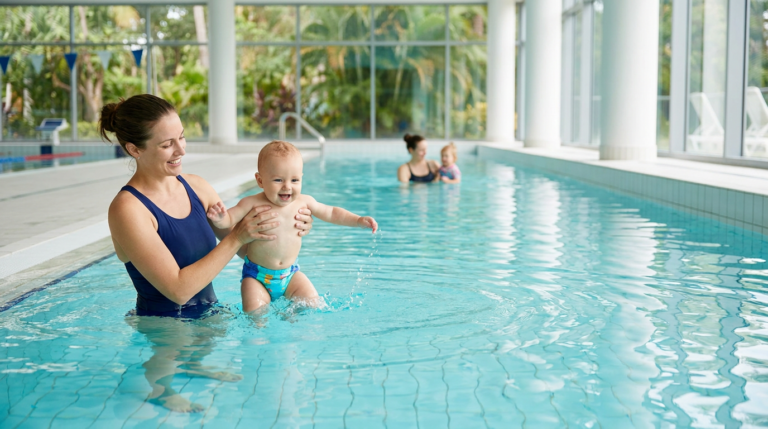
For the youngest toddlers or those with separation anxiety, parent-child lessons offer distinct advantages. Your presence provides emotional security that allows your child to take risks they might resist with a less familiar instructor. These shared lessons also teach you proper support techniques, positioning, and encouragement strategies to use during family pool time. You become an extension of the instructional team, reinforcing lessons between formal sessions through play and practice.
As children approach age 3 or 4, many programs transition to parent-observing formats where instructors work directly with children while parents watch from poolside. This shift supports growing independence and helps children focus on instructor directions without looking to parents for constant reassurance. The transition can be challenging for some children initially, but it represents an important developmental step beyond swimming—learning to trust other adults and function independently in structured environments.
Regardless of in-pool participation, parents dramatically influence swimming attitudes through their own reactions and communications. Children acutely sense parental anxiety; if you're nervous about water safety, your child will likely internalize similar fears. Conversely, parents who display calm confidence, celebrate small achievements, and maintain realistic expectations help children approach lessons with positive attitudes that accelerate learning. Your facial expressions, tone of voice, and post-lesson conversations either reinforce the fun and accomplishment or inadvertently communicate danger and stress.
Support your child's progress through complementary activities outside formal lessons. Bath time offers daily opportunities to practice face-washing, bubble-blowing, and water comfort. Many toddler swimming skills translate to bath play—pouring water, submerging toys, gentle splashing. These regular micro-practices, done playfully without pressure, significantly reinforce formal instruction while building positive water associations in familiar, controlled settings.
Swimming lessons represent both financial investment and time commitment that families should understand before enrolling. Realistic expectations about costs and duration help ensure sustainable participation that allows skills to fully develop rather than starting and stopping repeatedly.
In Singapore, group swimming lessons typically range from $35 to $55 per session, with most toddler programs falling within this bracket. Private or semi-private lessons command premium pricing, generally ranging from $60 to $120 per session, reflecting the intensive individual attention and flexible scheduling these formats provide. Most programs sell lessons in term packages rather than individual sessions, with typical terms encompassing 8-12 lessons scheduled weekly or twice-weekly.
When evaluating costs, consider the value equation beyond simple per-session pricing. Smaller class sizes, longer lesson durations, more experienced instructors, superior facilities, and structured curriculum frameworks all justify premium pricing through better outcomes. The cheapest available lessons rarely deliver the best value if they result in slower progress, require more total sessions to achieve competence, or create negative experiences that require later correction. Calculate cost-per-outcome rather than cost-per-session—if a $50 lesson delivers twice the progress of a $30 lesson, the premium option actually provides better value.
Beyond financial investment, swimming lessons require significant time commitment from families. Factor in travel time to and from facilities, changing and showering before and after lessons, and the actual lesson duration. For many Singapore families, this totals 90 minutes or more per lesson when accounting for all components. Twice-weekly lessons—optimal for toddler skill retention—mean dedicating 3+ hours weekly to swimming instruction.
Consistency dramatically impacts outcomes. Skills learned one week begin fading within days if not reinforced. Toddlers who attend lessons sporadically, with gaps due to illness, travel, or scheduling conflicts, progress significantly slower than those maintaining consistent attendance. When evaluating whether to start lessons, honestly assess your family's ability to maintain regular participation for at least one full term (typically 10-12 weeks). Starting and stopping repeatedly often proves more frustrating and less effective than waiting to begin until you can commit to sustained attendance.
Toddler swimming lessons represent the beginning of a multi-year swimming education journey, not a one-term solution that produces competent swimmers. Most children require 2-4 years of consistent instruction to achieve true swimming independence and water safety competence. Understanding this timeline prevents disappointment when your 3-year-old doesn't emerge from one term of lessons as a proficient swimmer. Instead, you can appreciate the foundational progress they're making toward long-term aquatic competence. Programs like those offered through structured SwimSafer Program pathways provide clear progression stages that help families understand the full journey from early water introduction through swimming mastery.
The success of initial swimming experiences often depends on preparation that happens before your child ever enters the pool. Thoughtful advance work reduces anxiety, sets appropriate expectations, and positions your toddler to approach lessons with curiosity rather than fear.
Begin preparing several days before the first lesson through conversations that build anticipation. Explain what swimming lessons involve using simple, positive language: "You'll go to a special pool where a teacher will help you play in the water and learn to swim like a fish!" Read children's books about swimming or watch age-appropriate videos showing children enjoying swim lessons. This mental preparation helps your toddler develop a conceptual framework for the new experience, reducing the anxiety that novelty often creates.
Practical preparation ensures the first lesson goes smoothly from a logistics standpoint. Assemble all necessary equipment in advance:
Arrive at the first lesson early to allow time for unhurried changing and facility exploration. Rushing amplifies stress for both parents and children. Extra time lets your toddler observe the pool environment, watch other children if classes are running, and adjust to the new setting before their own lesson begins. If the program permits, consider visiting just to observe a day or two before your child's first lesson, making the actual first day feel less completely novel.
Your toddler's first lesson might not go as smoothly as you envision, and that's completely normal. Some children jump right in enthusiastically, while others cry, cling, or refuse to participate. Neither response predicts long-term swimming success or enjoyment. Experienced instructors have seen every possible first-lesson reaction and know how to work with resistant or fearful children. Your role is to remain calm and positive regardless of your child's response, trusting the process and the instructor's expertise. The worst thing you can do is communicate disappointment or frustration about first-lesson reluctance, as this amplifies anxiety and creates negative associations with swimming.
Nearly every family encounters challenges during toddler swimming lessons. Understanding common issues and evidence-based solutions helps you navigate difficulties without abandoning swimming education prematurely.
Some toddlers develop water fear despite previous bath-time comfort. This fear might emerge from a specific negative experience (water in the face, slipping, witnessing another child's distress) or appear without obvious cause. Address fear through gradual exposure at your child's pace, never forcing or rushing comfort development. Work with instructors to identify appropriate accommodations—perhaps starting in shallower water, with more parent proximity, or with shorter session durations. Most water fear resolves with patient, positive exposure over time. What doesn't work: forcing reluctant children into frightening situations, expressing frustration about their fear, or comparing them to braver peers.
Toddler attention spans are naturally limited, and the stimulating pool environment creates additional focus challenges. Many 2-3 year olds struggle to follow instructions consistently or stay engaged with structured activities throughout entire lessons. This is developmentally normal, not misbehavior requiring correction. Quality programs anticipate this through varied activities, frequent transitions, and realistic expectations about continuous attention. Support your child's focus by ensuring adequate rest before lessons (avoid scheduling when they'd normally nap), providing nutritious pre-lesson snacks for sustained energy, and limiting exposure to overstimulating activities immediately before class.
Skill development rarely progresses linearly. Many children experience plateau periods where visible progress stalls despite consistent practice. These plateaus often precede breakthrough moments as the brain consolidates learning before the next developmental leap. During plateaus, maintain consistent participation rather than intensifying practice, adding extra lessons, or expressing concern about "falling behind." Your child is still benefiting from lessons even when progress isn't obvious week to week. Trust the process and the long-term trajectory rather than fixating on short-term advancement.
Children comfortable separating in other contexts sometimes struggle specifically with pool separation, perhaps because water feels inherently more threatening than other environments. Some programs address this through gradual separation—parent in water for initial lessons, then at pool edge, then poolside nearby, then eventually in observation areas. Don't interpret separation difficulty as swimming unsuitability. Many children who initially required extended parent proximity later become the most independent, confident swimmers once trust develops.
If challenges persist despite your best efforts and instructor support, consider temporary breaks rather than permanent cessation. Sometimes a few months of maturation resolves issues that seemed insurmountable earlier. The goal is developing lifelong swimming competence and water safety, not forcing arbitrary timelines that create negative associations undermining long-term outcomes.
Enrolling your toddler in swimming lessons represents a significant investment in their safety, development, and lifelong relationship with water. The benefits extend far beyond the pool—building confidence, physical coordination, and self-preservation skills that serve children throughout their lives. In Singapore's aquatic-rich environment, these skills take on particular importance, transforming swimming from an optional recreational activity into an essential life competency.
The toddler years offer a unique developmental window when children's natural curiosity, physical development, and learning receptivity align perfectly for water skill acquisition. Starting between ages 2-4 allows you to build positive water associations before fear develops, establish strong foundational skills that support later swimming advancement, and integrate water safety awareness during formative years when habits and attitudes solidify.
Success requires choosing quality instruction that prioritizes age-appropriate teaching methods, maintains rigorous safety standards, and employs experienced instructors who genuinely understand early childhood development. Look beyond marketing promises to examine actual qualifications, curriculum alignment with established frameworks like SwimSafer 2.0, and track records that demonstrate sustained success across thousands of students and many years of operation.
Remember that your child's swimming journey is exactly that—a journey spanning years, not months. Progress happens incrementally through consistent practice, patient encouragement, and realistic expectations calibrated to developmental capabilities rather than comparison with others. Some children advance rapidly while others need more time, but both can achieve swimming competence and water safety through sustained, positive instruction.
Most importantly, maintain focus on the ultimate goals: developing a child who is comfortable, safe, and confident in and around water. Technical perfection matters far less than building positive attitudes, safety awareness, and foundational skills that position your child for continued swimming development throughout childhood and beyond. With thoughtful program selection, consistent participation, and supportive parenting, swimming lessons during the toddler years lay groundwork for a lifetime of aquatic enjoyment and safety.
SPEEDISWIM brings over 20 years of expertise in early childhood aquatic education, having successfully trained more than 25,000 students across Singapore. Our toddler programs combine proven SwimSafer 2.0-aligned curriculum with patient, experienced instructors who understand exactly how young children learn. With multiple convenient locations and class formats designed specifically for ages 2-4, we make it easy to give your child the gift of water safety and swimming confidence.