Breathing is the most fundamental yet challenging aspect of swimming technique. Unlike running or cycling where breathing feels natural, swimming requires you to coordinate breath intake with precise timing, body rotation, and stroke mechanics. Whether you're learning to swim through the SwimSafer Program or training for competitive events, mastering proper breathing technique is essential for efficiency, endurance, and confidence in the water.
After training over 25,000 students across all levels, we've seen firsthand how proper breathing technique transforms swimmers. Many beginners struggle with timing and panic when they can't catch their breath, while intermediate swimmers often develop one-sided breathing habits that create stroke imbalances. The solution lies in understanding bilateral breathing and developing proper timing patterns that work with your body's natural rhythm.
This comprehensive guide will walk you through everything you need to know about swimming breathing technique, from fundamental principles to advanced bilateral breathing patterns. You'll discover practical step-by-step methods, common mistakes to avoid, and targeted drills that have helped over 1,000 athletes achieve competitive success. By the end of this guide, you'll have the knowledge and techniques to breathe confidently and efficiently, regardless of your current swimming level.
Your Complete Guide to Bilateral Breathing & Perfect Timing
Exhale IN the Water
Inhale OUT of the Water
Continuous exhalation prevents CO₂ buildup and eliminates panic responses
Prevents asymmetry & curved swimming paths
Engages powerful back & core muscles
Monitor competitors on both sides
Maximum oxygen, same-side breathing. Best for beginners & sprints.
Alternating sides. The gold standard for balanced technique & training.
Extended bilateral. Builds lung capacity & mental toughness.
Build foundation on your comfortable side first
Start with short distances (25m or less)
One length right side, next length left side
Count: pull, pull, pull, breathe (alternating)
Progress from 50m to 200m+ with bilateral pattern
Integrate breathing with natural body rotation
⏱️ Timeline: Most swimmers need 4-8 weeks of consistent practice to feel comfortable with bilateral breathing
Rotate, don't lift. Keep hips high.
Exhale continuously underwater.
Breathe as arm exits water.
Minimal rotation needed.
Students Trained
Competitive Athletes
Years Experience
Professional coaching from SwimSafer to National Team level
Proven methods trusted by Singapore's top swimmers
Before diving into specific techniques, it's crucial to understand why breathing in swimming differs from land-based activities. When you swim, your face is submerged in water, which triggers natural reflexes that can cause tension and anxiety. Your body must coordinate breathing with continuous movement while managing water pressure, reduced oxygen intake opportunities, and the need to maintain streamlined body position.
The golden rule of swimming breathing is simple: exhale in the water, inhale out of the water. This might sound obvious, but many swimmers hold their breath underwater, creating carbon dioxide buildup that triggers the panic response. Continuous exhalation through your nose and mouth while your face is submerged ensures you're ready for a fresh inhale when you rotate to breathe.
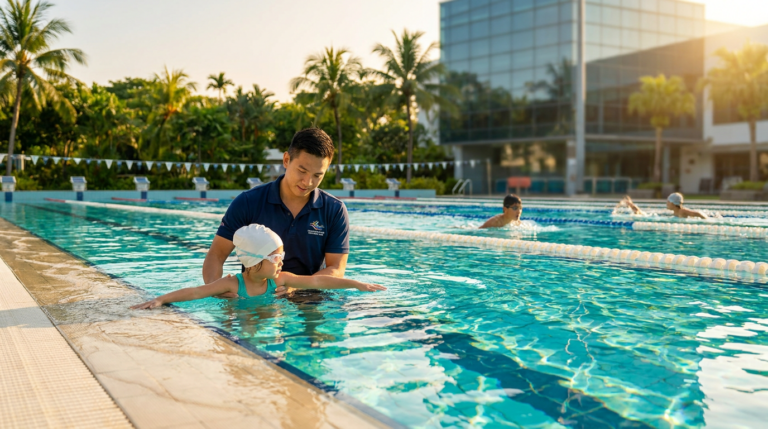
In our SwimSafer 2.0 curriculum, we emphasize breathing control as a core water safety skill. Students learn that proper breathing technique not only improves swimming performance but also builds confidence and reduces the fear response in aquatic environments. This foundation supports progression through all swimming levels, from basic water confidence to competitive racing.
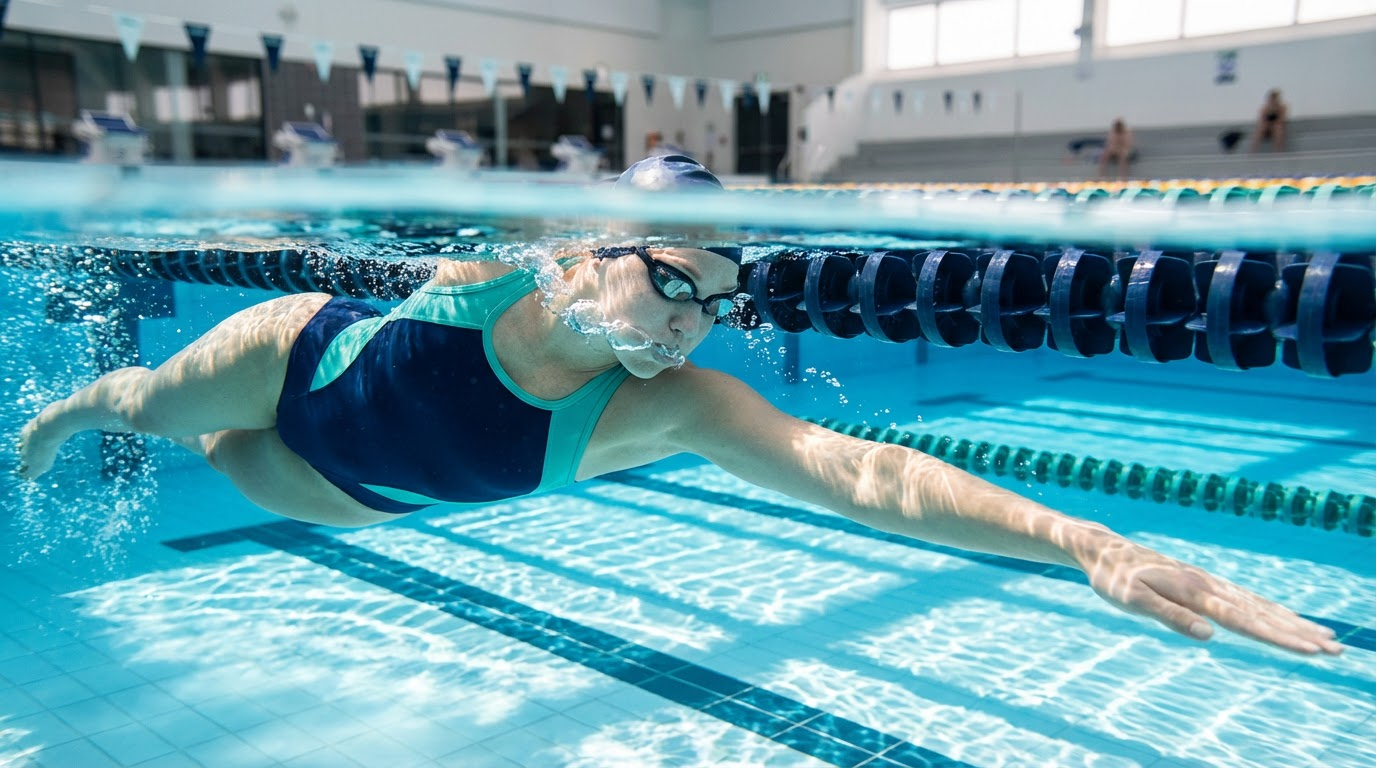
Your breathing pattern directly affects your body position in the water. Holding your breath causes tension in your chest and shoulders, disrupting your streamline and creating unnecessary drag. Conversely, controlled exhalation promotes relaxation, allowing your hips to rise naturally and maintaining the horizontal body alignment essential for efficient swimming.
Bilateral breathing refers to the practice of breathing on both sides while swimming freestyle, rather than consistently breathing on just one side. Typically, this involves breathing every three strokes (alternating sides), though variations like breathing every five or seven strokes also qualify as bilateral patterns. This technique is widely considered the gold standard in swim coaching for multiple compelling reasons.
The most significant benefit of bilateral breathing is balanced stroke development. When you breathe exclusively on one side, you create asymmetry in your stroke mechanics. Your dominant breathing side receives more rotation, while your non-breathing side remains relatively flat. Over thousands of strokes, this imbalance can lead to uneven muscle development, curved swimming paths, and reduced efficiency. Through our Competitive Swimming programs, we've corrected countless stroke imbalances by implementing bilateral breathing patterns.
Improved body rotation represents another key advantage. Bilateral breathing forces you to practice proper rotation on both sides, developing the core strength and awareness needed for efficient freestyle. This complete rotation is essential for accessing your powerful back and core muscles, rather than relying solely on arm strength. Athletes who master bilateral breathing typically demonstrate superior body alignment and reduced energy expenditure over long distances.
Bilateral breathing also provides tactical advantages in competitive swimming. Being able to breathe on either side allows you to monitor competitors on both sides during races, navigate better in open water, and adapt to challenging conditions like sun glare or choppy water. In competitive settings, this flexibility can mean the difference between winning and losing close races.
While bilateral breathing offers numerous benefits, it's not always mandatory for every swimmer in every situation. Beginners learning basic swimming should first establish comfortable breathing on their preferred side before attempting bilateral patterns. Rushing into bilateral breathing too early can overwhelm new swimmers and interfere with fundamental skill development. Our SwimSafer instructors typically introduce bilateral breathing concepts at intermediate levels once students have established basic stroke proficiency.
Competitive swimmers often adjust their breathing patterns based on race distance and strategy. Sprint swimmers might breathe less frequently or favor one side for races under 100 meters, while distance swimmers typically maintain bilateral patterns for balance and oxygen supply. The key is developing the capability to breathe bilaterally, then choosing when to apply it strategically.
Understanding different breathing patterns helps you choose the right approach for your swimming goals and current skill level. Each pattern offers distinct advantages depending on whether you're prioritizing speed, endurance, technique development, or race strategy.
Every 2 strokes (unilateral): This pattern means breathing on the same side with each stroke cycle (one complete left and right arm pull). While this provides maximum oxygen intake, it creates the stroke imbalances discussed earlier. This pattern is typically used by beginners building breathing confidence or by sprinters in short races where oxygen debt isn't the limiting factor.
Every 3 strokes (bilateral): The most common bilateral pattern involves breathing every third stroke, which automatically alternates your breathing side. One cycle might look like: right arm pull, left arm pull, right arm pull and breathe to the right; then left arm pull, right arm pull, left arm pull and breathe to the left. This pattern provides good oxygen supply while maintaining stroke balance, making it ideal for training and middle-distance racing.
Every 4 strokes: Breathing every four strokes returns you to the same breathing side, similar to breathing every two but with longer underwater phases. This pattern is sometimes used by advanced swimmers working on breath control or during specific race segments where stroke count and streamlining take priority over oxygen intake.
Every 5 or 7 strokes (advanced bilateral): These extended bilateral patterns challenge your breath control and cardiovascular fitness while maintaining bilateral benefits. Competitive distance swimmers often use these patterns during training to build lung capacity and mental toughness. In our competitive programs, athletes progressively work toward comfortable 5-stroke breathing during threshold training sets.
The "best" breathing pattern depends on multiple factors including your fitness level, swimming speed, distance, and specific training goals. Beginners should focus on establishing rhythmic breathing every 2-3 strokes before extending to longer patterns. Intermediate swimmers benefit from practicing multiple patterns to develop versatility. Advanced and competitive swimmers strategically vary patterns based on workout intensity and race demands.
During our coaching sessions across Singapore's international schools and country clubs, we've found that most recreational swimmers thrive with a comfortable 3-stroke bilateral pattern for general swimming, while having the option to switch to 2-stroke breathing during intense efforts or when fatigued. This flexibility ensures adequate oxygen supply while maintaining the long-term benefits of balanced technique development.
Developing bilateral breathing takes patience and systematic practice. The following progression has successfully guided thousands of our students from single-side breathing to confident bilateral patterns. Remember that everyone progresses at different rates, so focus on quality execution rather than rushing through these stages.
1. Perfect Your Single-Side Breathing First – Before attempting bilateral breathing, ensure you can comfortably breathe on your preferred side with proper head rotation (turning rather than lifting), maintained body alignment, and controlled exhalation underwater. This foundation ensures you're not building bilateral patterns on faulty mechanics. Practice swimming full lengths while breathing every 2-3 strokes on your comfortable side until it feels completely natural.
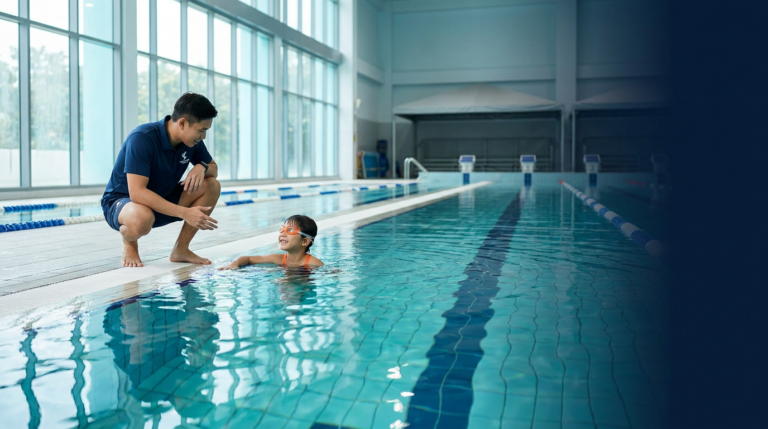
2. Introduce Breathing on Your Non-Dominant Side – Begin practicing breathing on your opposite side during warm-up or drill sets. Start with short distances (25 meters or less) and allow yourself to breathe more frequently if needed. Focus on matching the head rotation and timing you've developed on your comfortable side. It will feel awkward initially, but most swimmers notice significant improvement within 3-4 sessions of dedicated practice.
3. Practice Alternating Breathing by Length – Once you can complete 25-50 meters breathing on your non-dominant side, start alternating sides by length. Swim one length breathing to the right, the next length breathing to the left. This builds comfort on both sides while avoiding the complexity of switching mid-length. Continue this pattern for several sessions until both sides feel relatively similar in comfort and efficiency.
4. Implement 3-Stroke Bilateral Breathing – Now you're ready to breathe every three strokes, alternating sides throughout a single length. Start with slow, controlled swimming where technique takes absolute priority over speed or distance. Count your strokes mentally (pull, pull, pull, breathe) to establish rhythm. If you lose the pattern or feel oxygen-deprived, return to single-side breathing briefly, then resume the bilateral pattern when ready.
5. Gradually Extend Distance and Intensity – As 3-stroke breathing becomes comfortable, progressively increase the distance and intensity at which you maintain the pattern. Begin with 50-100 meters, then advance to 200 meters, eventually reaching the point where bilateral breathing becomes your default pattern for all moderate-intensity swimming. For higher-intensity work, you may naturally shift to more frequent breathing, which is perfectly normal.
6. Fine-Tune Your Timing and Rhythm – With the basic pattern established, focus on refining the timing of your breath within your stroke cycle. Your breath should occur during the natural body rotation generated by your arm pull, not as a separate action. The rotation initiates from your hips and core, and your head simply follows along, rotating just enough to get your mouth clear of the water. This integration creates seamless breathing that doesn't disrupt your forward momentum.
Throughout our 20+ years of coaching experience, we've identified recurring breathing mistakes that limit swimmer development. Recognizing these errors in your own technique is the first step toward correction and improvement.
Lifting your head instead of rotating: This is perhaps the most common breathing error. When you lift your head forward to breathe, your hips sink, creating significant drag and disrupting your streamline. The correction involves rotating your entire body as a unit, allowing your head to turn to the side while maintaining alignment with your spine. Your goggle line should remain in the water with only the side of your face breaking the surface. Practice this by swimming with one arm extended forward while breathing to that side, focusing purely on body rotation.
Holding your breath underwater: Many swimmers instinctively hold their breath when their face is submerged, leading to rapid CO2 buildup and desperate, gasping breaths. Instead, continuously exhale through your nose and mouth while your face is in the water, using a gentle, controlled release rather than explosive exhalation. This ensures your lungs are empty and ready for a fresh inhale when you rotate to breathe. Practice this while standing in shallow water, submerging your face and establishing a comfortable exhalation rhythm.
Breathing too late in the arm cycle: If you're trying to breathe as your arm is already recovering over the water, you've missed the optimal timing window and will likely lift or over-rotate your head. The breath should begin as your breathing-side arm completes its pull and starts to exit the water. This timing allows you to breathe in the natural bow wave created by your head movement, where there's actually a small air pocket. Your breathing-side arm recovery then helps facilitate the rotation back to center.
Over-rotating to get air: Some swimmers rotate excessively to ensure their mouth clears the water, often rolling nearly onto their back. This over-rotation stalls forward momentum and creates recovery problems for the opposite arm. The fix involves building confidence that you only need minimal rotation—your mouth needs to clear the water by just a few centimeters. Swimming closer to the lane rope or pool edge can provide psychological comfort as you practice more subtle rotation.
Irregular or inconsistent breathing patterns: Randomly breathing whenever you feel desperate for air creates rhythm disruptions and prevents you from developing efficient patterns. Establish a specific breathing pattern (every 2, 3, or 4 strokes) and commit to it for entire lengths or sets. This consistency builds the rhythm and muscle memory needed for effortless breathing. If you can't maintain your chosen pattern for a full length, you're either swimming too fast or need to choose a more frequent breathing pattern.
One of the most effective tools for identifying breathing errors is video analysis. Have someone record you swimming from the side and front angles, or use underwater cameras if available. When reviewing footage, specifically watch for head position during breathing, degree of body rotation, timing of the breath relative to arm position, and whether your hips remain level or sink during the breathing cycle. In our coaching programs, video analysis often reveals issues swimmers weren't aware of, accelerating correction and improvement.
Swimming breathing technique should evolve as you progress through different skill levels. What works for a beginner building water confidence differs significantly from the breathing strategy of a competitive swimmer. Here's how to approach breathing technique at each stage of development.
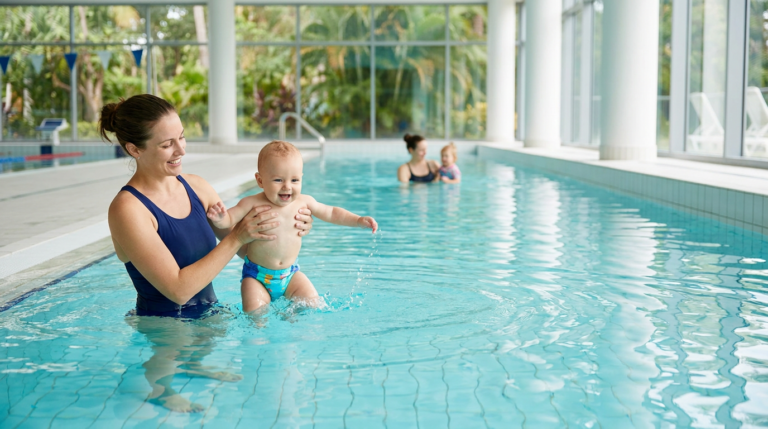
At the beginner level, the primary focus should be establishing comfort with face-in-water swimming and developing rhythmic breathing on one preferred side. Beginners in our SwimSafer Program start with basic breath control exercises like bubble blowing and submersion activities before attempting full stroke breathing. The goal is building confidence and eliminating panic responses to water on the face.
Begin with stationary breathing drills at the pool wall, where you can hold on and practice the breathing motion without worrying about propulsion. Progress to kickboard-assisted breathing, which allows you to focus on breathing mechanics while the board provides support. When ready for full stroke breathing, choose your more comfortable breathing side and practice breathing every 2 strokes (every complete stroke cycle). Don't worry about bilateral breathing yet; establish a solid foundation on one side first.
Common breathing frequency for beginners should prioritize adequate oxygen supply over distance between breaths. If you need to breathe every stroke cycle or even more frequently, that's perfectly acceptable while you're building endurance and technique. Many beginners make the mistake of trying to swim too far without breathing, leading to oxygen debt, panic, and reinforcement of poor breathing habits.
Intermediate swimmers have established basic breathing competency on their preferred side and are ready to develop bilateral breathing capability and more sophisticated breath control. At this stage, you should be able to comfortably swim 50-100 meters with rhythmic breathing, maintain proper head rotation, and demonstrate controlled exhalation underwater.
The intermediate phase is ideal for introducing breathing every 3 strokes (bilateral pattern). Follow the step-by-step progression outlined earlier in this guide, starting with practicing your non-dominant side breathing separately before combining into alternating patterns. Intermediate swimmers should also begin experimenting with different breathing patterns (every 2, 3, or 4 strokes) based on swimming intensity and distance.
Breath control becomes more refined at this level. Practice sets with reduced breathing frequency, such as breathing every 5 or 7 strokes, to build lung capacity and mental toughness. However, these should be limited portions of your training, not the default pattern. The majority of intermediate swimming should use comfortable 2-3 stroke breathing that allows for proper oxygenation and technique execution.
Advanced swimmers and competitive athletes should have complete bilateral breathing proficiency, allowing them to breathe comfortably on either side and switch patterns based on tactical and physiological demands. At this level, breathing technique is refined to minimize drag and maximize efficiency, with virtually no disruption to body position or stroke rhythm.
Competitive swimmers in our programs develop race-specific breathing strategies. Sprint events (50-100m) might use limited breathing or strategic breath-holding, middle-distance events (200-400m) typically employ 3-stroke bilateral breathing with possible variations during turns and finish, while distance events (800m+) use consistent bilateral patterns that ensure adequate oxygen supply for the duration. Athletes learn to adjust breathing frequency based on pace, with faster swimming often requiring more frequent breathing to meet elevated oxygen demands.
Advanced breath control training includes hypoxic sets (limited breathing to simulate low-oxygen conditions), breathing pattern variations within single sets, and specific breathing strategies for different race segments. However, it's important to note that excessive hypoxic training offers limited benefits and may even be counterproductive, as quality technique execution requires adequate oxygen supply. Our competitive coaches carefully balance breath control challenges with proper oxygenation to optimize both physiological adaptation and technical precision.
Targeted drills accelerate breathing technique development by isolating specific components of the breathing motion. Incorporate these drills into your regular swim sessions to address weaknesses and reinforce proper mechanics.
Side-Kick Breathing Drill: Push off the wall on your side with bottom arm extended forward and top arm resting along your side. Kick while maintaining this position, rotating only your head to breathe forward then returning face-down between breaths. This drill isolates head rotation from body rotation, helping you minimize excessive movement. Practice on both sides, taking 3-4 breaths per length initially, progressing to full-length intervals.
6-Kick Switch Drill: Begin in side-kick position (as above) and maintain it for 6 kicks, breathing as needed. After the sixth kick, take one complete stroke to switch to the opposite side, maintaining that new position for another 6 kicks. This drill develops balanced body rotation and breathing on both sides while building the core stability needed for efficient freestyle. Focus on smooth transitions between sides and maintaining streamlined body position throughout.
Single-Arm Freestyle: Swim freestyle using only one arm while keeping the other arm extended forward. Breathe to the stroking arm side. This drill allows complete focus on the breathing motion without the complexity of coordinating both arms. It also highlights any timing issues between your arm pull and breathing rotation. Perform equal distances with each arm, and notice which side feels smoother and more natural. Work to bring the weaker side up to match the stronger side.
Breathing Pattern Progression: Within a single continuous swim, progress through different breathing patterns. For example, swim 50 meters breathing every 2 strokes (right side), 50 meters breathing every 2 strokes (left side), 50 meters breathing every 3 strokes (bilateral), and 50 meters breathing every 5 strokes. This drill builds breathing versatility and helps you understand how different patterns feel at the same swimming speed. Rest briefly between repetitions as needed.
Underwater Exhalation Practice: While this isn't swimming-specific, it's one of the most valuable drills for beginners and intermediate swimmers. Stand in chest-deep water and practice submerging your face while continuously exhaling through your nose and mouth. Lift to breathe, then immediately submerge and resume exhalation. Establish a rhythmic pattern, gradually increasing the duration of underwater exhalation. This simple drill builds the habit of continuous exhalation that eliminates breath-holding and its associated problems.
Wall Breathing Drill: Hold the pool wall with both hands while floating on your stomach. Without moving your body, practice the breathing motion by rotating only your head to the side, breathing, then returning to face-down position while exhaling. Perform 10-15 repetitions to each side. This stationary drill allows you to perfect the breathing motion without any other technical demands. Focus on minimal head rotation, keeping one goggle in the water, and smooth transitions between face-down and breathing positions.
Effective drill practice requires quality over quantity. Rather than rushing through drills, perform them with complete focus on the specific technical element you're addressing. A typical drill session might include 200-400 meters of breathing drills within a 1500-2000 meter workout. Beginners might dedicate a higher percentage of workout time to drills (40-50%), while advanced swimmers use drills primarily for warm-up and technique maintenance (15-25% of total volume).
Competitive swimming demands strategic breathing approaches that balance oxygen needs with speed optimization. Through our Competitive Swimming programs, we've developed over 50 athletes for National Youth and National Teams by teaching them to use breathing as a tactical tool, not just a physiological necessity.
In sprint events (50-100 meters), many elite swimmers minimize breathing to maintain maximum speed and streamline. The 50m freestyle often involves taking zero breaths or a single breath, while 100m swimmers typically breathe 3-6 times total, often avoiding breaths during the critical first 15 meters after starts and turns where underwater kicking provides speed advantages. However, individual physiology varies significantly; some sprinters perform better with more frequent breathing that ensures adequate oxygen supply for all-out efforts.
Middle-distance events (200-400 meters) require more sophisticated breathing strategies. Most competitive swimmers use 3-stroke bilateral breathing as their baseline pattern, possibly adjusting to 2-stroke breathing during the final sprint finish. The 200m events allow for some strategic breath limitation during the third length (often the fastest), while the 400m requires consistent breathing throughout to maintain adequate oxygen for the entire race duration.
Distance events (800-1500 meters) prioritize consistent oxygen supply over minimal breathing. Bilateral breathing every 3 strokes is standard, with many distance specialists comfortable breathing every 2 strokes if needed to maintain pace and oxygen saturation. The key in distance swimming is establishing a sustainable rhythm that you can maintain for the entire race duration without oxygen debt accumulation.
Beyond physiological needs, breathing serves tactical purposes in competitive swimming. Bilateral breathing capability allows you to monitor competitors on both sides, particularly important during the middle sections of races where positioning matters. In open water swimming and triathlon events, bilateral breathing helps with navigation and adaptation to changing conditions like sun position and water chop.
During turns, most competitive swimmers establish patterns of stroke counts and breathing positions. A common pattern involves taking the last breath 2-3 strokes before the wall, then resuming breathing 2-3 strokes after the turn. This ensures you're not breathing during the turn itself (which would compromise speed and streamline) while maintaining adequate oxygen supply. Practice your turn breathing patterns during training until they become automatic during races.
Race breathing strategy should be established during training, not attempted for the first time during competition. Our competitive swimmers practice race-specific breathing patterns during pace work and time trials, ensuring they understand how different breathing frequencies feel at race pace and can execute their strategy confidently under competitive pressure.
Mastering swimming breathing technique is a journey that progresses through distinct stages, from basic comfort with face-in-water swimming to sophisticated bilateral breathing patterns and competitive breathing strategies. The key principles remain consistent across all levels: exhale continuously underwater, rotate rather than lift your head to breathe, maintain rhythmic breathing patterns, and practice with patience and focus on quality execution.
Bilateral breathing offers significant benefits for stroke balance, versatility, and long-term swimming development, making it worth the investment for most swimmers beyond the absolute beginner level. However, the specific breathing pattern you choose should align with your current abilities, swimming goals, and the specific demands of your training session or race. Flexibility and adaptability in breathing technique ultimately serve you better than rigid adherence to any single pattern.
Remember that breathing technique development takes time and consistent practice. Most swimmers need several weeks of focused work to feel comfortable with new breathing patterns, and even experienced swimmers benefit from regular drill work to maintain and refine their technique. If you're experiencing persistent breathing difficulties or want personalized guidance to accelerate your progress, professional coaching can identify specific issues and provide targeted corrections that dramatically accelerate improvement.
At SPEEDISWIM, we've spent over 20 years helping swimmers of all levels master breathing technique, from children taking their first strokes in our SwimSafer programs to national-level competitors refining race strategies. Whether you're swimming for water safety, fitness, or competitive success, proper breathing technique forms the foundation for confidence, efficiency, and enjoyment in the water.
Join over 25,000 students who have learned proper swimming technique with SPEEDISWIM's expert coaching. Our professionally qualified instructors provide personalized guidance for swimmers of all levels, from SwimSafer beginners to competitive athletes.
Group lessons from $35/session | Professional coaching across Singapore's top venues